
Your child walks out of school looking fine. By the time they get home, a question about their day or a reminder to hang up their coat is suddenly too much. Another child goes straight to their room and barely speaks. Both responses can leave adults wondering what happened and whether they should ask about it now.
Start by making the handover easier. You don’t have to work out the whole day on the doorstep. This guide is for families and carers who want a manageable after-school routine, and for school staff trying to understand why a pupil’s experience looks different at home. The timings are examples to adapt with the child.
1. Make the first few minutes predictable
Pick one sentence that tells the child what’s happening next. If there’s a change, lead with that: “We’re going to Gran’s first; your water is in the car.” Give them the information at the usual pickup point, or earlier if you can. Knowing the next step can be more useful in the moment than being asked to decide what to do.
At home, agree where things can land without a conversation. A hook for the coat, a basket for the bag or a place by the door for shoes will do. If the bag goes in the wrong place, leave it for later unless it’s in someone’s way. A routine meant to make arriving easier can quickly become another set of instructions if each step has to be done in the right order.
Different households will do this differently. If you pick up siblings or go straight to a club, the quieter part might be the walk to the bus stop, five minutes beside a trusted adult, or a familiar track on the way. For a child who wants to tell you something straight away, listen. The aim is to take away the expectation of a report, while keeping the invitation open.

2. Offer one or two ways to settle
Talk about preferences at a time when your child feels able to choose. They might want water and a familiar snack, a few minutes of music, a chance to change out of uniform or some movement outdoors. Ask what they’d like you to do, too. Some children want company without questions. Others prefer you nearby but out of the room. Start with things you already have.
At pickup, avoid making it a long menu. You can make water available and say, “I’ll be in the kitchen if you want me.” If you’ve agreed two options, say their names or show the objects. Let the child point, use their communication device or choose nothing yet. If they don’t answer, give them time before asking again. Accept a change of mind; the same option doesn’t have to help every day.
Build the routine around what the child finds comfortable. A sofa in the middle of a noisy room might feel less restful than quietly helping you feed the dog. Turning down the radio could make the trip home easier for one child; another might want to move to music. A quiet activity is an option, not a condition the child has to meet before they’re allowed to play.
Try changing one demand before changing everything else. If the sticking point is taking off a scratchy uniform, let changing come before unpacking. If a child is comfortable until the television comes on, ask whether they want the volume lower or another place to sit. Check what happened afterwards: were they able to get to the next part of the afternoon more comfortably? Ask them as well as looking for changes yourself. A quiet child can still be having a hard time.

3. Agree how you’ll move on to the next thing
Try a short landing period, perhaps ten minutes, before homework or questions about missing kit. Agree what the end looks like. If a timer bothers your child, use a familiar event instead: “After we’ve had a drink I’ll tell you what time we need to leave.” If you have another pickup or an appointment, say so early and keep the landing period as simple as you can.
Here’s a fictional example. Ellie likes movement after school, and being asked about the day on the way home often ends in tears. Her family tries a short walk before going inside. On wet days they take the covered route to the back door instead. After a week, Ellie says she likes the walk on Mondays and wants to go straight home after PE. Her family keeps both options. The useful discovery is when each option helps, not whether they can make every day look the same.
If your child arrives upset, use fewer words and give space where appropriate while staying close enough to keep them safe. Save the conversation about what happened for a quieter moment. If something still has to happen, say what is essential and leave the rest: “We need to get on this bus. I can carry your bag.” Children don’t have to explain why they’re struggling before adults make a busy moment easier.

4. Ask about one part of the day, later
“How was school?” can be a big question. Later, ask about one place or moment: “What was it like coming out when the corridor was busy?” or “What would you change about pickup?” Leave time for an answer and accept a gesture, a short message or “I don’t know”. If the child would rather talk while doing something side by side, put the conversation there instead of making it a separate task.
The National Autistic Society’s UK school guidance explains that masking may make a pupil appear to be coping when they’re overwhelmed. It also highlights sensory demands and changes between activities. That can be one explanation for a difference between home and school. A hard pickup on its own doesn’t tell you why a child is struggling. Listen for other things the child raises, such as hunger, a worry about a friend or a change in the journey, and keep those separate from guesses about the cause.
For a few days, note the situation, the child’s own words if they want them shared, and anything that helped. A short note is enough: “Busy exit after assembly; wanted no conversation until we got home; a quieter route helped.” Keep it private and drop the notes once they have served their purpose. If the child tells you about bullying or feeling unsafe, raise that directly with school instead of waiting to finish the trial.
If the school run is shared, agree a sentence all the adults can use and one thing to pass on, such as a change to the gate or the pickup time. Parents and carers can share the important practical information separately rather than discussing the child’s hardest moment over their head. If school staff need to tell you something urgently, they can do that; for routine handovers, ask whether a brief message or a quieter time for a conversation would work.

5. Give school something specific to try
You might say: “On three days this week, Sam came home exhausted. Sam says the corridor at the end of the day is the hardest bit. Could we ask Sam about trying a quieter way out, and check next Friday whether it helped?” Ask the teacher what they see just before home time. If a small change would affect supervision or transport, agree who will handle it so the child doesn’t have to explain the plan to a different adult each day.
In England, Chapter 6 of the government’s SEND Code of Practice (January 2015 edition; the publication page was updated on 12 September 2024) describes a cycle of assessing, planning, doing and reviewing SEN support, informed by family and pupil views. The pickup suggestion here is a practical example to discuss with a teacher or SENCO. If afternoons are still repeatedly difficult, ask for a wider conversation about what school and the journey are like for the child. A calmer arrival at home may help, but it can’t remove a problem that is still happening during the day.
At the review, keep the focus on what the pupil notices. For example: “Was the hall easier to get through?” or “Was there enough time to get to your lift?” If one route helps but leaves the pupil worried they’ll miss their friends, ask which part of the plan they’d change. It’s fine to keep one adjustment and revise another.
A story to try when there’s time to talk
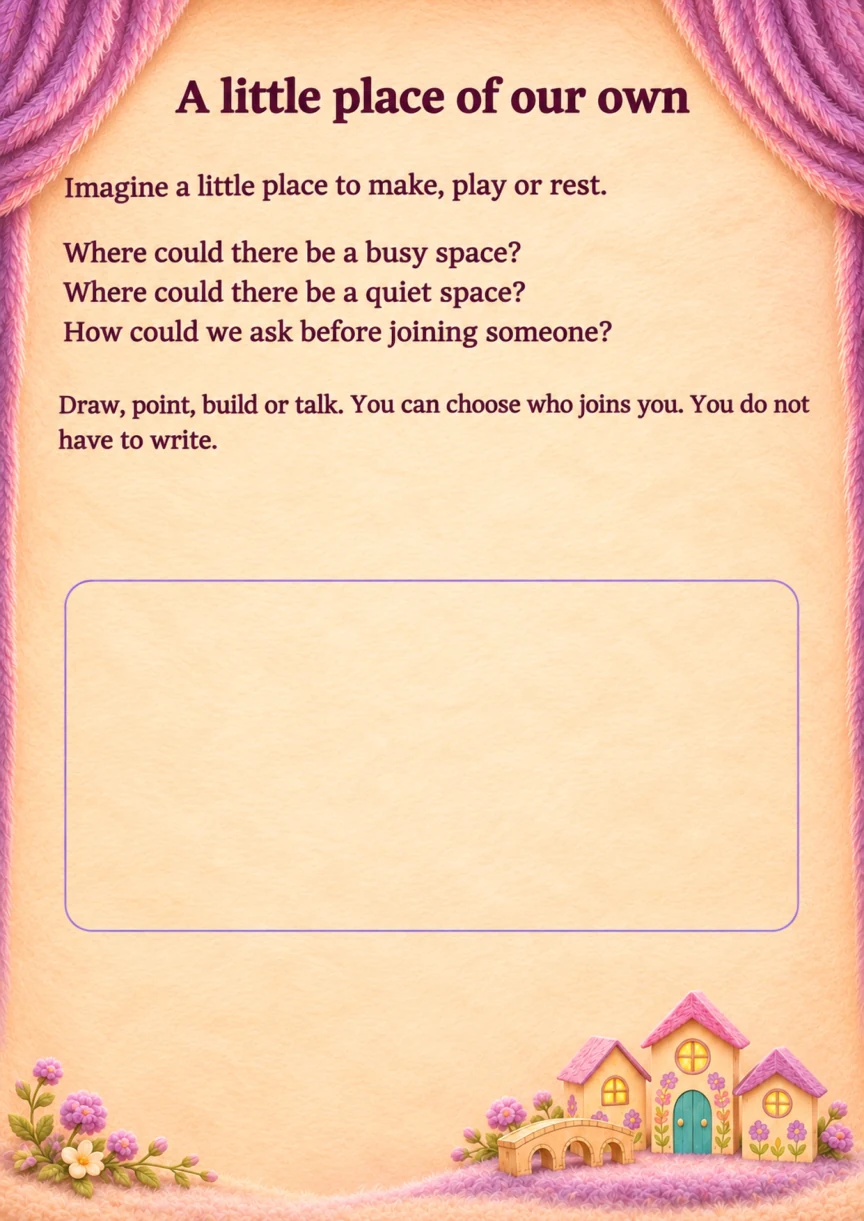
If your child likes talking through stories, look together at the public preview of The Fuzzburys: A Little Space for Me. The book page includes the original “A little place of our own” planning activity. As a separate conversation starter, you could ask, “What would make that place feel right for you after school?” You can leave the question there without expecting the child to finish an activity. For more options, see the Hewston Higgins guides for families and schools.