

‘I hate reading’ can be hard to hear when you want your child to enjoy books. Maybe they’ve spent the evening telling you dinosaur facts and gone quiet as soon as the school book came out. I’d be curious about what happened at that moment.
I’d ask, ‘Which bit would you change if you could?’ A child might want you to read the first page, help them keep their place or find a different book. Their answer gives you somewhere to start.
These ideas are for adults reading with primary-age children, including children with SEND. You can try one with a borrowed book and a quiet few minutes. Keep what makes reading easier for your child.
Listen to the refusal before choosing a solution
Ask when there’s no book waiting to be finished. ‘Which part felt hardest?’ is a place to start. Let them point, draw or say they aren’t sure yet.
If it helps, give them a few things to choose from. ‘Were the words difficult? Did you like the story? Did you feel too tired?’ Give them time to tell you something you hadn’t thought of.
If they’re bored, ask what they’d like to find out about. If the words are too hard, take an example to their teacher. If they’re tired, try finding a better time the next day.
Give a small, meaningful choice
BookTrust's guidance on book choice, produced with the Open University, highlights the value of respecting children's preferences and helping them choose. It also cautions that an overwhelming selection can make choosing harder for less confident readers.
I’d offer two or three choices that feel different, like a funny comic, a page about an animal and an illustrated adventure. If nothing appeals, ask what they’d change about the choice.
If your child likes football, see if they’d go for player facts, a match report or a comic about a team. Try the library if you can. It gives them room to change their mind and pick something else.

Keep story enjoyment alongside reading practice
Your child might want to hear a long, exciting story while they’re still learning to read shorter books on their own. You can read the story they’re interested in and ask their teacher what they’re practising when it’s their turn to read.
Education Scotland's guidance on shared and guided reading describes complementary purposes: shared reading can support enjoyment and participation, while carefully planned teaching helps children develop independence. Its guidance is written for Scotland's early years context; the distinction is useful when thinking about a primary child's experience at home.
Ask the teacher which skills the school book is for and how they’d like you to help. When you’re sharing a story for fun, try reading it aloud yourself and let your child listen.
Let listening be a real way into a story
Read aloud, try an authorised audiobook, or share a short extract. Listening does not demonstrate that a child can read the printed words independently. It can, however, give them a way to enjoy a story while reading skills are being taught separately.
In BookTrust's tips from authors Katie and Kevin Tsang, reading aloud is encouraged beyond the early years, alongside audiobooks and following children's interests. There is no need to withdraw shared stories because a child is getting older.
Ask if your child wants to see the pictures, follow the page or just listen. If you’re using audio, let them tell you what volume is comfortable and whether they want to wear headphones.

Try a short invitation with an agreed ending
‘Shall I read the first page and then you can tell me if you want more?’ gives your child a clear place to stop. Try that with a comic, a story or a page of facts they picked.
Say who’s reading and where you’ll stop. That could be one scene, two pages of pictures or one surprising fact. If your child wants to stop where you agreed, keep that promise.
Afterwards, think about what helped them get started. Did they want you to read? Did knowing when you’d stop help? Was the room quieter? Try the thing that made a difference next time.
Adapt the setting and the response
I’d ask what would make this page or this moment easier for the child in front of you. Children who share a diagnosis can have very different answers.
They might need a comfortable position, less background sound, a clearer view of the page or a different time of day. They might prefer one person reading with them rather than several adults taking turns. Try one manageable change at a time where possible, so you can tell what helped.
Your child can show you what they noticed by pointing, choosing between two pictures, drawing something or using their usual communication system. You can hold or move the book if that helps them see it. Follow any communication and access arrangements you already use together.
Offer conversation without turning it into a quiz
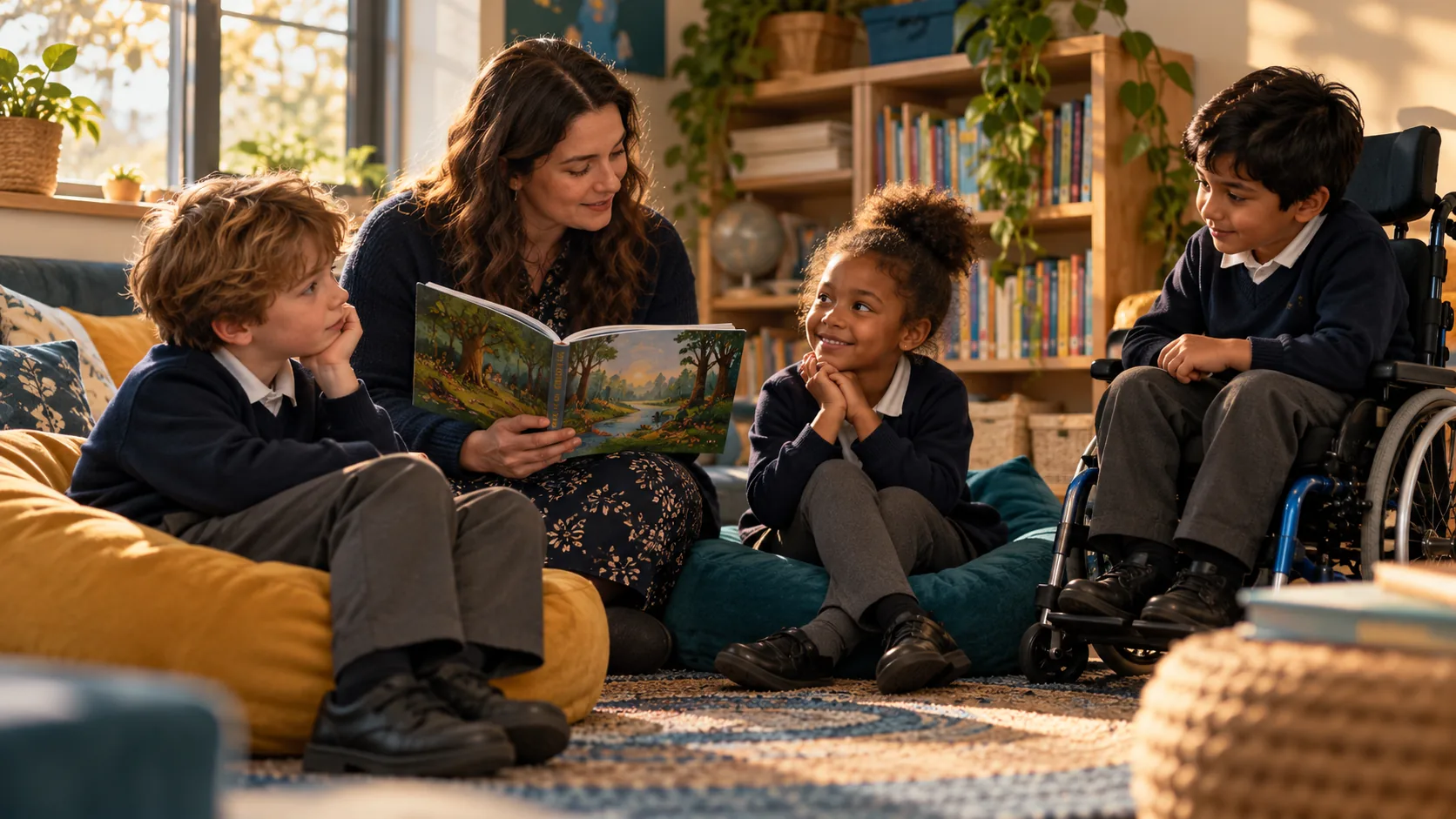
After a story, try sharing your own observation: “That ending surprised me.” Leave a pause. The child may disagree, show you a picture or say nothing. You can enjoy a shared moment without needing a formal response.
If they want to talk, follow the part that caught their attention. A child might care more about the strange vehicle in the background than the character's feelings. That interest can lead to another book, a drawing or a question to investigate together.
Teachers still need to teach and check understanding. The point is to make the purpose clear. If an activity is a comprehension lesson, explain that. If it is an opportunity to enjoy a story, allow it to remain enjoyable without adding a worksheet every time. Our story-based inclusion activity offers one example for a session where discussion is the intended purpose.
Share specific observations with school
If reading regularly ends in distress, or you are worried about progress, speak with the class teacher. In England, the school's SENCO can be involved where appropriate. Job titles and support arrangements differ across the UK. You do not need to arrive with a diagnosis or a complete explanation to describe what is happening.
Bring examples: “They ask me to read the story, but become upset when asked to read aloud,” or “They can read individual words, but lose track of the sentence.” Describe what you tried and what changed. Ask which skills school is currently teaching, what suitable home practice looks like and when you will review it together.
Agree a manageable next step rather than collecting a long list of tasks. That might mean clarifying the practice book, changing the way an adult prompts or arranging a follow-up conversation. Check what the child thinks about the plan. Their experience matters alongside the adults' observations.

A simple plan for your next shared read
Choose a calm opportunity and offer two possible texts. Agree whether the child wants to listen, share the reading or explore pictures. Set a small stopping point together. At the end, ask whether they would choose something similar again. Keep the answer useful rather than treating it as a verdict on the session.
You might discover that they love being read to, want shorter texts, prefer factual books or dislike the public performance of reading aloud. None of those discoveries settles every difficulty. Each gives you a better starting point than repeating the same argument over the same page.
For your next choice, explore Hewston Higgins books and learning worlds and free samples. Families and educators using resources regularly can compare membership options and check current access and download allowances. Choose resources to fit the child; no purchase is needed to try the ideas in this guide.
When a child says they hate reading, resist making that sentence their permanent identity. Listen for the difficulty underneath it. Then offer a manageable invitation, useful teaching where it is needed, and another opportunity to find something worth reading.
Sources and further reading
- BookTrust and the Open University: Why book choice matters for children.
- BookTrust: Six top tips for encouraging children to read, by Katie and Kevin Tsang.
- Education Scotland: Guided and shared reading, updated 4 November 2025.