
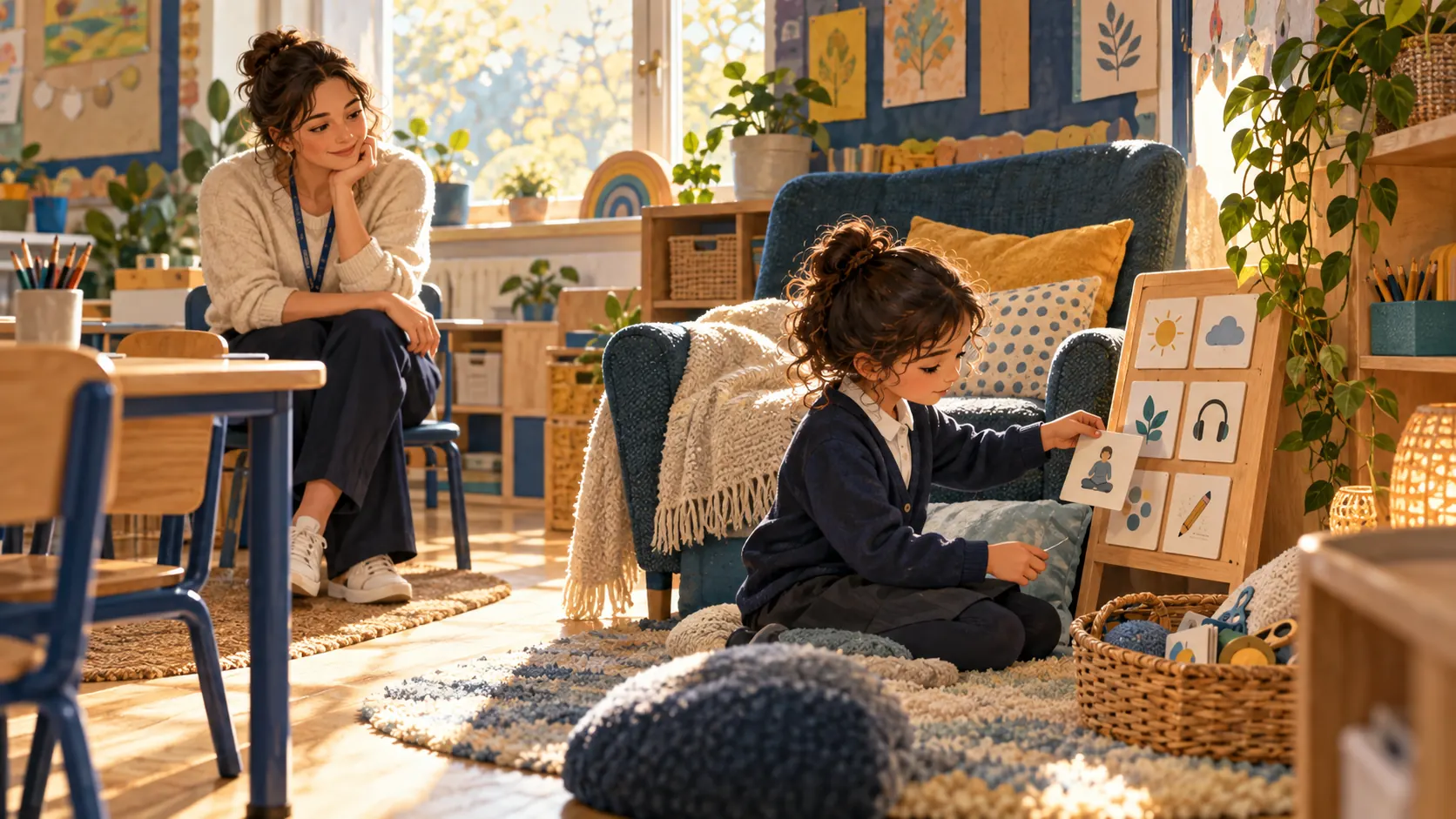
A calm corner in a classroom is a planned space where a pupil can pause, use an agreed support and return to learning when ready. It should feel safe and predictable. It should not be used as a punishment, a place to isolate pupils or a substitute for listening to what is making the day difficult.
There is no single setup that suits every class. Build the space around the pupils who will use it, the adults who will support it and the room you have available.
1. Decide what the space is for
Agree a simple purpose with staff and pupils. For example: “This is a place to pause, choose a helpful strategy and get support if needed.” Explain how a pupil can use it, how long they can stay and how they can rejoin the lesson. Make the expectations calm, clear and consistent.
2. Invite pupil input
Ask what helps pupils feel more settled and what makes a space uncomfortable. A child may prefer a seat facing the room rather than a tent, quiet rather than music, or no sensory objects at all. Offer choices and check them regularly. Do not assume that every pupil with the same diagnosis wants the same support.
3. Keep the setup simple
Start with a comfortable seat, a small number of clear visual choices and only the materials pupils have agreed to use. Keep walkways open and make sure the area can be supervised. Avoid filling the space with bright displays or lots of objects if those could distract or overwhelm the pupils using it.
4. Teach how to use it before a difficult moment
Introduce the calm corner when the class is settled. Model how to choose an option, ask an adult for help and return to the activity. Practise the routine briefly, without requiring pupils to disclose private feelings in front of classmates.
5. Protect dignity and access
Make the space available through a predictable, non-shaming routine. Do not send a pupil there as a consequence or use it to remove them from learning without support. Make sure pupils who cannot easily reach or use the corner have another accessible way to request a pause or adult help.
6. Notice what is working
Check in privately with pupils and staff: Is the space being used as intended? Does it help pupils rejoin? Is anything confusing or uncomfortable? If a pupil is regularly distressed, the calm corner alone will not resolve the underlying issue. Work with the family, SENCO or pastoral team to understand what additional support may be appropriate.
7. Review and adapt
Keep what is useful, remove what is not and update the routine when the class or pupil's needs change. A calm corner should be one part of an inclusive classroom approach, alongside positive relationships, clear routines and appropriate individual support.
Further reading
- Department for Education: Promoting and supporting mental health and wellbeing in schools and colleges
- Education Endowment Foundation: Universal approaches to inclusive teaching
- Department for Education and Department of Health and Social Care: SEND Code of Practice