
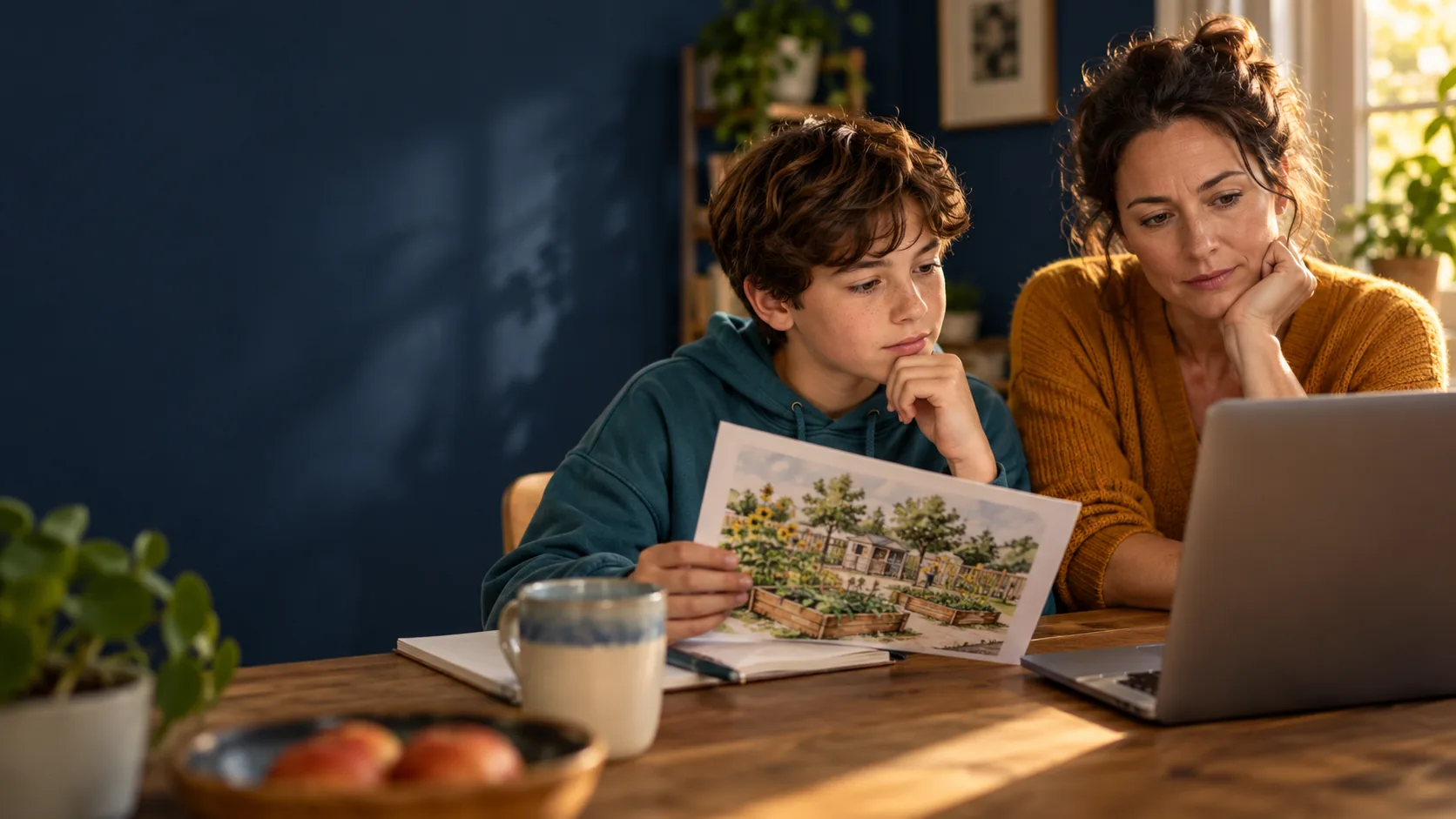
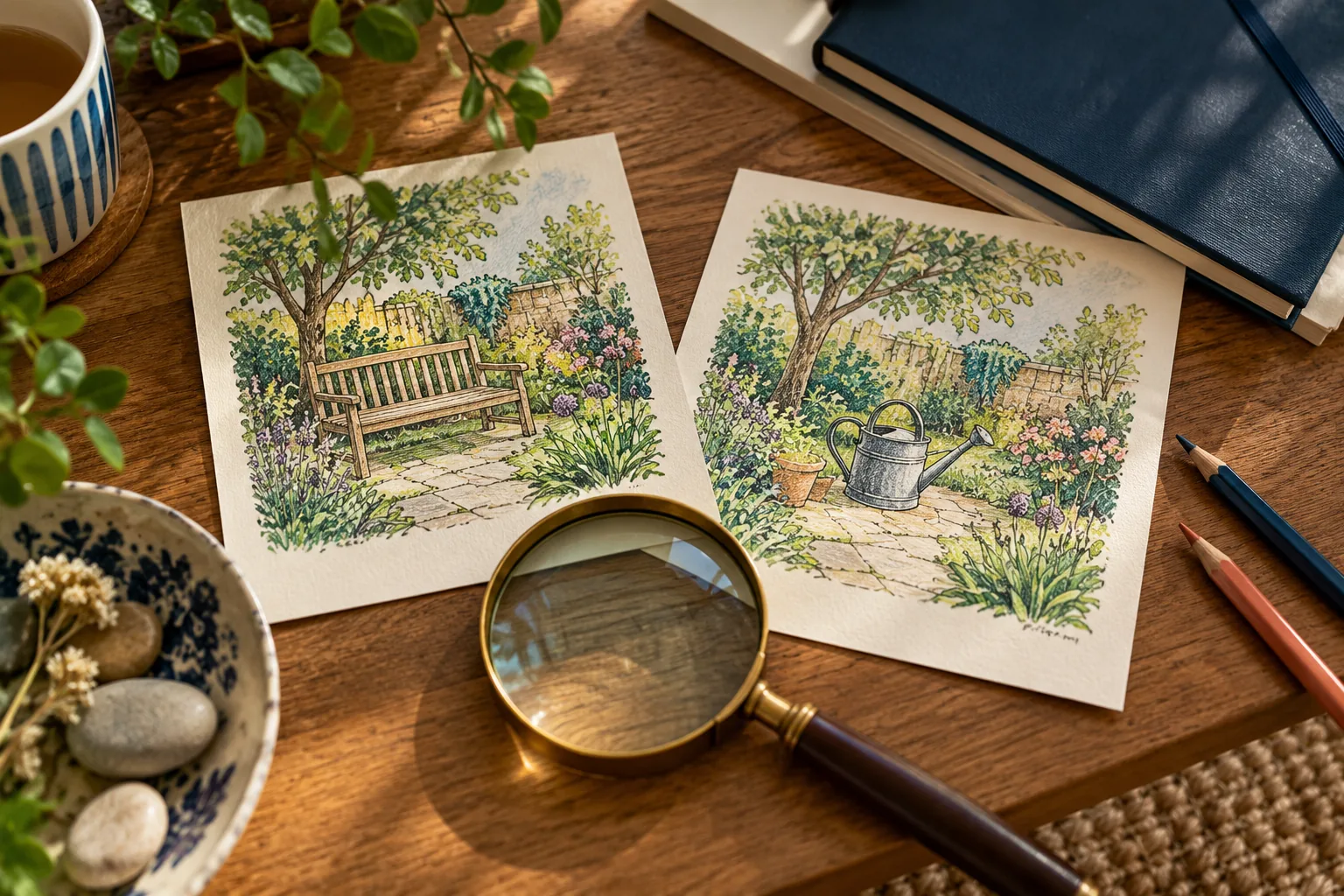
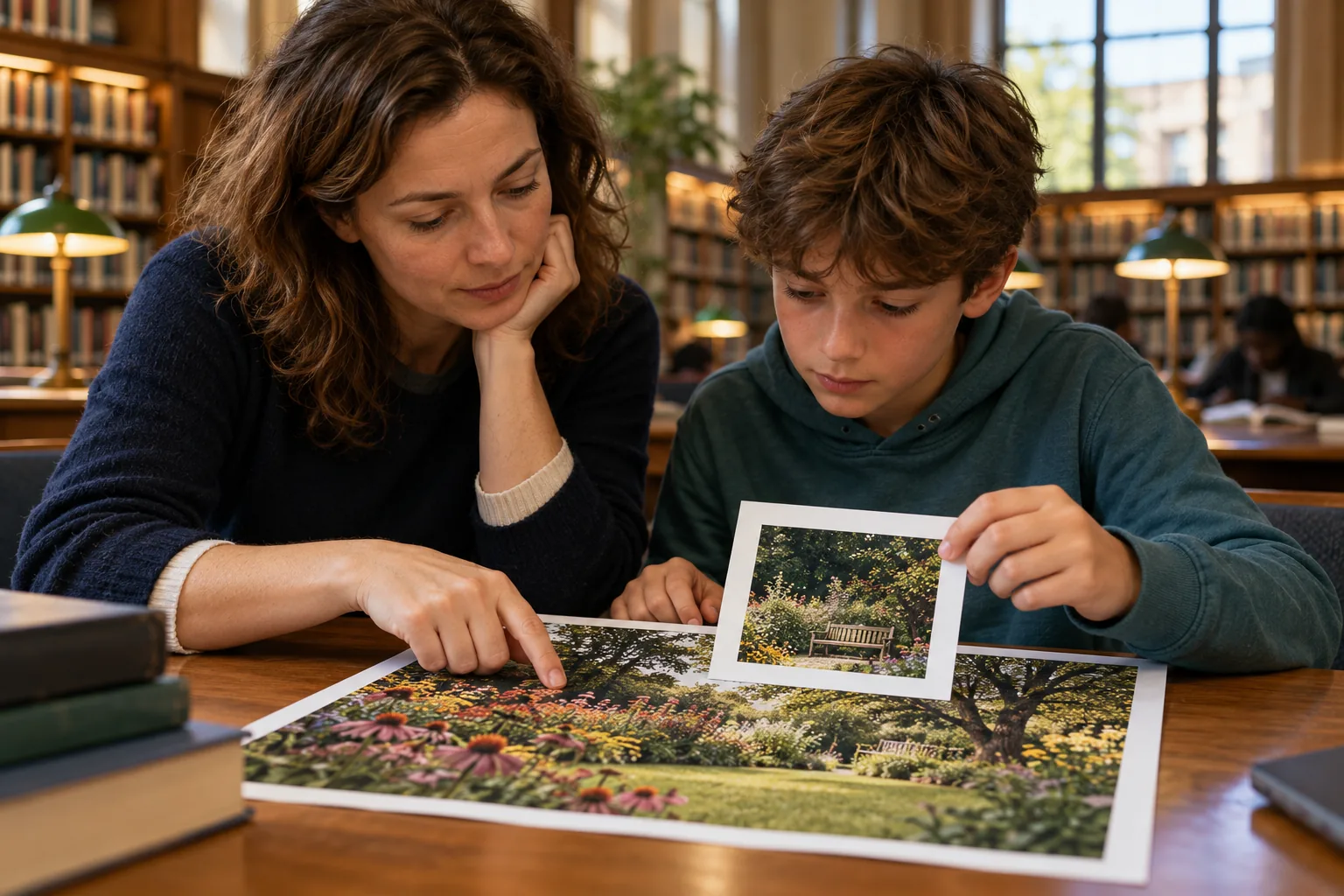
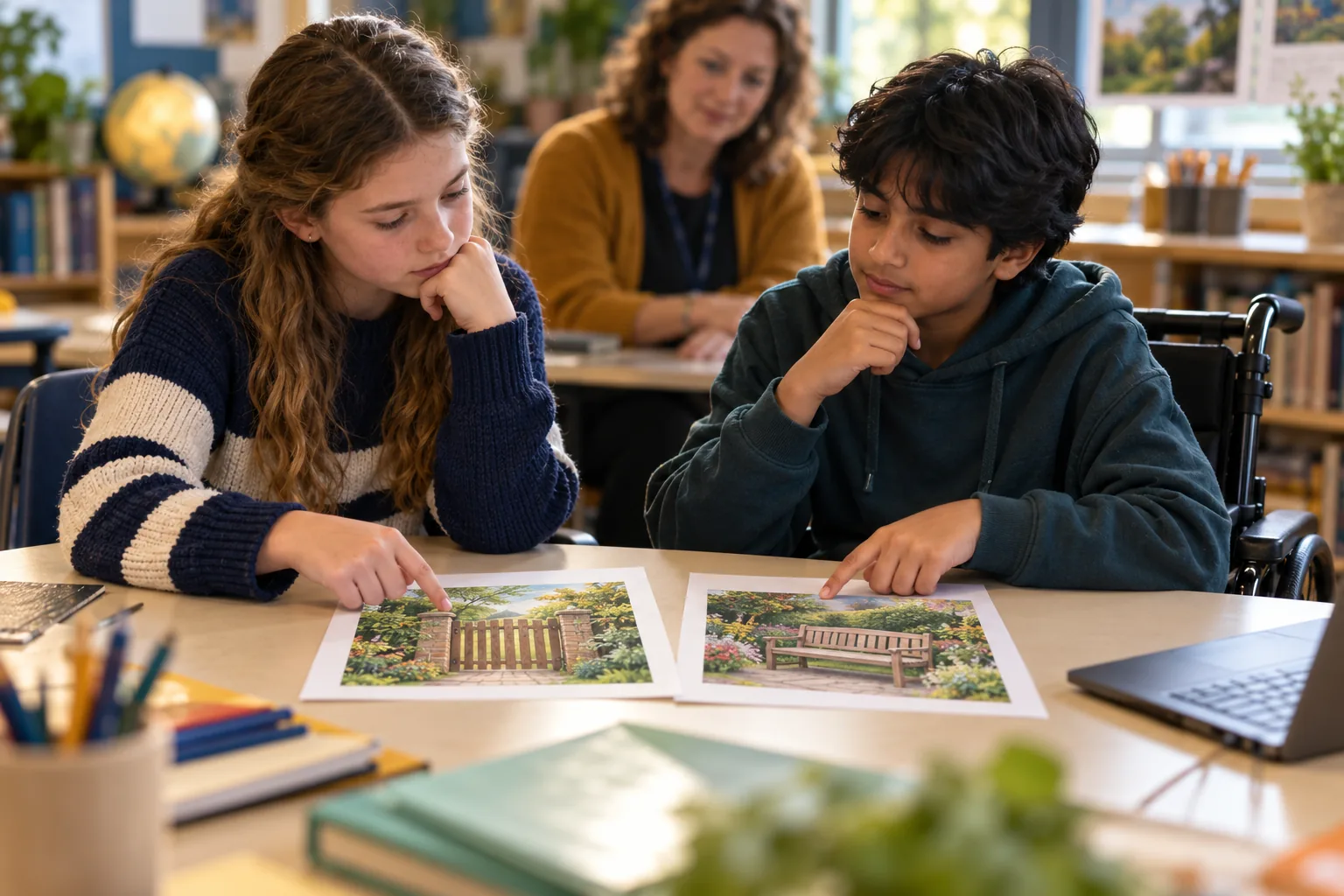
Hero and four landscape scenes: generated illustrative mockups, not photographs of real school use. The book source page is labelled separately.
Start with a question, not a contest
A surprising post appears in a family chat. A short video seems to prove something. A child asks whether a claim is true, and the adult is not sure either. That is a useful starting point for learning: neither person has to pretend to know the answer.
I’d get into the habit of asking, ‘What could we check together?’ You can leave a post in the chat while you look for the original source or find out what happened just before the clip starts.
This guide offers a short, supported activity for roughly ages nine to thirteen, with adaptations for different readers and communication preferences. Start with the invented example below before considering a carefully chosen real source. No social-media account, public posting or independent internet search is required.
The garden activity is newly authored supplementary material for this article. It is not an original task from one of our books or a verified printer-friendly companion. A separate example later in the guide links to an actual, unchanged source page from The Last Broadcast.
What the published guidance says
England’s computing programme of study, published on 11 September 2013, includes evaluating digital content critically at Key Stage 2. This curriculum reference applies to England; arrangements differ across the UK.
The UK Safer Internet Centre’s misinformation guidance encourages adults to discuss online information with children and check before sharing. It also recognises that misleading content can be upsetting. Its advice supports conversation rather than expecting children to manage online uncertainty alone.
The sequence below is our editorial teaching suggestion, not a government lesson plan or an independently evaluated intervention. Its purpose is to practise explaining a judgement with evidence. One successful activity does not establish that a child can recognise every misleading post.
Set up a small, safe investigation
Choose a low-stakes subject such as a fictional garden, club opening time or lost library book. Avoid beginning with frightening news, health advice, accusations about real people or a child’s own embarrassing mistake. The challenge should be reasoning about information, not coping with distressing content.
Use three short pieces of information that you write or read aloud. Keep them visibly labelled as invented practice material. On paper, a shared document or an adult’s spoken explanation, introduce this example:
Practice claim: “The community garden has closed for good.”
Practice source A: A message forwarded on Monday says, “The garden gate was locked on Sunday. It must have closed for good.” The original writer is not identified.
Practice source B: A notice from the fictional garden organiser says, “The garden is closed on Sundays in November. It opens on Wednesdays and Saturdays.” The notice is dated this week.
Practice source C: A photograph shows a locked gate. There is no date or location attached to the picture.
Tell the child that all three are made up. The aim is to compare what each supports, rather than guess what the adult wants to hear. You can offer one source at a time, read it aloud or leave the sources visible throughout. Do not make remembering the wording the hidden test.
1. Say exactly what the claim is
Ask, “What are we being asked to believe?” In this example, the claim is permanent closure. It is not merely that someone saw a locked gate.
Underline, point to or repeat the important words: “closed for good”. If the child prefers, offer two statements to choose between: “closed on one day” and “closed permanently”. Ask which one matches the message. A child can make that distinction without writing a paragraph.
This small step keeps the investigation manageable. A long post might contain several claims, an opinion and a request to share it. Trying to decide whether the whole thing is “true or false” at once can obscure which part needs checking.
If a real source contains unfamiliar vocabulary, explain it before asking for a judgement. Words such as “permanent”, “temporary”, “cancelled” and “postponed” change the meaning of a message. Understanding them is part of the task, not a shortcut that makes it too easy.
2. Separate an observation from an explanation
The forwarded message reports a locked gate and adds a conclusion. Even if the observation is accurate, permanent closure is only one possible explanation. The garden could have been closed for that day, opened later or used a different entrance.
Ask the child to finish two sentences in any suitable way: “The message says someone saw…” and “The writer thinks this means…”. An adult can record the response. Keep the difference visible without demanding technical terminology first.
An inference is an interpretation drawn from information. It can be sensible and still need checking. An opinion expresses a judgement or preference: “This is the best garden” cannot be checked in the same way as an opening time. A statement presented as a fact may also be wrong; calling something a fact does not make it established.
For this activity, accept careful language such as “perhaps”, “the message suggests” or “we do not know yet”. The goal is not to ban inference. It is to avoid presenting an interpretation as if it had already been confirmed.
3. Look for the source, date and missing context
Now compare the information available about each source. Who produced it? When? What does it actually cover? What is missing?
In the invented example, source B identifies the organiser and gives current opening days. Source A is forwarded without an identified original writer. Source C lacks a date and location. Those differences affect how useful the sources are for this particular question.
Do not turn these clues into automatic rules. A named organisation can make an error. A recent post can repeat an old story. A photograph may be genuine but show a different place or moment. Attractive design and confident wording are not enough to settle the question.
For a simple picture exercise, use a photograph you own or are allowed to use. Place a loose paper frame over part of it, then lift it away. What information became visible? Keep the full original intact. This demonstrates missing context without altering an approved book illustration or presenting an edited picture as new evidence.
4. Compare evidence that answers the same question
Return to the exact claim: has the garden closed permanently? The organiser’s notice points to scheduled opening days, so it contradicts that claim within the invented scenario. The gate photograph alone cannot establish permanent closure.
Ask, “Which source helps most with this question, and why?” A useful answer might be, “The notice gives opening days, but the photograph only shows a gate.” It does not need elaborate vocabulary to show good reasoning.
For a real-world example, an adult can help locate the relevant organisation’s current information through a known route. Avoid opening an unfamiliar link simply because it appears in the message being checked. Use your setting’s online-safety arrangements and an adult-selected source.
Two pages repeating the same original message are not necessarily two independent confirmations. With older learners, trace whether both reports point back to one announcement. The activity is about the quality and relevance of information, not collecting the largest number of matching search results.
If evidence conflicts or remains incomplete, keep that uncertainty visible. “We have not confirmed it” is different from “it is definitely false”. Children do not need to manufacture a final answer to finish the activity.
5. Choose what to do next
Offer three possible outcomes: the claim is supported by the information available; the information points against it; or more checking is needed. Ask the child to explain one reason for their choice.
In our invented garden case, a proportionate response is: “The notice says the garden opens on Wednesdays and Saturdays. A locked gate on Sunday does not show it has closed permanently.” That corrects the conclusion without insulting the person who forwarded the message.
Do not actually post the practice material. If you later use a real example, model pausing rather than forwarding something uncertain just to ask others whether it is true. An adult can decide how to verify or correct a message without spreading it further.
If a child brings you upsetting content, respond to their concern before turning it into a lesson. They do not have to keep looking at it to prove what happened. In school, follow safeguarding procedures and involve the appropriate staff member. A practice activity is not a substitute for responding to a real concern.
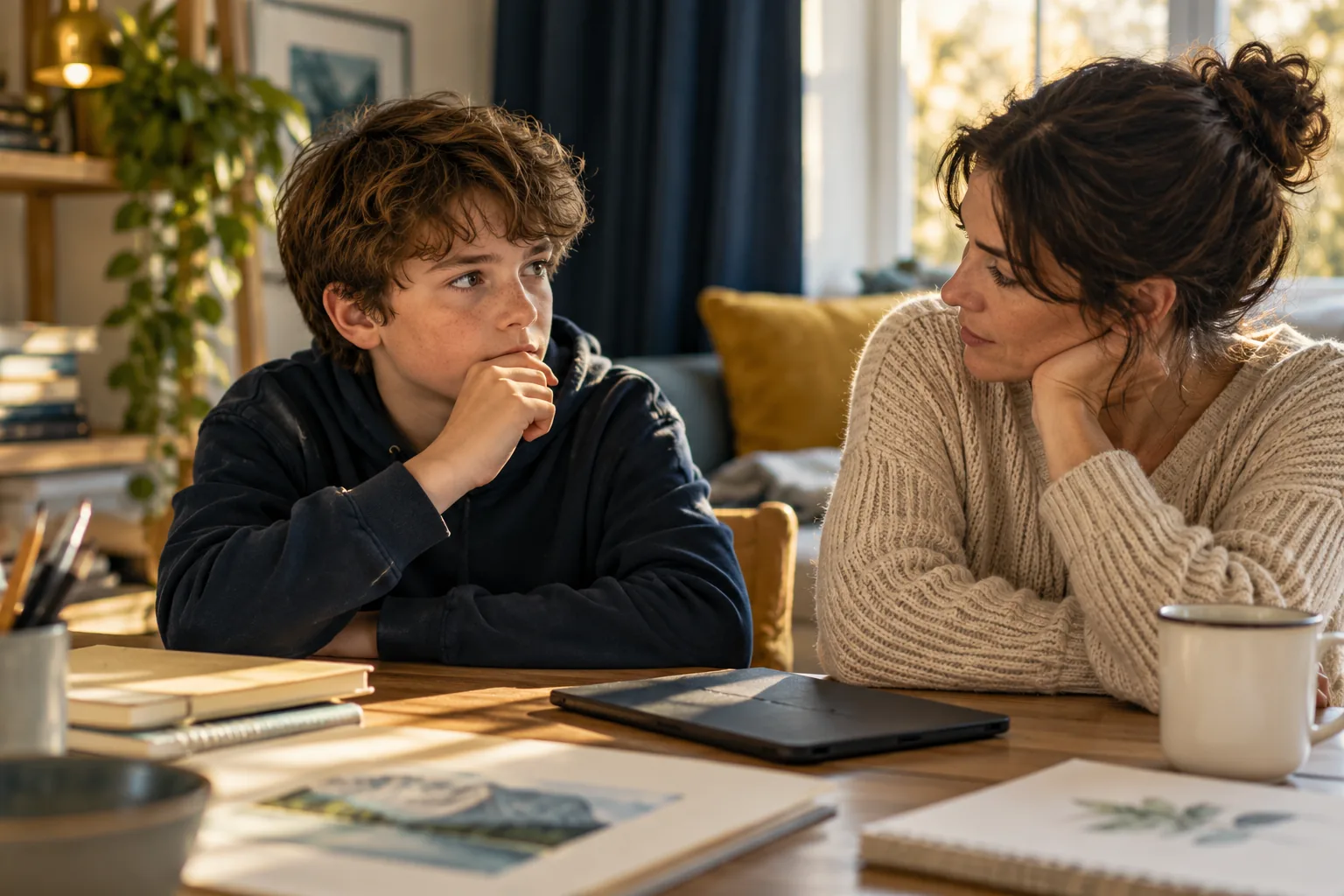
Make the thinking accessible without removing the question
Keep the three sources available and use the same short question throughout. Offer read-aloud support, familiar communication aids, larger text or an adult scribe where helpful. Children can point to the relevant source and explain through their preferred communication method.
Work with one claim and two sources first if three create unnecessary load. You can add the undated picture later. For a learner ready for more challenge, change the date of the fictional notice and ask whether the judgement should change. Explain that this is a new version of the practice case.
Avoid scoring how quickly children spot an error. Give time to reconsider and make changing a view an ordinary part of the activity. An adult can model this honestly: “I thought the locked gate settled it. The opening notice gives me a reason to change my mind.” This is suggested teaching language, not an account of Jonathan’s personal experience.
For children who find recording difficult, our writing-support guide offers ways to preserve their ideas without making handwriting the main demand. An evidence choice and a short explanation can be enough for this session.
An original book example for older readers
For a related fictional investigation aimed at ages eleven to fourteen, The Last Broadcast includes a source-desk page comparing a station notice with corridor observations. The actual page is shown below, complete and unchanged.
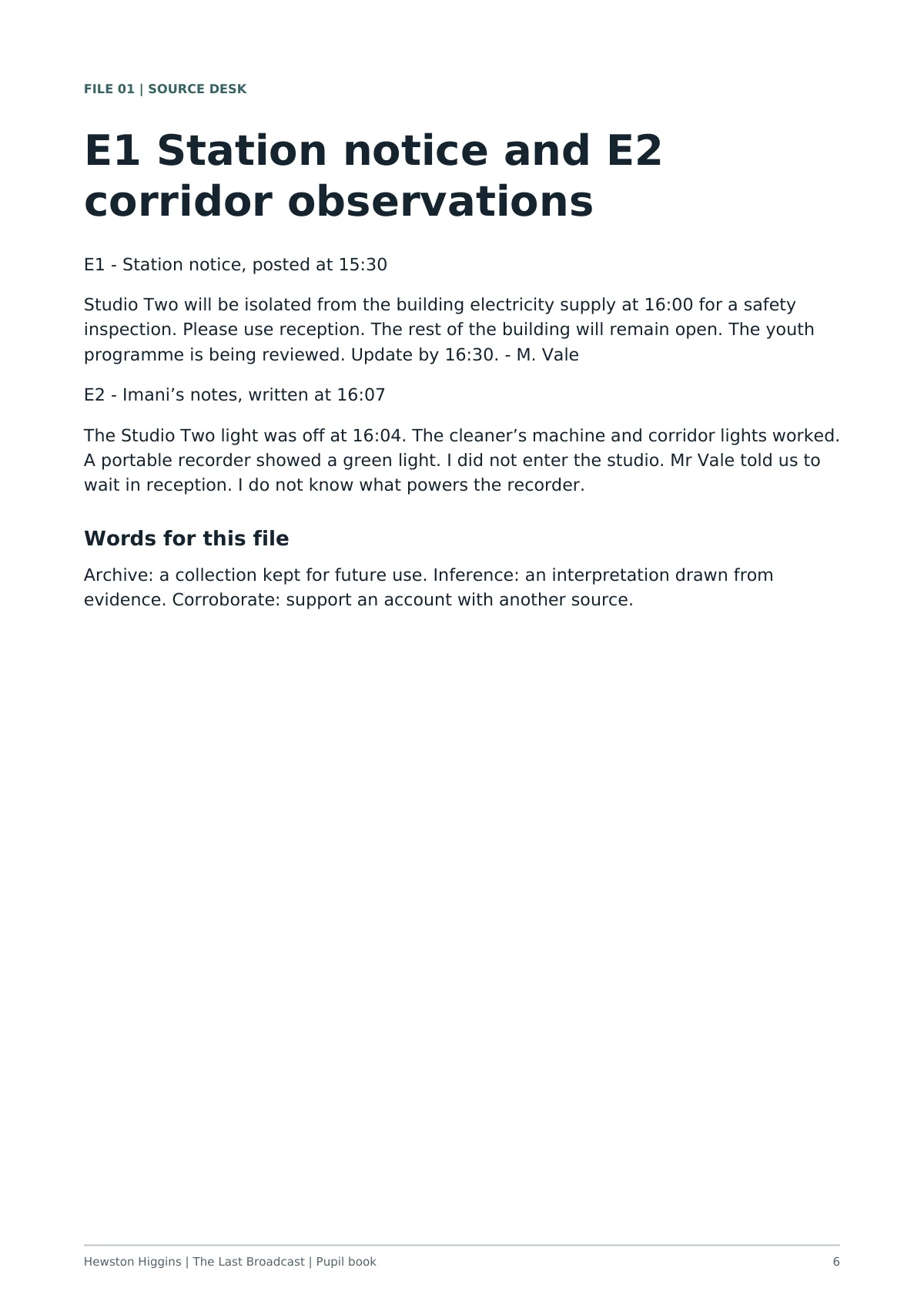
The notice says that Studio Two will be isolated from the building electricity supply for a safety inspection. Imani’s observations include a recorder with a green light, alongside the explicit statement that she does not know what powers it. That gap matters: the observation alone does not establish how the recorder is powered.
This is a product example of reasoning with fictional sources, not evidence that the book produces measured media-literacy gains. The garden activity above remains a separate supplementary exercise. For the book’s resources, current access arrangements and print status, use its detailed product page.
You can find other purposeful learning routes in our practical guides. If the next session is about creating rather than checking a message, the creative activities page offers a different starting point. Checking a claim and inventing a story are both worthwhile, but they ask the learner to do different things.
Sources and editorial scope
- Department for Education: National curriculum in England — computing programmes of study. Published 11 September 2013; applies to England.
- UK Safer Internet Centre: Supporting critical thinking and reliability online. UK online-safety guidance for families and education settings.
Sources checked 31 October 2026. The garden case and teaching sequence are original editorial examples. Generated scenes are illustrative mockups of imagined learning situations, not photographs demonstrating real school use or endorsements. The separately labelled book source page is an existing approved asset, reproduced without cropping or altered instructions.