
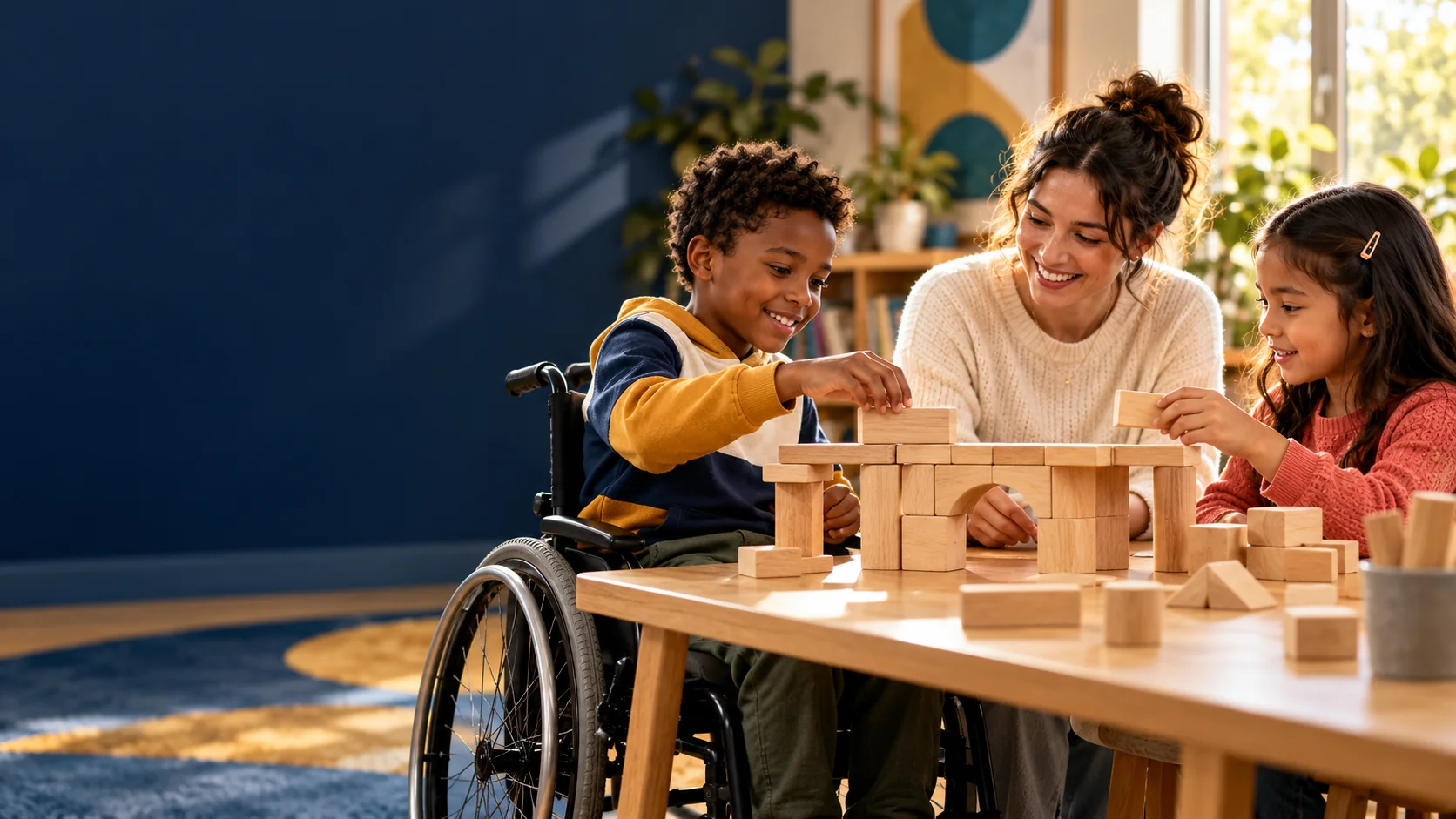
Start with a shared game, not a test of patience
A child reaches for the next piece before someone else has finished. Another stays silent while the group moves on. A third leaves because the game is too noisy. All three can be described as finding turn-taking difficult, but they may need quite different changes to the activity.
Give the children something they’ll want to do together, like building a tower or making up the next bit of a story. Show whose turn it is with a card or an object they can pass round.
This guide offers five adaptable activities for families, primary teachers, teaching assistants and SENCOs. Most use ordinary household or classroom materials. Choose the version that suits the child’s interests and access needs, rather than treating an age label as a starting requirement. You can use the ideas with younger children or make the challenge more sophisticated for older primary pupils.
The activities are original educational suggestions, not a prescribed speech and language programme. They offer opportunities to practise participating together; they do not promise a particular developmental outcome.
What the guidance says — and what these games can offer
The evidence and guidance: Alder Hey Children’s NHS Foundation Trust describes turn-taking as a foundation for two-way communication. Its parent information recommends leaving a pause for the child to respond and recognises that a response can be a movement, look, smile or sound. The page was last reviewed on 12 March 2026. Read Alder Hey’s guidance.
Kent Community Health NHS Foundation Trust’s leaflet, published on 15 September 2026, suggests beginning with one adult and one child, keeping turns short and introducing another participant as the activity becomes manageable. Read Kent’s turn-taking leaflet.
In England, the primary English curriculum includes collaborative conversation and discussion. Its non-statutory guidance describes teaching pupils how to participate constructively in conversations and debates. This curriculum reference applies to England; the activities themselves can be adapted elsewhere in the UK. See the English programmes of study.
Our practical approach: make the exchange understandable, offer a usable way to contribute and let the child influence what happens. A quiet child’s participation should not depend on giving a long spoken answer. A lively child should not have to sit absolutely still to prove they are listening. The purpose is a meaningful exchange, not a performance of perfect behaviour.
Before you start: make a turn easy to recognise
Choose one familiar activity and one partner. Explain or demonstrate the pattern once: you add something, then I add something. Show the first exchange rather than giving several instructions at once. Agree how to stop or take a break before introducing a more complicated challenge.
Leave enough time for a response. A child may be planning a movement, choosing a symbol or deciding what to say. Filling every pause with another question can turn an invitation into pressure. Watch for the child’s usual ways of showing interest, refusal or a wish to continue, and respond to those messages.
Keep communication aids within reach throughout. Do not remove a child’s device or require them to earn access to it. Use established communication methods and any individual advice already agreed with the family or relevant professionals. Eye contact is not an entry requirement for these games.
Use materials that are appropriate for the children present. Large pieces are often easier to handle than tiny components; avoid small loose objects where there is a choking or mouthing risk. Offer a table, tray or floor version to suit positioning and mobility. A simple activity made accessible is more useful than an elaborate activity somebody cannot reach.
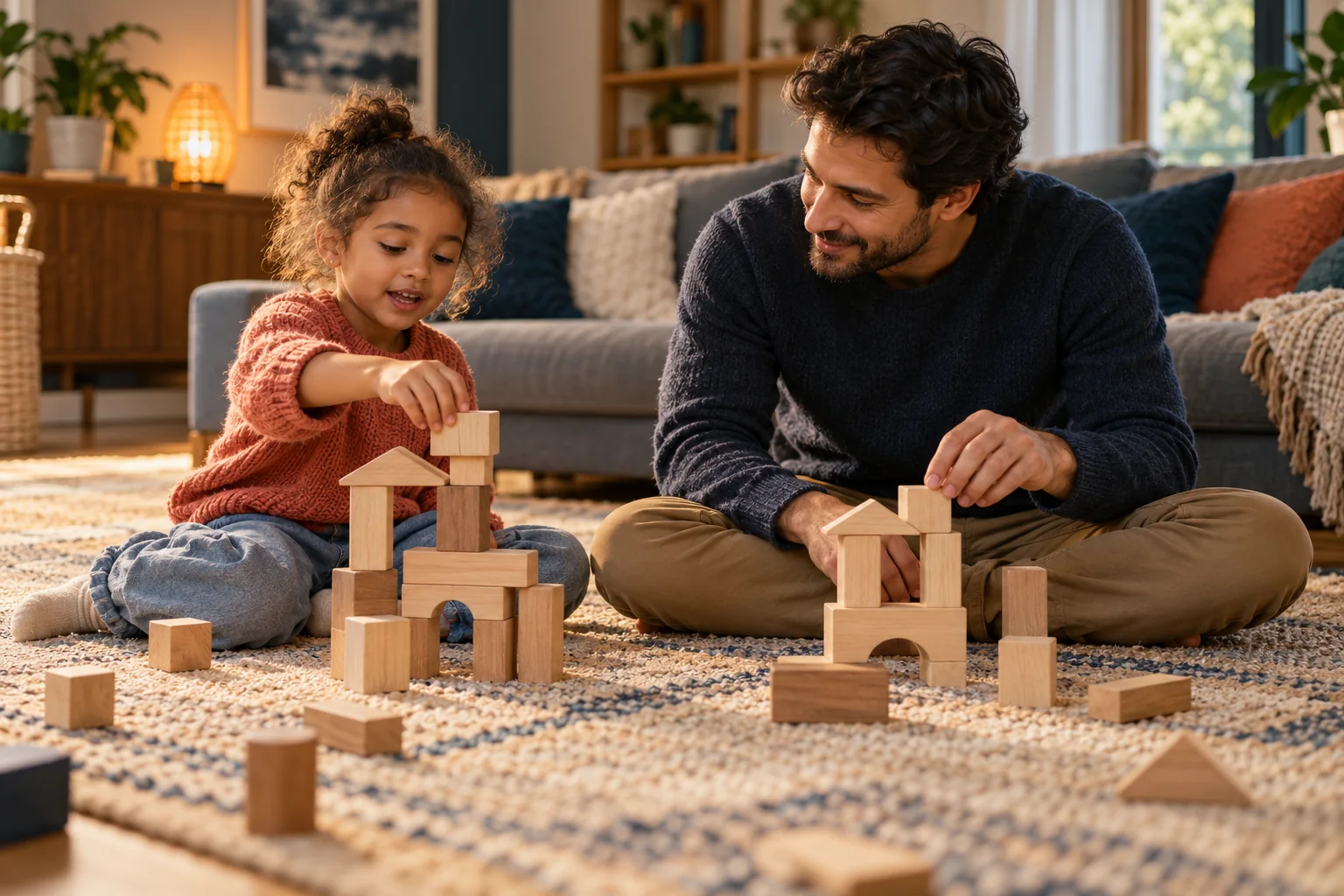
1. Build a bridge with two different jobs
You need: large construction pieces and a toy or picture that can travel across a short bridge.
Begin with a shared goal: can you make a route across a pretend river? One person chooses where a support goes; the other adds a top piece. Demonstrate one exchange and then switch roles. There is no need to count a large number of turns. Two enjoyable exchanges may be enough for the first attempt.
If choosing and building at the same time is difficult, separate those jobs. A child can select from two pieces by pointing, signing, speaking or using their communication system. Their partner places the selected piece. Both contributions should change the bridge; choosing is a real role, not a consolation job.
For older pupils, introduce a design question: how could the bridge carry a heavier toy, or leave room for a boat underneath? Ask partners to try one idea each before comparing what happened. Keep the engineering challenge interesting without turning the session into a race.
Notice whether the child understands when their contribution is needed. If the sequence is unclear, model it again or simplify it to one piece each. If sharing a structure is unwelcome today, build parallel bridges and exchange an idea instead. Participation can begin alongside another person.
2. Draw a journey that neither person controls alone
You need: a large sheet of paper and a choice of comfortable drawing tools.
One person draws a starting point: perhaps an island, a doorway or a hill. Their partner adds a route leading away from it. The first person then adds somewhere the route could reach. Continue for as long as both people want to develop the picture.
Keep ownership clear: each contribution stays on the page. Avoid correcting a child’s drawing or rewriting their idea because it does not match the adult’s plan. The activity is about building on what somebody else offers.
A child who does not want to draw can choose between two locations, place a reusable picture or direct a partner. Someone with a motor difficulty might prefer a broad marker, a digital drawing tool or a partner who records their selection. Offer the same creative authority whichever method they use.
For a classroom pair, add one purposeful question: which part of the journey would be hardest, and what could help? Children can answer through a drawing, gesture, communication aid or short explanation. The shared picture gives them something concrete to respond to.

3. Trade a tiny rhythm — with a quiet alternative
You need: hands, a tabletop or two suitable sound-makers, plus an agreed quiet version.
Offer one simple pattern, such as two gentle taps. Your partner can copy it, change it or choose the next sound. Then swap the role of starting the pattern. This is an exchange, not a memory examination; there is no need to mark a response wrong.
Agree the sound level before starting. Some children may prefer a visual rhythm: place a blue counter, then a gold counter, and let the partner add the next pair. Others may enjoy a small movement sequence. Ask what is comfortable rather than assuming that music or clapping is enjoyable for everyone.
If copying is too much, take turns producing one independent sound or placing one large shape. If the activity becomes repetitive, change who decides the rule. An older child might invent a short signal for a pretend spacecraft or design a pattern that represents rain becoming a storm.
Finish while the exchange is still welcome. A child who communicates “enough” has contributed useful information. Responding to that message models the two-way listening the activity is intended to encourage.
4. Run a pretend shop with a genuine choice
You need: a few suitable objects or pictures and a surface where both partners can reach them.
Give each participant a role: one offers the available items, the other chooses. The shopkeeper responds to that choice and hands over the item, or places it where the customer can access it. Swap roles after a short exchange if both participants want to.
Start without money, prices or a long shopping list. Those additions can make an appealing activity unnecessarily demanding. Once the exchange is familiar, older pupils can add a budget, compare two options or explain why an item suits a fictional customer.
Accept different ways of requesting. A spoken sentence is one possibility; a sign, symbol selection or established gesture is another. Model useful language alongside the exchange without withholding an item until the child repeats a particular phrase.
For groups, use separate pairs rather than one large queue. The aim is repeated meaningful interaction, not a long wait while everybody watches a single adult. Keep useful communication vocabulary available in both roles, including ways to decline, change a choice or ask for clarification.
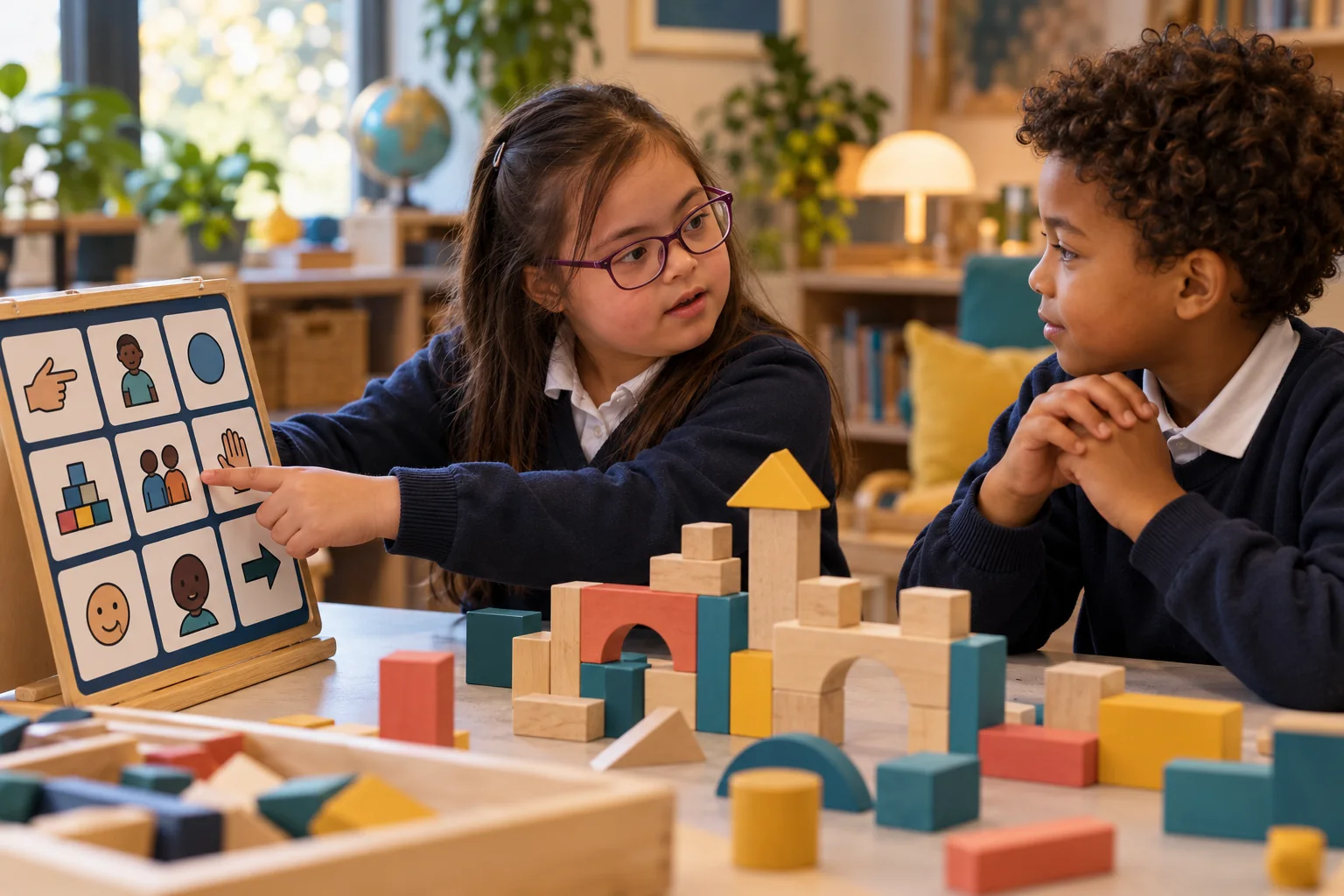
5. Make an outdoor pattern together
You need: a clear workspace and safe, suitably sized materials such as large leaves or reusable outdoor shapes.
One partner places an object; the other decides what could come next. You might make a curved trail, a symmetrical design or a pattern around a planter. Nobody has to copy an adult’s model. Agree whether you are continuing a repeating rule or inventing something freely.
Make the workspace accessible from the start. A raised tray or tabletop can bring the activity within reach. Indoors, use large paper shapes instead. If handling natural materials is uncomfortable, a child can direct where a partner places their chosen item.
Older pupils can take turns explaining a design decision or predicting how the pattern will continue. Younger children might simply choose a colour or position. Keep the thinking appropriate to the learner while retaining a shared outcome.
This activity also gives adults something useful to observe: does the child prefer choosing, arranging, explaining or watching before joining? That information can help shape the next invitation. It is not a score or a diagnosis.

When taking turns becomes difficult, change the setup
Before increasing the demand, check what may be getting in the way. Is the child waiting through several lengthy turns? Is the next step unclear? Can they reach the materials and their communication aid? Are the sounds, textures or group size making participation unpleasant?
Try one change at a time. Reduce the group to a pair, shorten the exchange, provide duplicate materials or demonstrate the sequence again. Letting partners work alongside each other can be a useful option when sharing a single object is creating conflict. Do not use a favourite possession as the compulsory shared item.
If one participant regularly dominates, give both people a meaningful decision rather than simply telling the quieter child to speak up. An adult can say, “Let’s give your partner time to choose,” then wait. Model repairing an interruption yourself: “I started before you finished. I’ll pause.”
Where communication or participation difficulties persist, talk with the family, class teacher or SENCO about the specific barriers observed and any existing support. Follow individual professional advice where relevant. A game should complement that support, not delay a conversation about help.
A manageable plan for tomorrow
Choose one activity, prepare the materials and offer a short invitation. Watch for two things: did each person have a usable way to contribute, and did their partner respond? Note what helped, rather than counting how many times the child needed a reminder.
At school, record the useful adjustment in ordinary planning language: “Two-person drawing worked when choices stayed visible,” for example. At home, simply remember the version the child wanted to return to. There is no need to create another piece of paperwork for every shared game.
For more ideas, explore our learning resources, free samples and books and learning worlds. If your setting uses materials regularly, compare the current membership options and check the access terms before choosing. You do not need to buy anything to try the activities above.
Taking turns is easier to practise when there is a reason to come back for another contribution. Start with something the child wants to do, make room for their way of communicating and let the shared activity grow from there.
Sources and scope
- Alder Hey Children’s NHS Foundation Trust: Ideas to Encourage Turn Taking, last reviewed 12 March 2026.
- Kent Community Health NHS Foundation Trust: Turn taking, published and last edited 15 September 2026.
- Department for Education: National curriculum in England — English programmes of study, spoken language for years 1–6; England only.
Sources checked 27 October 2026. The five activities and adaptations are editorial suggestions, not a validated intervention or personalised clinical advice. Images are AI-created editorial illustrations of imagined situations.