

On 9 October 2026, the government published the final report of the independent review into mental health conditions, ADHD and autism. Its central message is both simple and overdue: people should be able to receive meaningful support based on their needs, rather than being forced to wait for a diagnosis before help begins.
I think about families having to explain the same thing again at each appointment, and teachers trying to help while a referral sits in a queue. The child still has to get through the school day while the adults are waiting.
But a promise is not yet a service.
I have ADHD and have spoken openly about the difficulties I experienced at school and throughout my life. That is one reason I care so deeply about early intervention. I know what it means when a child’s needs are misunderstood, when their behaviour is judged before their barriers are explored, and when support arrives after damage has already been done.
This article separates the verified findings and government commitments from my own proposed view of what must happen next.
What the independent review actually found
Verified facts
The 599-page review was commissioned by the Department of Health and Social Care and chaired by Professor Peter Fonagy. It examined prevalence, demand, assessment, service quality and support for mental health conditions, ADHD and autism.
The review says the rise in mental-health problems is real and cannot be explained by greater awareness alone. It also says the available evidence suggests that the underlying population prevalence of ADHD has remained broadly stable or increased only modestly, while recorded diagnoses and demand for assessment have risen dramatically.
Among children aged 6 to 11, recorded ADHD prevalence increased from 0.45% in 2000 to 2.70% in 2025. Among 12 to 17-year-olds, it rose from 0.26% to 3.88%. Monthly ADHD referrals increased from about 5,000 in 2019 to around 17,000 in 2024. By the end of 2025, more than 560,000 ADHD referrals were open, alongside community paediatric waiting lists of approximately 173,000, most of which related to ADHD assessment.
For autism, the review reports more than 254,000 open referrals by December 2025, with over 90% waiting longer than 13 weeks. Autism-related SEND recorded in schools rose from 1.5% of pupils in 2016 to 3.3% in 2024.
Those figures do not mean that children’s needs are less real. The review explicitly warns against that conclusion. It says people are seeking answers and support for genuine difficulties, and that the system’s over-reliance on diagnosis has created a route to help that cannot keep pace with demand.
Sources: DHSC final report and official executive summary, both published 9 October 2026.
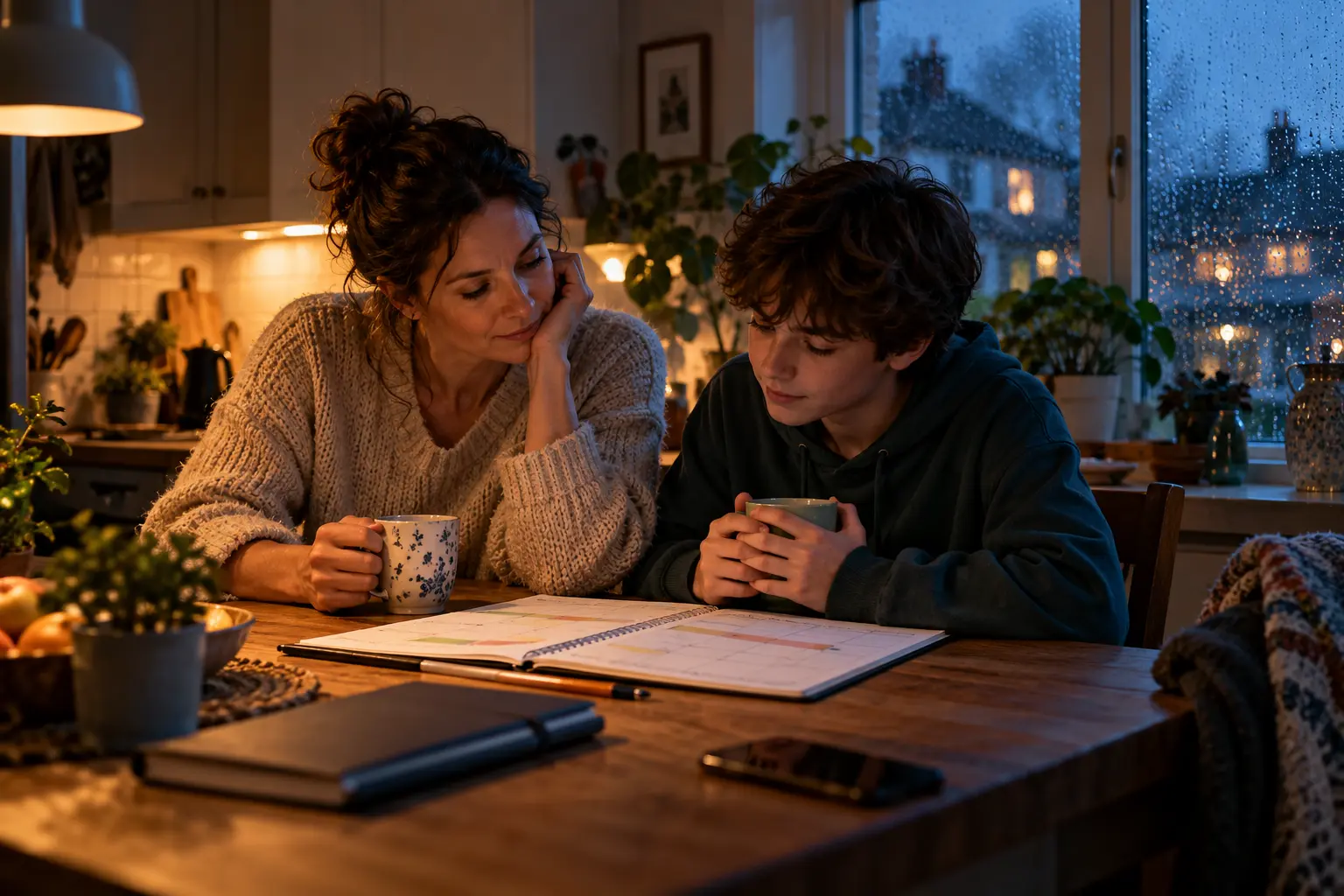
Caption: Waiting is not a neutral period. Families still need practical support, clear communication and a plan.
A waiting list is not support
Verified facts
The review says delays themselves can cause harm. It cites national evidence suggesting that the proportion of people whose difficulties worsen while waiting rises from around one in four among those waiting for less than two weeks to more than seven in ten among those waiting longer than six months.
It also makes an important distinction: diagnosis is not an outcome on its own. Too often, the diagnostic process ends without timely evidence-based treatment, adjustments or ongoing support.
The review therefore recommends a “needs-led plus diagnosis” system. It calls for a “no wrong front door” approach, a clinically led review of existing waiting lists and evidence-based support while people wait. Crucially, it says nobody should be removed from a waiting list without being connected to appropriate help, and that alternatives should be actively arranged rather than merely signposted.
My proposed view
This is the part that must not be watered down.
“Support while waiting” cannot mean sending a family another list of websites. It cannot mean handing a teacher a generic leaflet and expecting an already stretched school to create a complete intervention from nothing. It cannot mean quietly moving people off a list because they were offered a webinar.
Support should be practical enough to use tomorrow. It might include a clear individual plan, environmental adjustments, trusted information, visual tools, communication support, regulation strategies, help with routines and a named person who checks whether any of it is working.
It must also be proportionate. Some children need small, immediate adjustments. Others need specialist assessment, treatment or protection urgently. A needs-led system should identify that difference; it must not become a cheaper way to deny access to diagnosis or specialist care.
Diagnosis still matters—needs-led support must not become diagnosis denial
Verified facts
The report examines underdiagnosis, misdiagnosis and overdiagnosis and says all three can exist in the same system. It does not conclude that overdiagnosis is occurring at scale. Instead, it calls for comprehensive, high-quality assessment, timely diagnosis where needed and support based on need rather than diagnosis alone.
The government’s response says clinically appropriate diagnosis and treatment will continue, including when medication may be required. It has also said it intends to work towards making all ADHD and autism diagnostic assessments a Care Quality Commission-regulated activity and to review advertising practices.
Source: Government response, 9 October 2026.
My proposed view
There is a false argument that appears far too often: either we support people before diagnosis, or we take diagnosis seriously. We must do both.
A diagnosis can help a person understand themselves, protect access to appropriate treatment, inform reasonable adjustments and replace years of blame with a clearer explanation. For many people, it is deeply meaningful. Needs-led support should remove an unnecessary barrier to early help; it should never be used to make diagnostic pathways harder to reach.
The test is straightforward: are people receiving more useful support, sooner, while retaining access to robust assessment when it is needed? If the answer is no, the reform is not working.
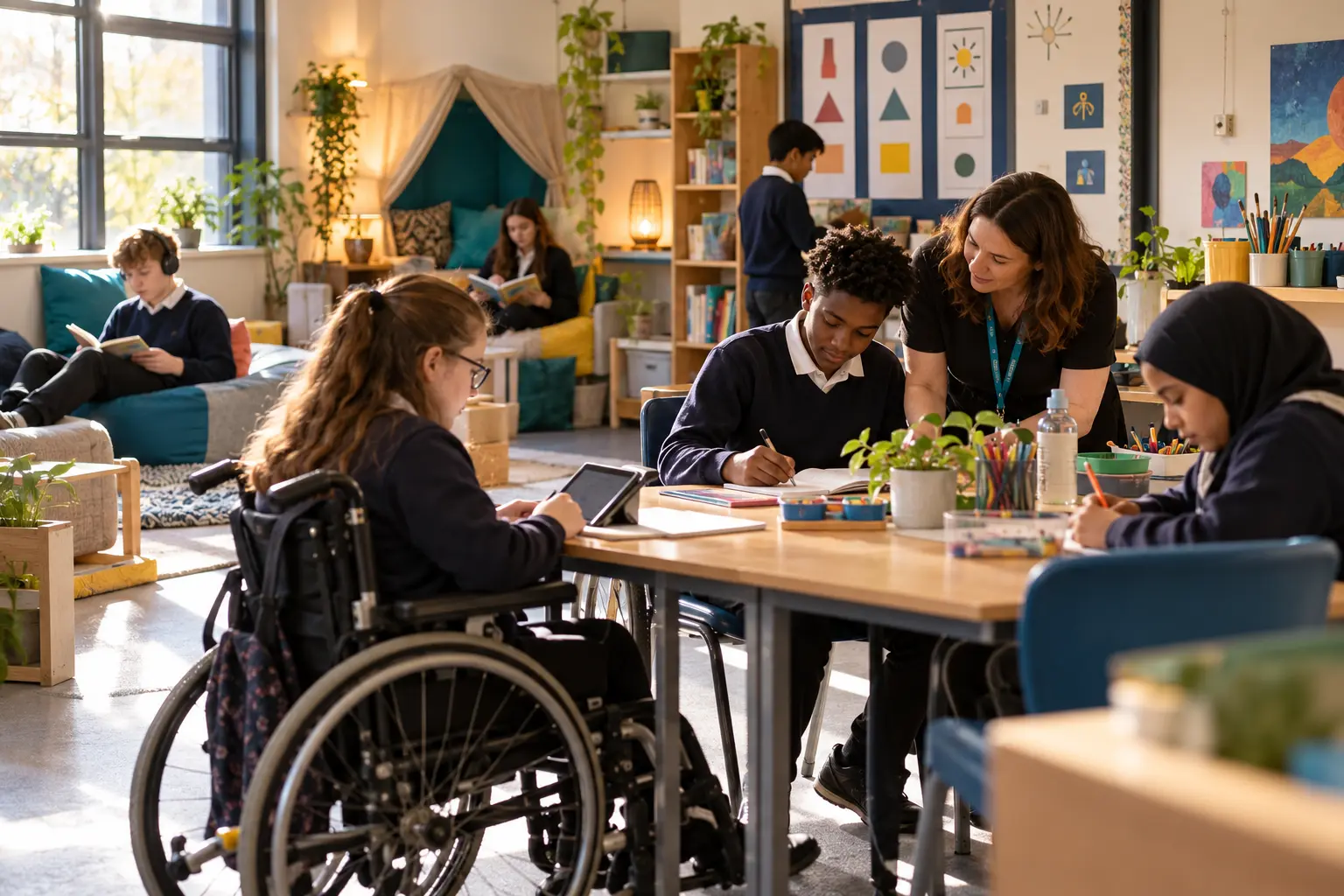
Caption: Inclusive support should be ordinary, available and flexible—not something a child must repeatedly prove they deserve.
What early support should look like in schools
The government says the review’s response will work alongside a £4 billion package of support for children with SEND, including stronger inclusion, wider specialist support and training for teachers.
That direction is welcome. However, early intervention only works when schools have the time, people, training and materials to deliver it consistently.
My proposed view
In practice, needs-led support in education should mean:
- adults asking what is making participation difficult, rather than beginning with punishment;
- adjustments being tried, recorded and reviewed without waiting for a formal label;
- calm and accessible language that does not shame a child;
- predictable routines, visual explanations and choices about how to take part;
- sensory and movement needs being planned for rather than treated as disruption;
- emotional regulation being taught proactively, not introduced only after a crisis;
- families being listened to as partners;
- referral for specialist assessment continuing where it is clinically or educationally appropriate; and
- children having a genuine voice in what helps them.
This is also why accessible books and resources matter. They are not a substitute for clinicians, therapists, specialist teachers or properly funded services. They can, however, give children and adults a shared language. A carefully designed story or activity can help a child name a feeling, understand a routine, rehearse a strategy or begin a conversation that would otherwise feel impossible.
The best resources do not tell children that they are the problem. They help adults change the environment, explain expectations and make participation more possible.
Joined-up support must be more than a diagram
Verified facts
The review describes services across health, education, care, employment and welfare as fragmented. It recommends integrated, age-appropriate support close to home, delivered through multidisciplinary teams. It also says services should be joined up from childhood into adulthood and organised around the person rather than a collection of separate condition-specific pathways.
The report places participation—relationships, family life, community, education and work—at the centre of success. It argues that belonging, purpose and routine are not rewards that people receive only after recovery; they are part of how wellbeing is built.

Caption: “Joined-up” should mean that the young person does not have to retell the same story at every door.
My proposed view
Families have heard the phrase “joined-up working” for years. Too often, it describes a meeting rather than an experience.
Real joined-up support means one understandable plan, clear responsibilities and communication that does not depend on a parent chasing every service. It means the teacher knows what has been agreed, the health professional understands what happens in school, and the young person is not asked to begin again each time a new adult enters the room.
Most importantly, it means listening. The child or young person should not be a subject discussed after decisions have already been made. Their views, communication preferences, goals and daily reality should shape the plan.
Prevention must include belonging
The review links rising distress with financial insecurity, uncertainty, poorer sleep, social comparison, loneliness and reduced belonging. It recommends long-term investment in youth, community and voluntary organisations alongside better health and education support.
That matters because children do not live inside service pathways. They live in families, schools, streets, clubs, online spaces and communities.
My proposed view
We will not solve distress solely by improving referral forms. Children need places where they feel safe, useful and welcome. They need opportunities to create, move, read, play, make friends, spend time outdoors and succeed without being compared every minute.
That does not replace therapy or clinical care. It strengthens the foundations around them.

Caption: Participation, purpose and belonging are part of support—not optional extras after everything else is fixed.
What I will be watching next
The government has promised a cross-government mental health strategy and said it will focus on prevention, early intervention and support that is available before and without diagnosis. The review’s recommendations include action over the next 12 to 24 months and a longer ten-year programme.
I will be watching for five things:
- A funded delivery plan. Who will provide early support, with what workforce and from which budget?
- Clear national minimums. A child’s access to support should not depend on where they live or how confidently their family can argue.
- Protected diagnostic access. Waiting-list support must add help, not remove rights or close assessment pathways.
- Evidence from families and young people. Success should be measured through their actual experience, not only the number of referrals processed.
- Accountability for outcomes. Government should publish waiting times, access, treatment gaps, educational participation and inequalities in a form the public can understand.
The principle is right: help should begin with need, not paperwork. Now it must survive contact with reality.
Children should not have to deteriorate before adults believe them. Parents should not have to become full-time case managers to secure basic adjustments. Teachers should not be left to bridge national service gaps with goodwill alone. And a diagnosis should be a route to understanding and appropriate care—not the only key that opens the door to compassion.
That is the standard against which this reform should be judged.
Practical next steps
Carry the conversation forward
Explore accessible books and resources designed to support calm conversations, routines, confidence and emotional understanding at home and in school.
This article offers general information and personal commentary. It is not medical, diagnostic or legal advice. If a child or young person needs urgent support, contact an appropriate qualified professional or emergency service.