

A timetable gives your child somewhere to look when they’ve forgotten what comes next. I’d show them how to turn over the finished picture or move it to the side, then check whether the next picture makes sense to them.
This guide explains how to make and use a visual timetable for children at home, nursery or school. It is suitable as a starting point for autistic children, children with ADHD, language needs, anxiety, working-memory differences and many other learners, but it should never be assumed that every child with the same diagnosis needs the same format.
What is a visual timetable?
A visual timetable gives the child something to look at to see what’s next. It could be photos, drawings, symbols, objects or a few words. Start with what they recognise. For some children that’s a photo of their actual shoes and a photo of the front door.
Visual support is a form of scaffolding: it makes information easier to access while a skill or routine is developing. The Education Endowment Foundation describes effective scaffolding as something that can be visual, verbal or written and should be adjusted as pupils become more independent. That means a timetable should support participation, not create permanent adult dependence.
What it can help with
- seeing the order of a routine;
- understanding when a preferred or difficult activity will happen;
- remembering instructions without repeated spoken prompts;
- preparing for transitions and known changes;
- checking what is finished;
- communicating when language is harder to process.
Keep the timetable available on hard days too. If your child keeps looking at it and still seems unsure, try a photo or object they recognise and show them what it means.
How to make a useful visual timetable
1. Choose one real problem to solve
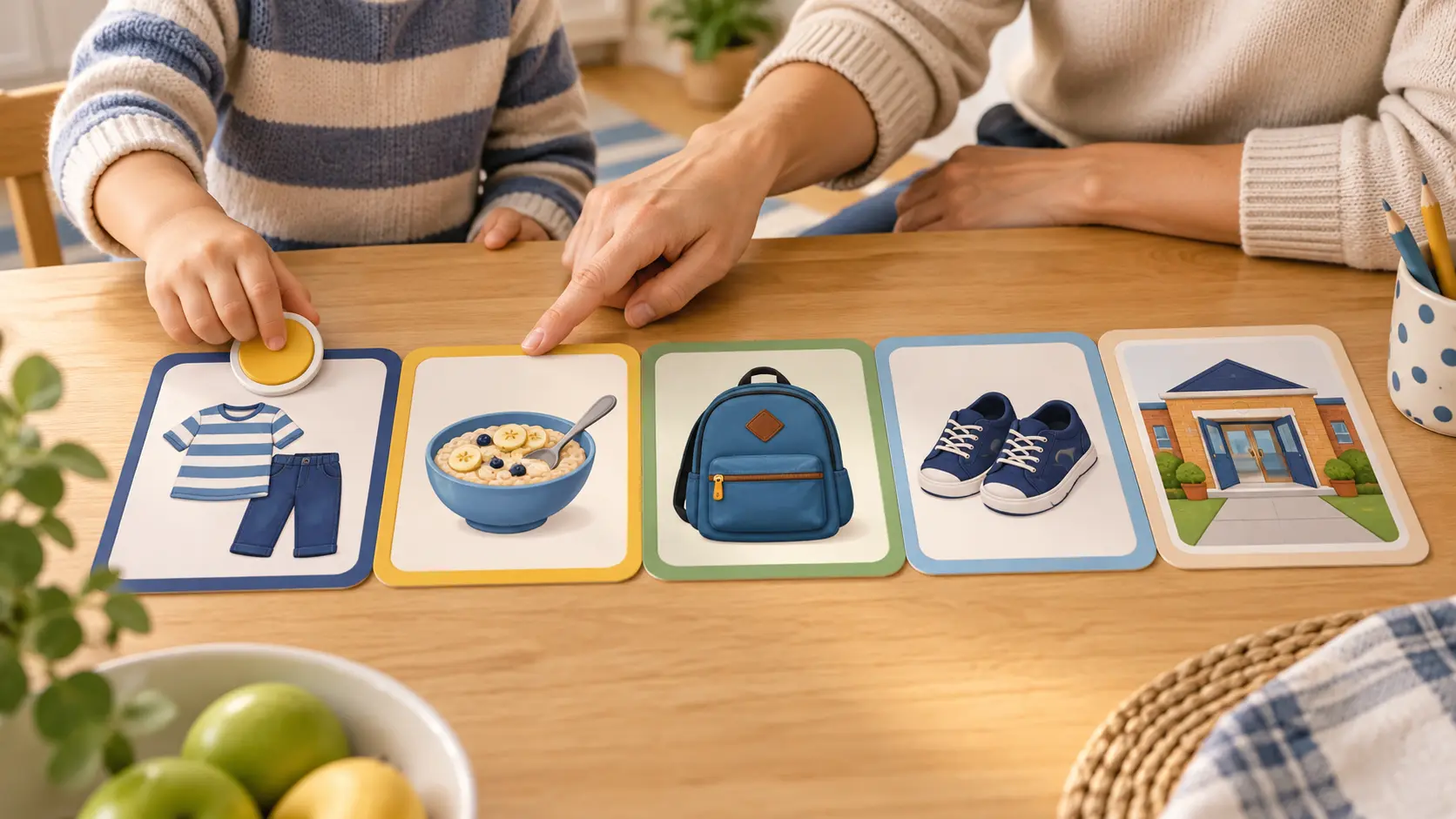
I’d pick one bit of the day that usually gets rushed. At home it might be getting dressed, having breakfast, finding the bag, putting on shoes and leaving. At school it could be putting the maths equipment away before break. Try one routine so you can see what helps.
2. Decide how much to show
Ask your child how much they want to see. Some want to know what’s coming after lunch. Others are happier looking at two cards. If it helps, keep a short strip for what’s happening now and a separate one for the whole day.
3. Choose the right representation
Use a current photo if the child knows the place or object by sight. A short word might be quicker for a reader. For a child who finds pictures confusing, try showing them the actual object, like their swimming bag. Check they know what a symbol means before you use it on its own.
4. Make the sequence physically usable
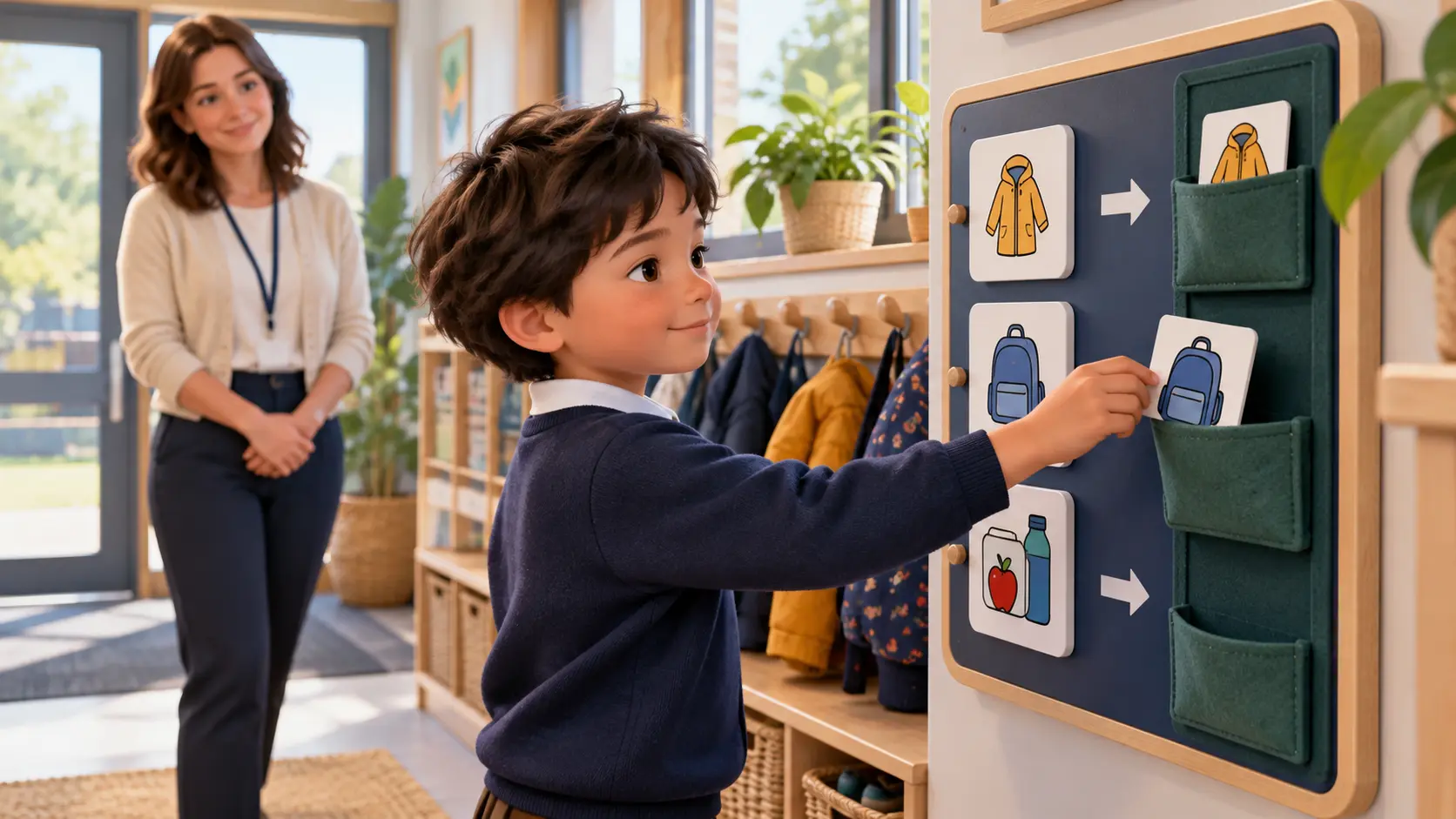
Put it at a height your child can reach, near the place where they use it. Make sure they can tell the pictures apart and choose a way to mark a step as finished. A pocket for used cards or a tick might be enough. If a laminated sheet catches the light, see if plain card is easier to read.
5. Include needs, not only adult tasks
A timetable filled entirely with demands may communicate that the child’s needs are interruptions. Include lunch, movement, toilet, regulation breaks, choice and home time where relevant. Do not promise a break and then remove it because earlier work took longer. If the sequence changes, update the visual honestly.
Teach the timetable before expecting independence
On a quiet day, look at the first card together, do that step and come back to move the card. Use the same short words for a few days. Give your child a chance to get to know the routine before deciding whether it helps.
Use it as information, not a threat
I’d keep the words short if you’ve already had to ask a few times. ‘Breakfast is finished. Let’s see what comes next.’ Give your child time to check the board before you say anything else.
Gradually reduce adult prompts
When your child starts checking the board, give them a little room to do it themselves. A point or ‘Where could you check?’ may be enough. Keep the board there for as long as they find it helpful.
How to show changes without breaking trust
If swimming is cancelled, look at the timetable with your child and swap the swimming card for what will happen instead. Tell them what you know. If you don’t know yet, tell them when you’ll check.
Some children like a countdown and others find it harder if they hear about a change all day. Ask what makes it easier for them and give whatever notice you can.
Build in a flexible symbol
Once the other cards are familiar, try a ‘change’ or ‘choice’ card when things are going well. Show the child what it means and practise swapping a familiar activity. They’ll have seen it before they need it on a difficult day.
Home and school consistency
At school you might show lessons and breaks. At home you might show getting dressed and leaving. Agree the pictures or words you’ll both use for ‘finished’, ‘change’, ‘help’ and ‘break’ if that helps the child. Use their agreed communication system or support plan if they have one.
A photograph of the classroom timetable sent home can prepare a child for a special event. Likewise, families may share a successful morning sequence with school. Only share relevant information and keep personal details private.
Common visual timetable mistakes
Too many steps
If the board becomes wallpaper, reduce it. Separate a day overview from the immediate routine.
Pictures the child does not understand
Test each image. Ask the child what it means or observe whether it leads to the correct place or activity. Replace ambiguous symbols.
The timetable is wrong
Out-of-date visuals create uncertainty. Assign an adult to update class schedules and build checking them into the morning routine.
Adults keep talking over it
A visual should reduce the amount of language a child must process. Use short phrases and wait.
It is used only when the child is distressed
Practise during ordinary routines so the child can use it when processing becomes harder.
It becomes a compliance device
A timetable is information. If a child repeatedly cannot complete a step, investigate the barrier rather than adding more arrows or removing privileges.
How to know whether it is helping
Look for meaningful changes: fewer repeated questions, easier transitions, more independent checking, less verbal prompting, or quicker recovery when plans change. Do not judge success only by whether the child moves faster. A child who pauses to check and then proceeds independently may be using the support exactly as intended.
Review after a week or two. Remove clutter, replace confusing images and ask the child what they would change. A good visual timetable evolves with the learner.
Further reading and sources
- Education Endowment Foundation: Special Educational Needs in Mainstream Schools
- EEF: Universal approaches to inclusive teaching
- EEF: Promoting independence through scaffolding
- Department for Education: SEND guide for schools and alternative provision