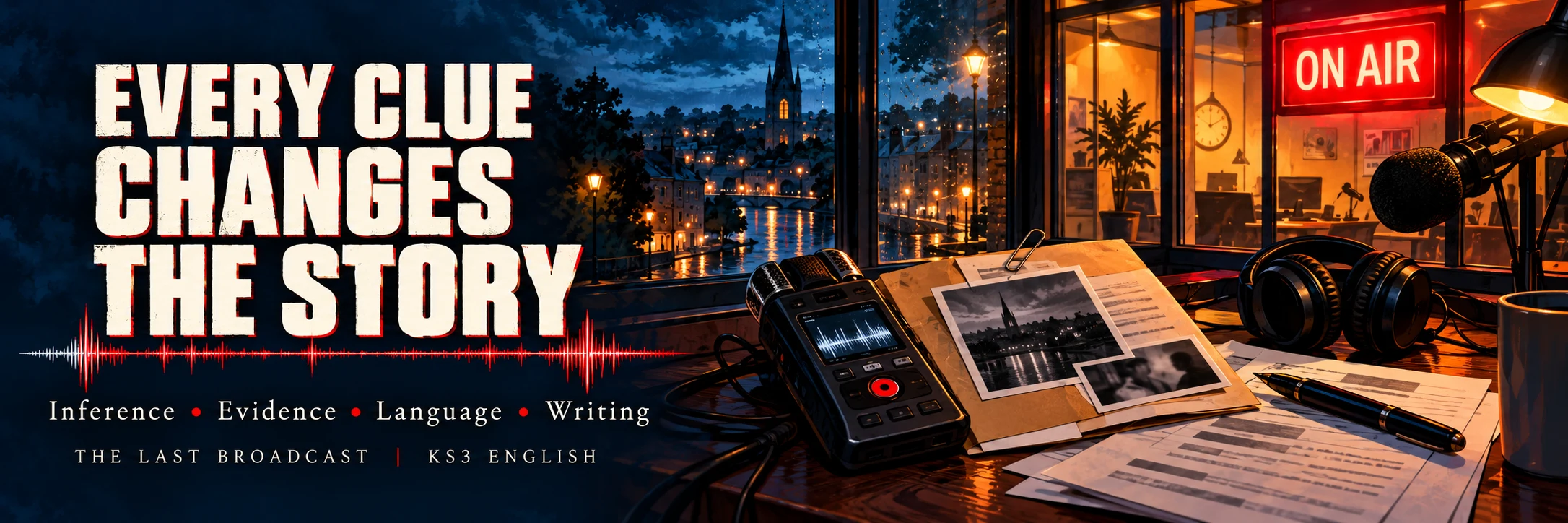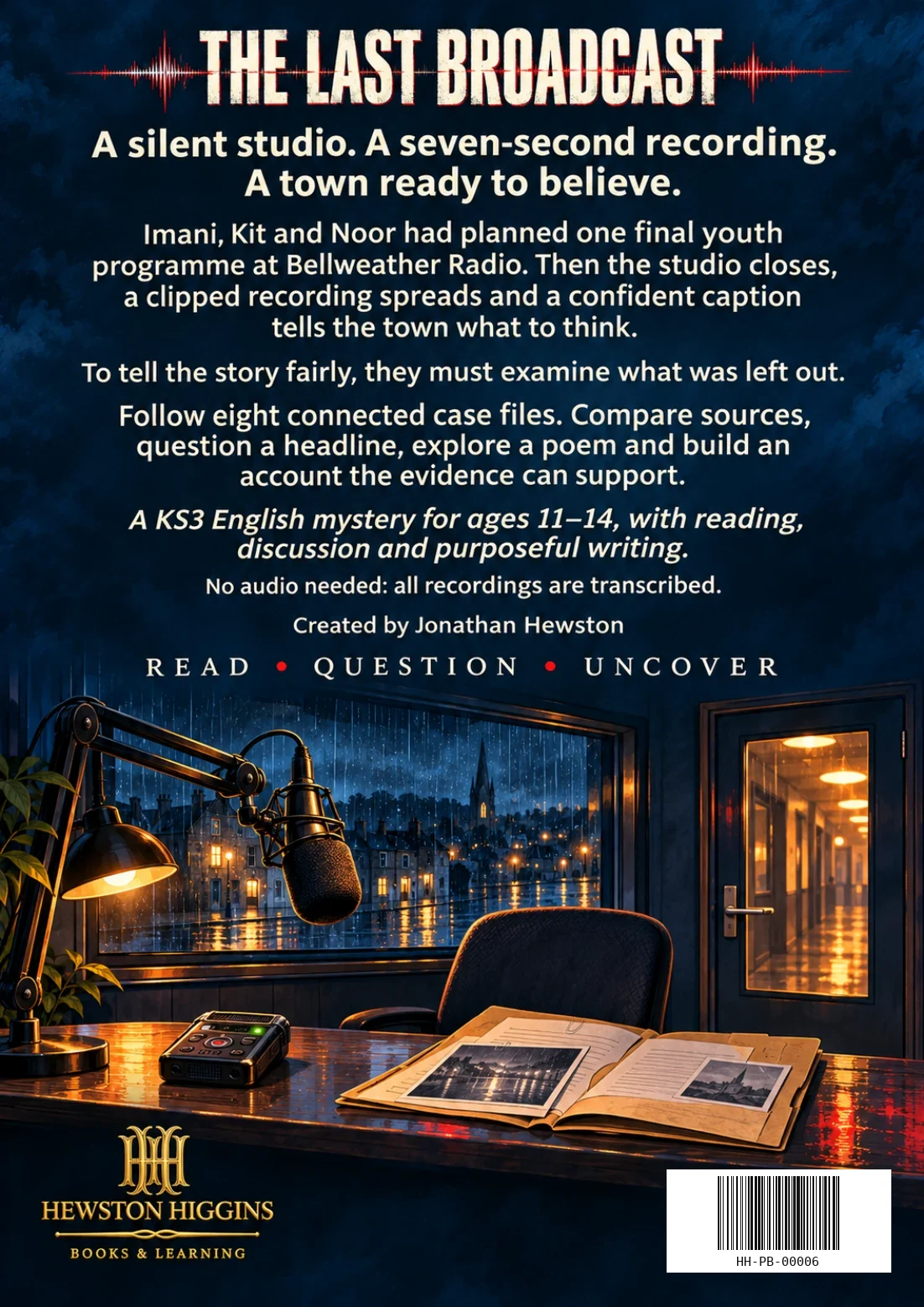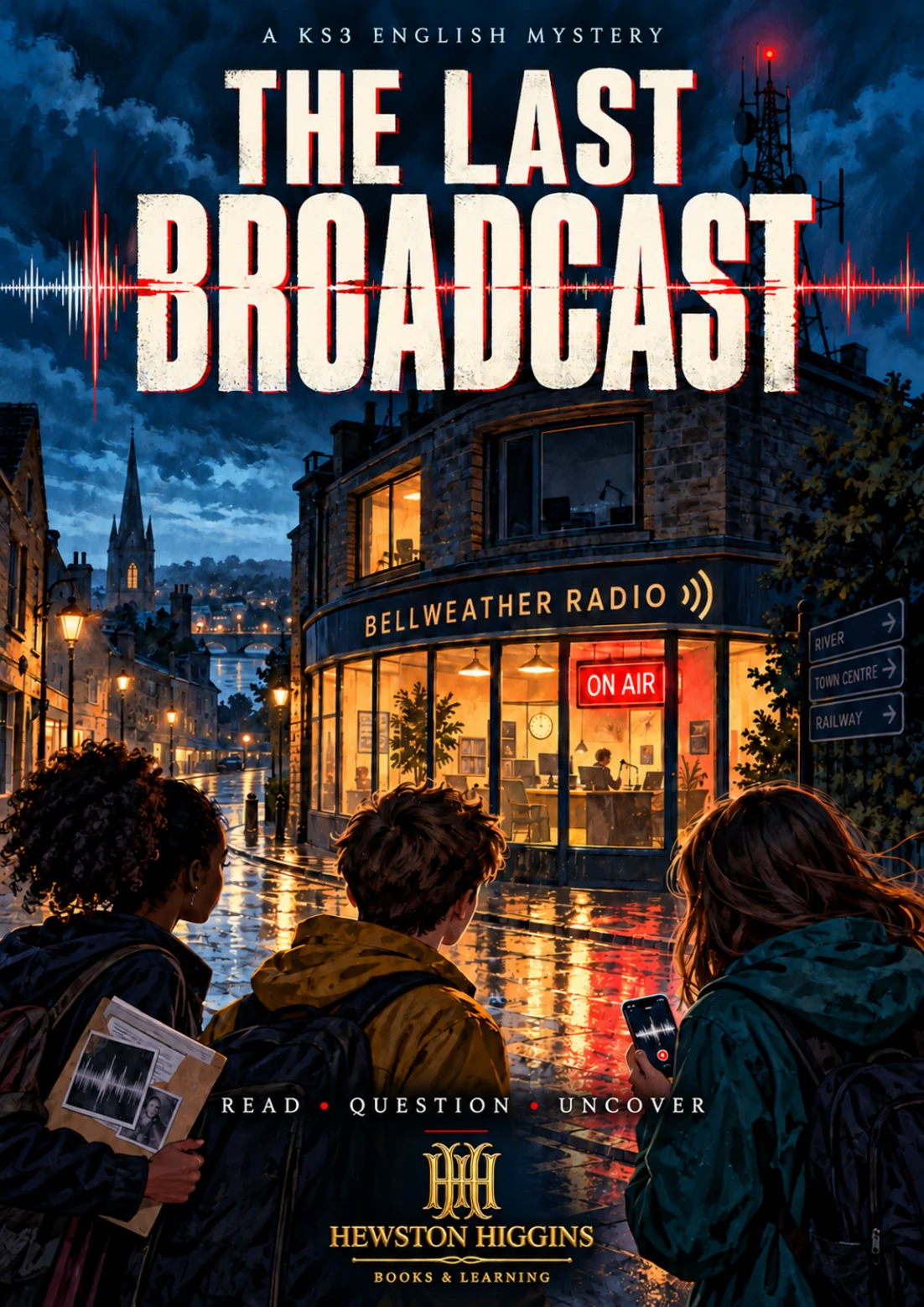
The Last Broadcast — a KS3 English mystery
A silent studio. A seven-second recording. A town ready to believe. In The Last Broadcast, pupils join Imani, Kit and Noor as their final youth radio programme becomes an investigation into what happened at Bellweather Radio. The mystery unfolds through eight connected case files, each offering a new scene, sources to examine and a purposeful piece of writing.
A reason to read closely
An edited clip appears to show a station manager suppressing recordings. Witnesses describe different cases, an old publicity poster makes a sweeping promise and new records change the meaning of earlier words. Pupils have to distinguish what is stated from what is inferred, weigh alternative explanations and decide which claims the evidence can support. The story rewards careful reading and a willingness to revise a view.
English skills inside the investigation
The unit develops retrieval, inference with evidence, comparison, audience and purpose, language and structure analysis, and clear writing. Pupils examine a fictional poem, annotate an interview scene, compare publicity with a factual update, draft a correction and build a recommendation. The final broadcast asks them to turn those decisions into a coherent account for listeners.
Creative work with real choices
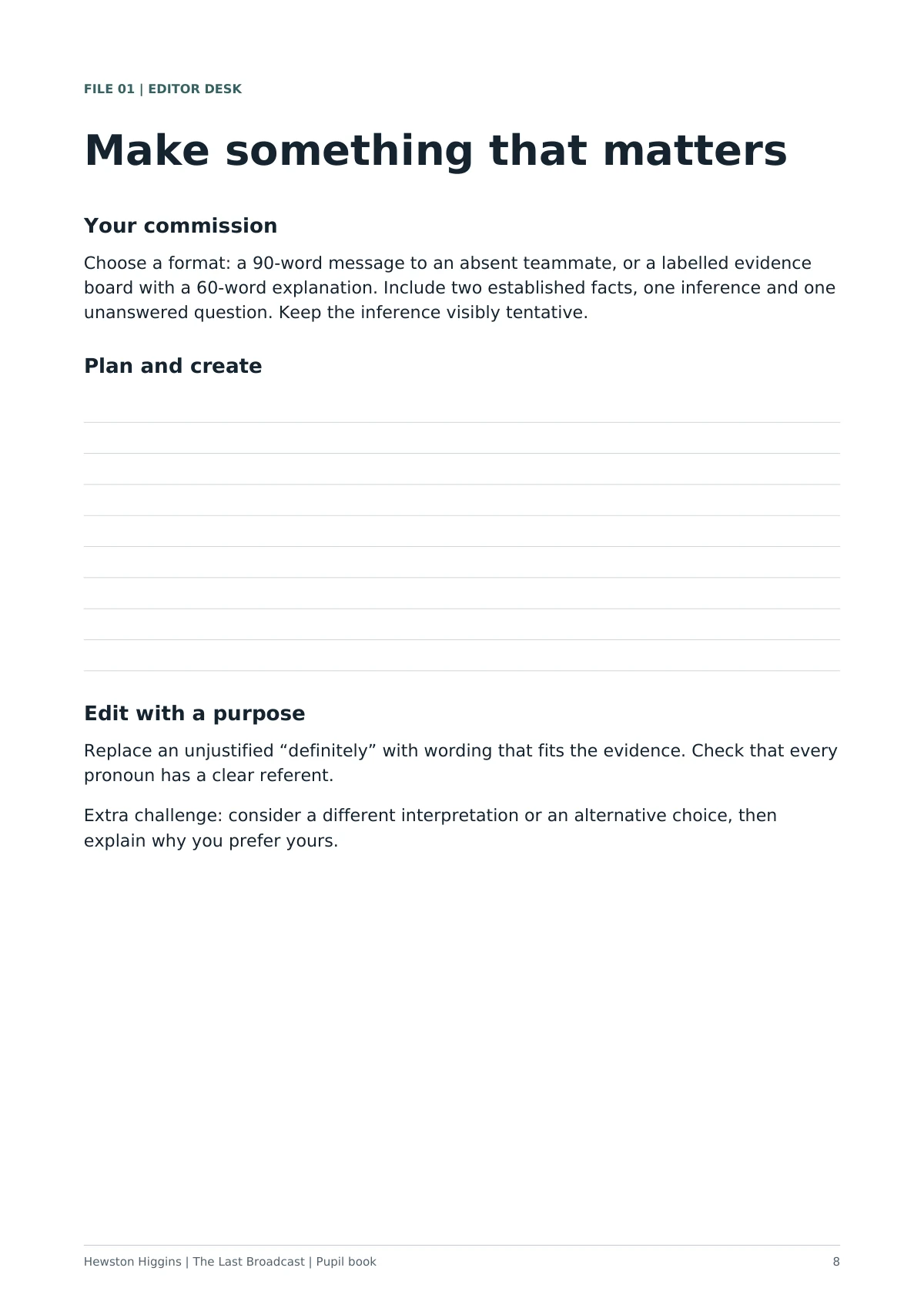
Learners can create an evidence board, write competing headlines, compose a poem or annotate a performance, develop an interview and choose between two defensible programme decisions. The ending does not depend on guessing a single preferred opinion. A strong response explains its evidence, recognises a serious alternative and keeps uncertainty visible.
Who it is for
Designed for Key Stage 3 English in England, usually ages 11–14, The Last Broadcast can be used in secondary classrooms, small-group reading work, tutoring or supported home education. Year 7 is a suggested entry point; teachers can adjust challenge according to assessed starting points. Older learners who need accessible language can use age-respectful supported routes. The book is not presented as suitable for every learner without adjustment.
What is in the pupil book
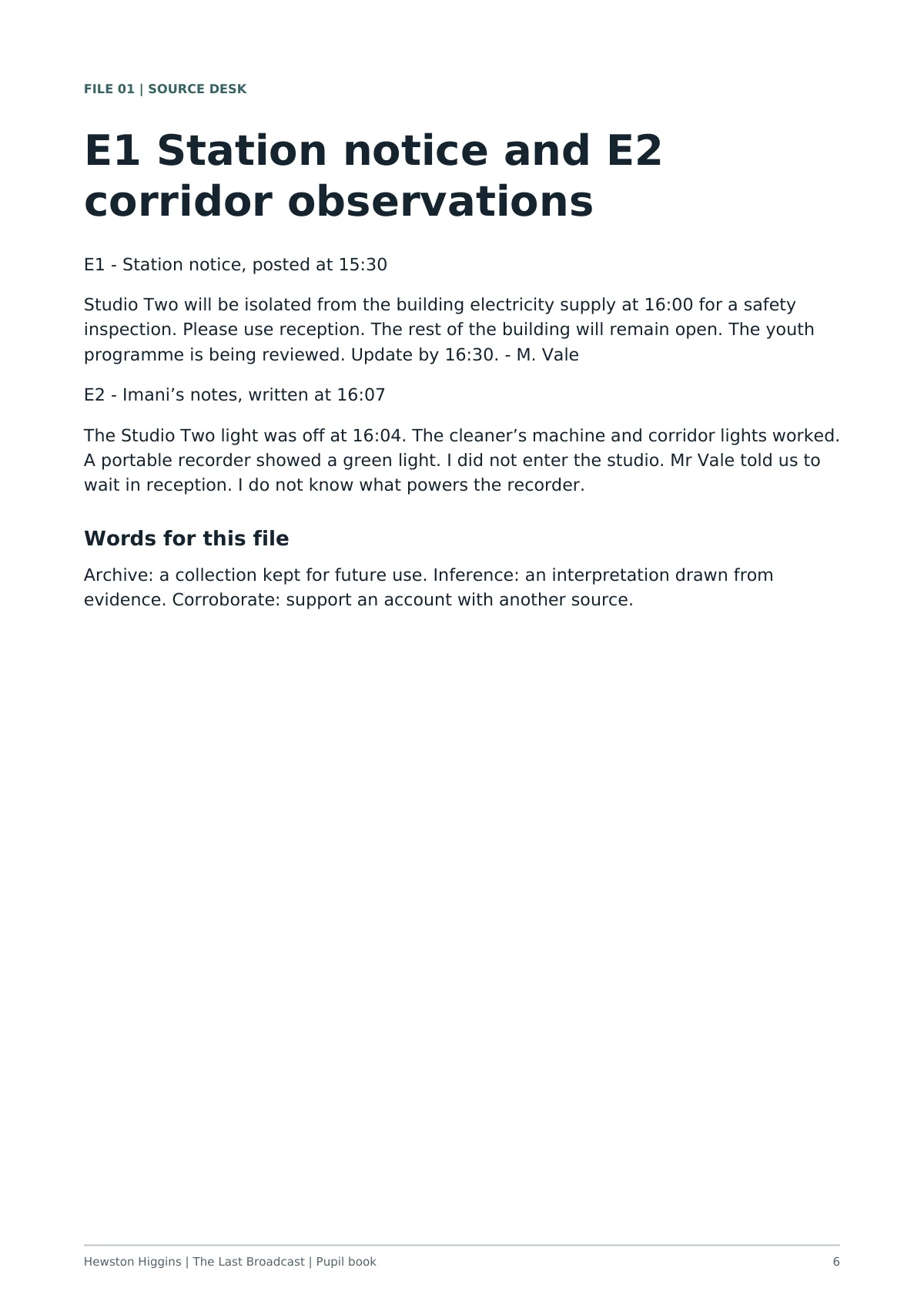
The pupil section contains 40 pages including its illustrated front cover, introductory reading tools, eight four-page case files, a final broadcast task, a fresh-source check, reflection and two possible endings. It is currently supplied within a 51-page combined book PDF, which also includes the original 11-page teacher appendix. All source texts are original fiction. Every necessary sound is transcribed, so no external audio is needed.
A separate comprehensive teacher guide
The companion teacher guide expands the original appendix into 54 pages. It provides twelve detailed lessons, modelled reading moves, likely misconceptions, access and extension routes, question answers, illustrative responses, twelve reproducible pupil templates, a model final broadcast, a new transfer assessment, a mark scheme and a progress record. The twelve templates are also available as a separate PDF. The suggested twelve-session route is flexible; timings are estimates.
Ten classroom learning posters
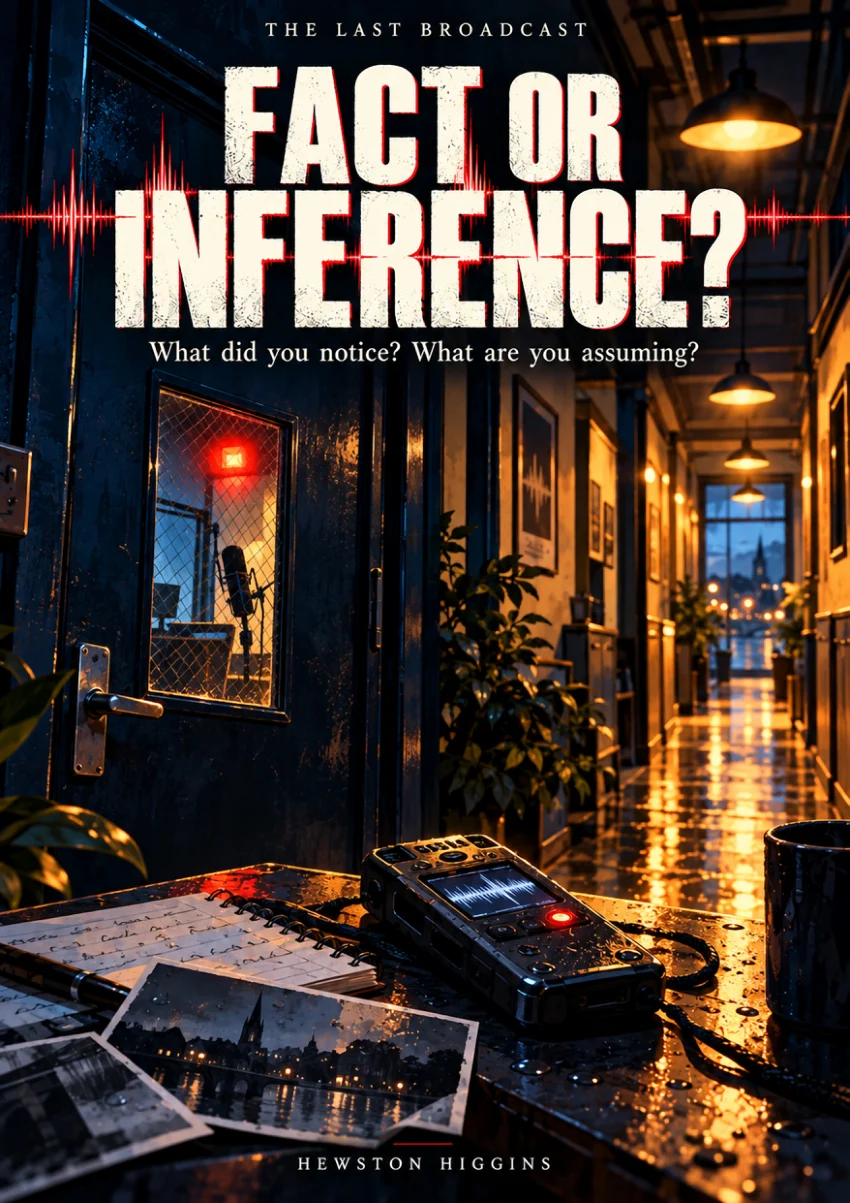
The display collection contains ten distinct posters supplied in A4 and A3. Topics include fact and inference, missing context, source checks, witness comparison, language choices, poetry, fair questions, revising an interpretation, argument and a final broadcast check. Each poster includes a practical prompt connected to the unit. A4 and A3 are size editions of the same ten designs, not twenty different posters.
Support participation without losing the challenge
Teachers can offer read-aloud or text-to-speech support, vocabulary preparation, chunked sources, typing, dictation, AAC-supported responses and flexible pacing. Pupils do not have to perform publicly, disclose personal experiences, use a phone or create an online account. The aim is to remove avoidable barriers while retaining the reasoning. These are adaptable teaching options, not a guarantee of accessibility for every learner or a clinical intervention claim.
Curriculum scope and practical use
The unit supports selected KS3 English reading, writing and discussion aims. It is not a complete English curriculum, an exam-board-endorsed course or a standardised assessment. Independent subject-teacher review and classroom trial are not recorded. Use within a wider programme of whole-book reading, poetry, drama and other required study. The resources can be displayed on screen and printed within the applicable licence. Eligible member downloads and separate resource purchases are described below.
Display the story, print the pupil pages
The separate 39-page low-ink A4 companion reproduces PDF pages 2–40 of the approved reading edition, retaining every pupil source, original task and response space. It excludes the illustrated cover and teacher answers. Use the original page labels to move between the displayed book and pupil sheets. The twelve additional reproducible templates are included in the teacher pack.