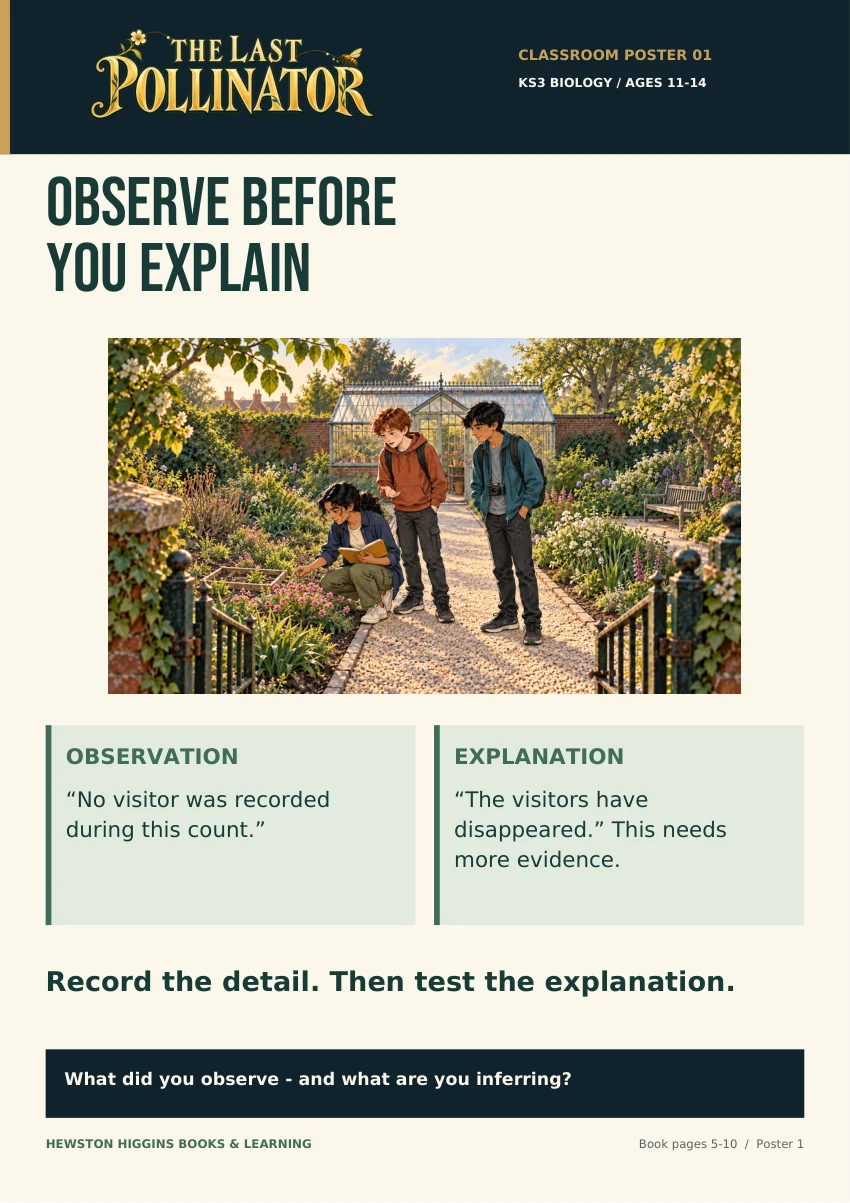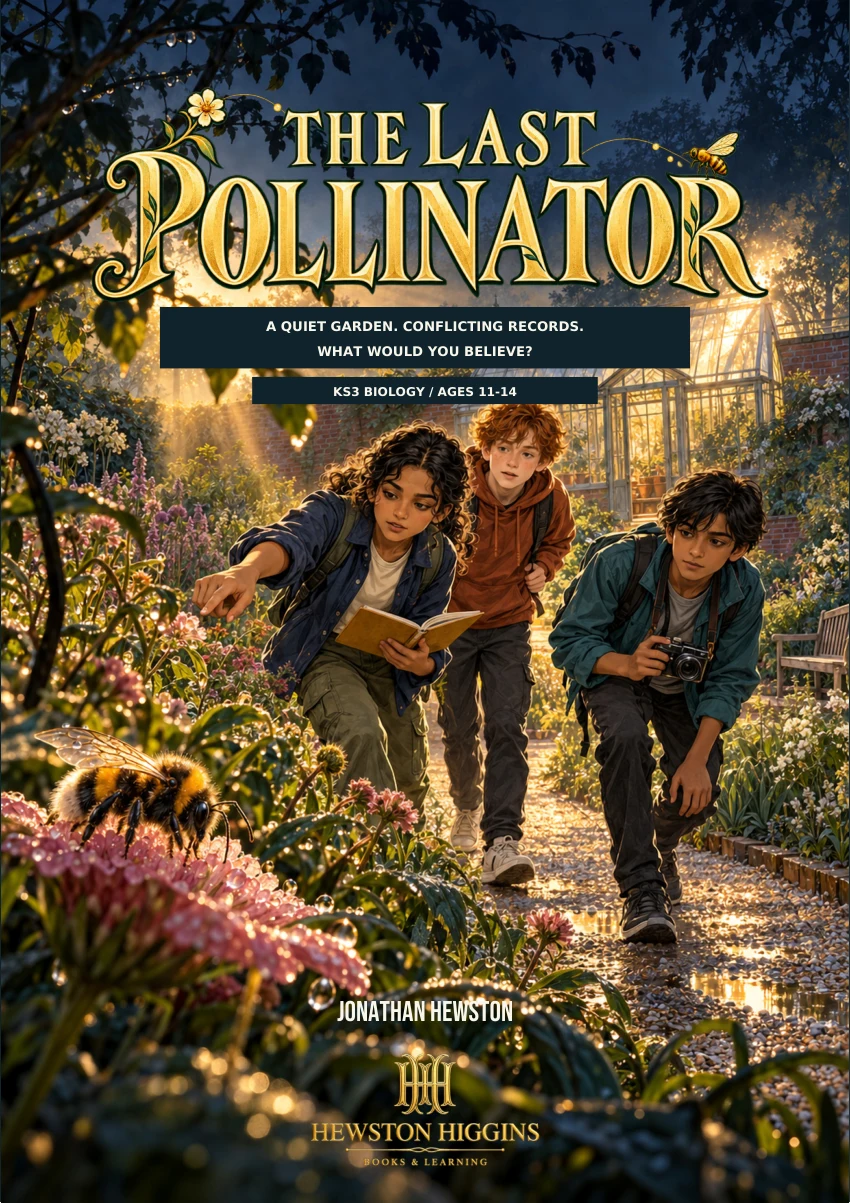
A KS3 science mystery with a reason to investigate
One garden notebook says busy with bees. Another says almost none. With six weeks until the exhibition, Asha, Rowan and Dev need an explanation they can trust. But a quiet border, a cut-back strip and a rumour about a spray do not tell the whole story.
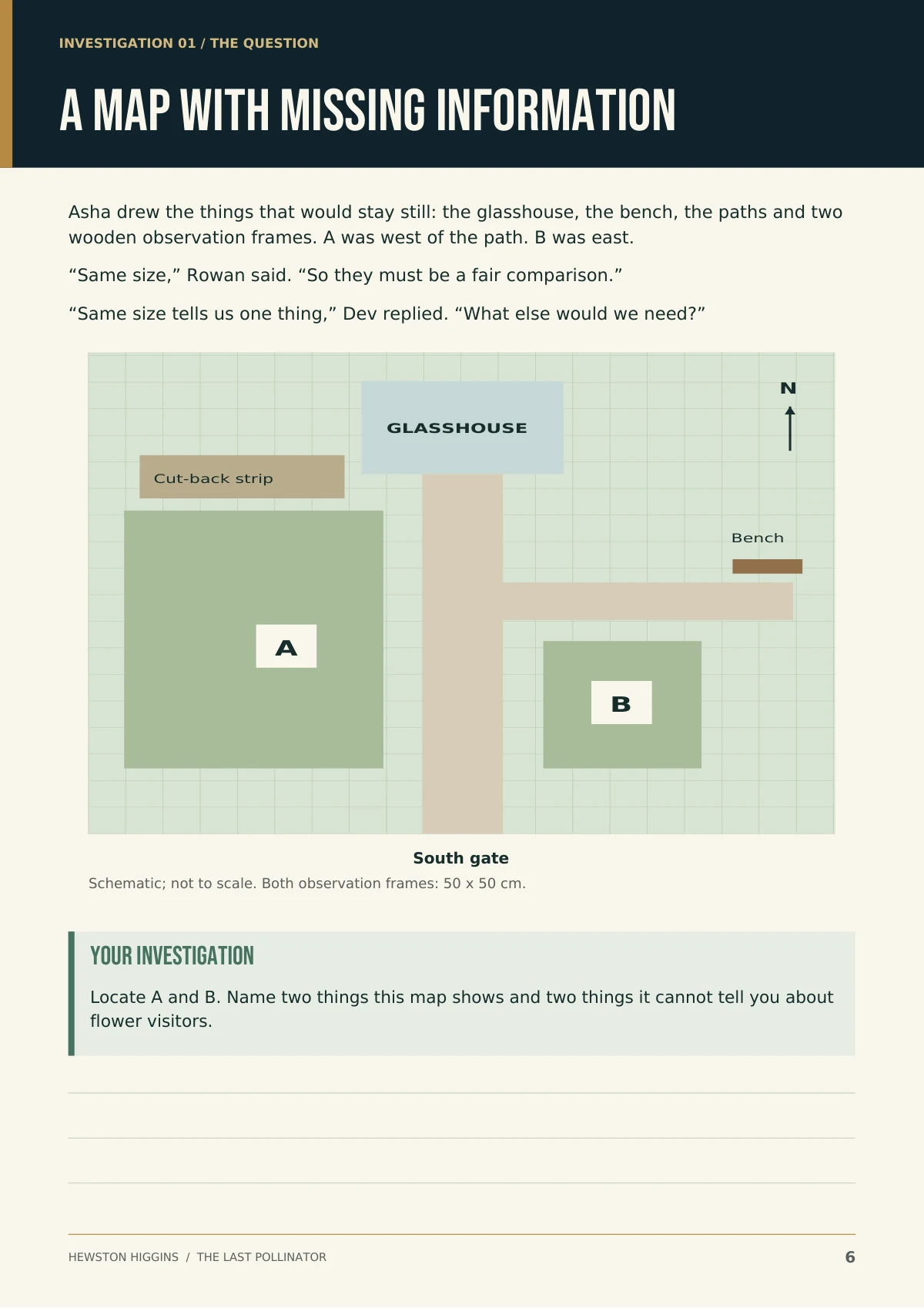
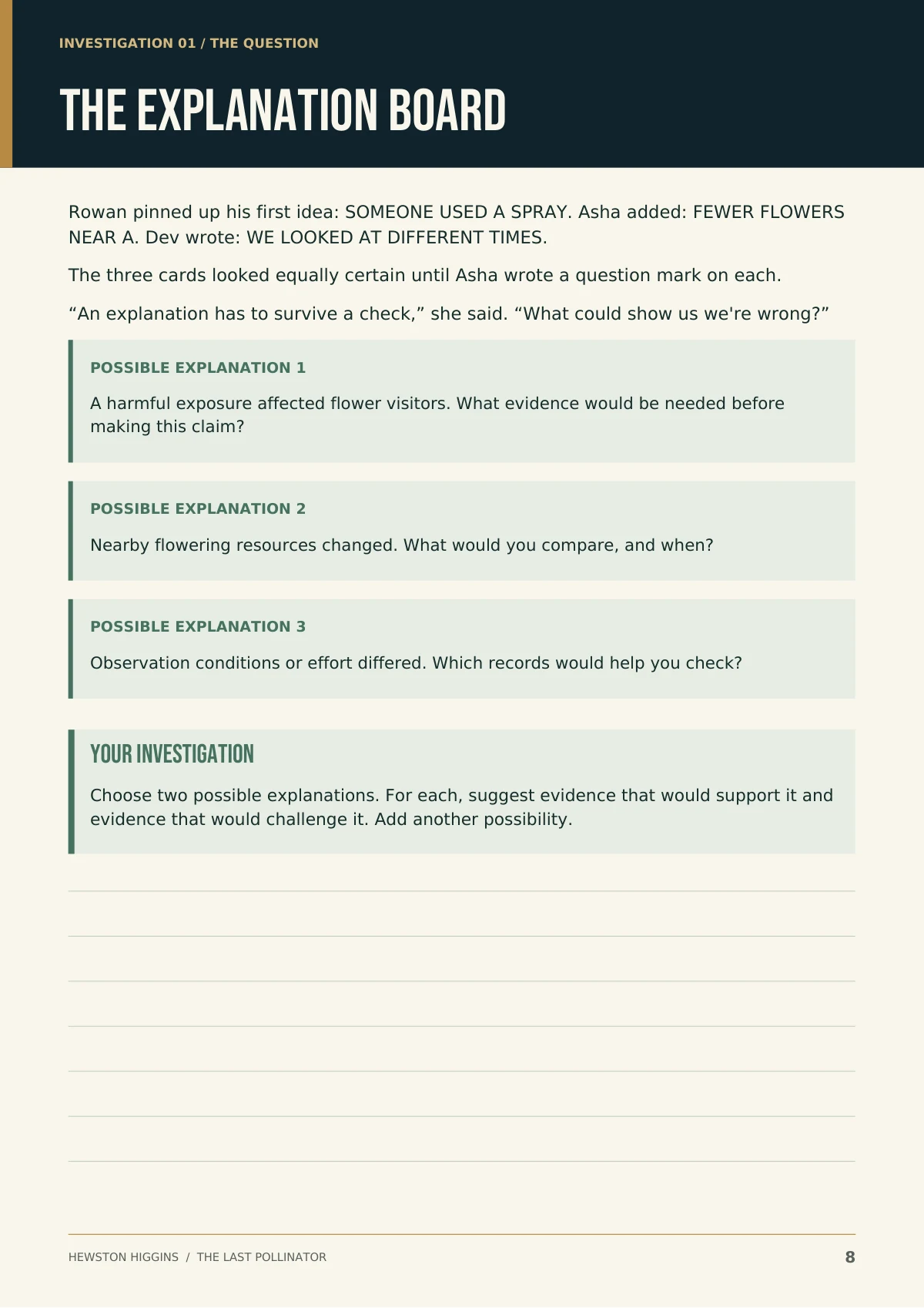
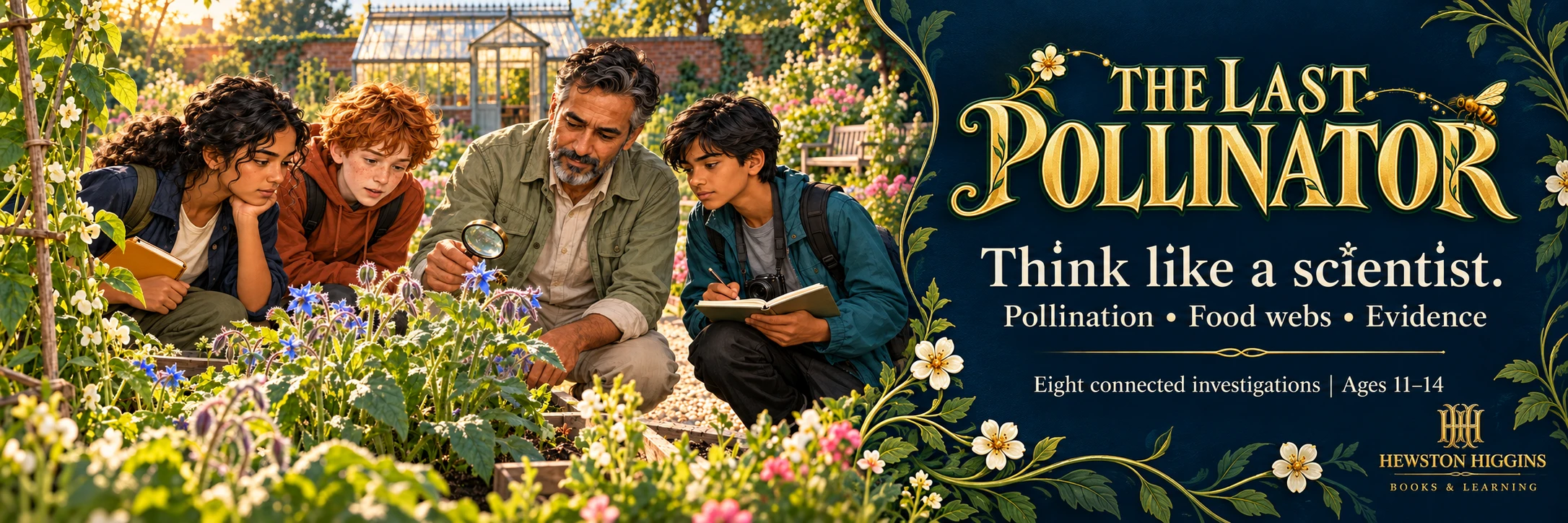
The Last Pollinator is a 64-page illustrated biology book for ages 11–14. Across eight connected investigations, pupils follow a fictional garden mystery while building understanding of pollination, plant reproduction, food webs and scientific enquiry. Every claim has to face the evidence.
From flower visitors to evidence-based explanations
A landing insect does not guarantee a seed. A higher count does not prove a treatment worked. Through dialogue, diagrams, notebook entries and invented datasets, pupils learn to distinguish what they observed from what they can reasonably conclude.
- Plant reproduction: anthers, stigmas, pollen transfer, fertilisation and the conditions needed for development.
- Ecological connections: producers, consumers, feeding arrows, habitats and a connected garden food web.
- Working scientifically: ask measurable questions, compare methods, define observation effort and retain raw records.
- Data handling: calculate means, construct graphs and compare baseline and follow-up results.
- Scientific communication: build a claim with evidence, reasoning, uncertainty and a feasible next check.
The story supports selected England KS3 science content; it is not a complete KS3 curriculum or an exam-board-endorsed course. The garden, characters and numerical records are fictional teaching material.
Display the colour book. Print the pupil pages.
The separate 60-page printer-friendly A4 pupil companion follows book pages 4–63 using the original page labels. It retains the original reading text, task wording, live scientific diagrams, data tables and response space. White panels and black live text reduce ink use; decorative story artwork is omitted. Use it alongside the colour reading book for the complete illustrated experience. It is a matching companion, not a generic worksheet set.
Use the supplied evidence entirely indoors, with no equipment, phone or live insect handling required. Optional outdoor work needs adult supervision, suitable access and a local risk assessment. The book’s classroom visit-count rule differs from the official UK PoMS FIT Count protocol.
Teach the whole investigation with confidence
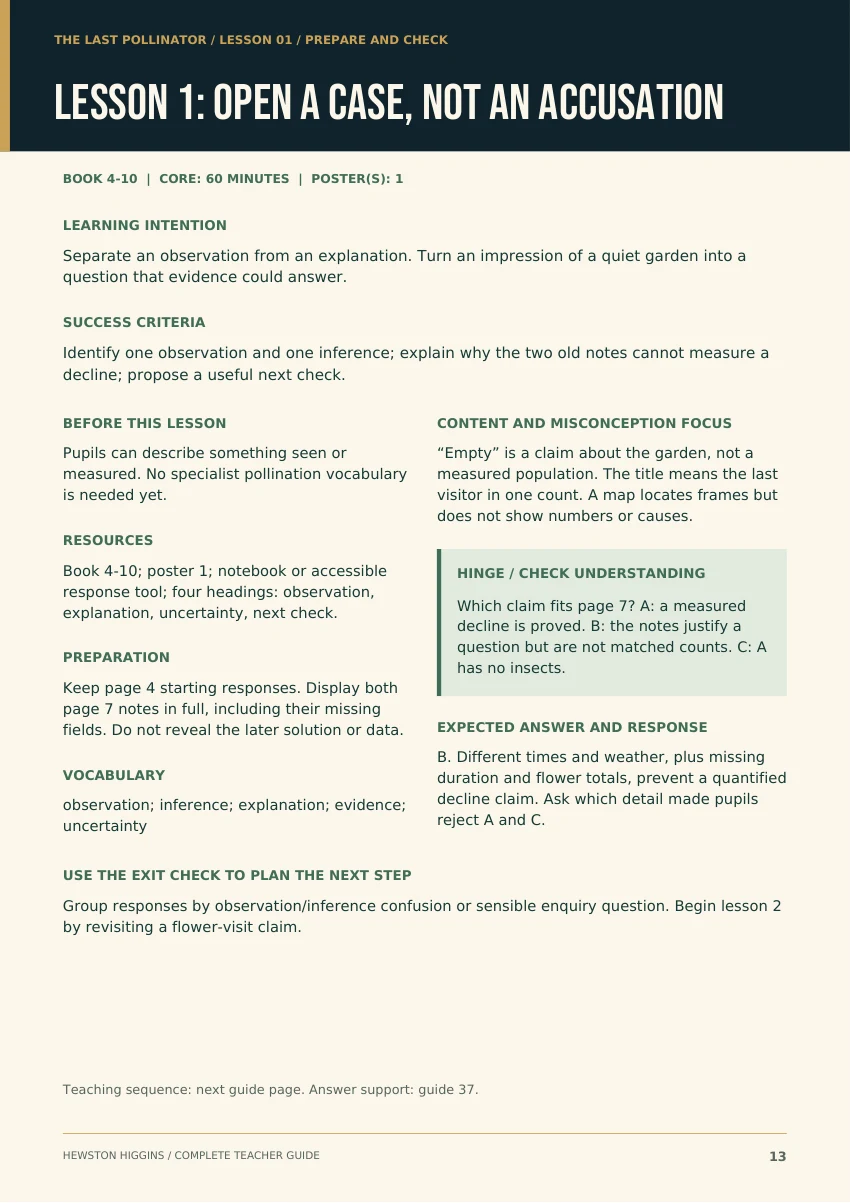
The 48-page complete teacher guide maps twelve detailed 60-minute lessons to the correct book pages and posters. Each lesson provides learning intentions, success criteria, preparation, resources, vocabulary, timed stages, teacher prompts, pupil actions, quick checks and expected answers.
It also includes SEND adaptations and accessible response options, deeper challenge, misconceptions, eight investigation answer keys, a model case report, assessment criteria and a fresh-data marking guide. A supplied-data route keeps the sequence available when outdoor work is unsuitable. Independent classroom trial and external teacher sign-off are not claimed.