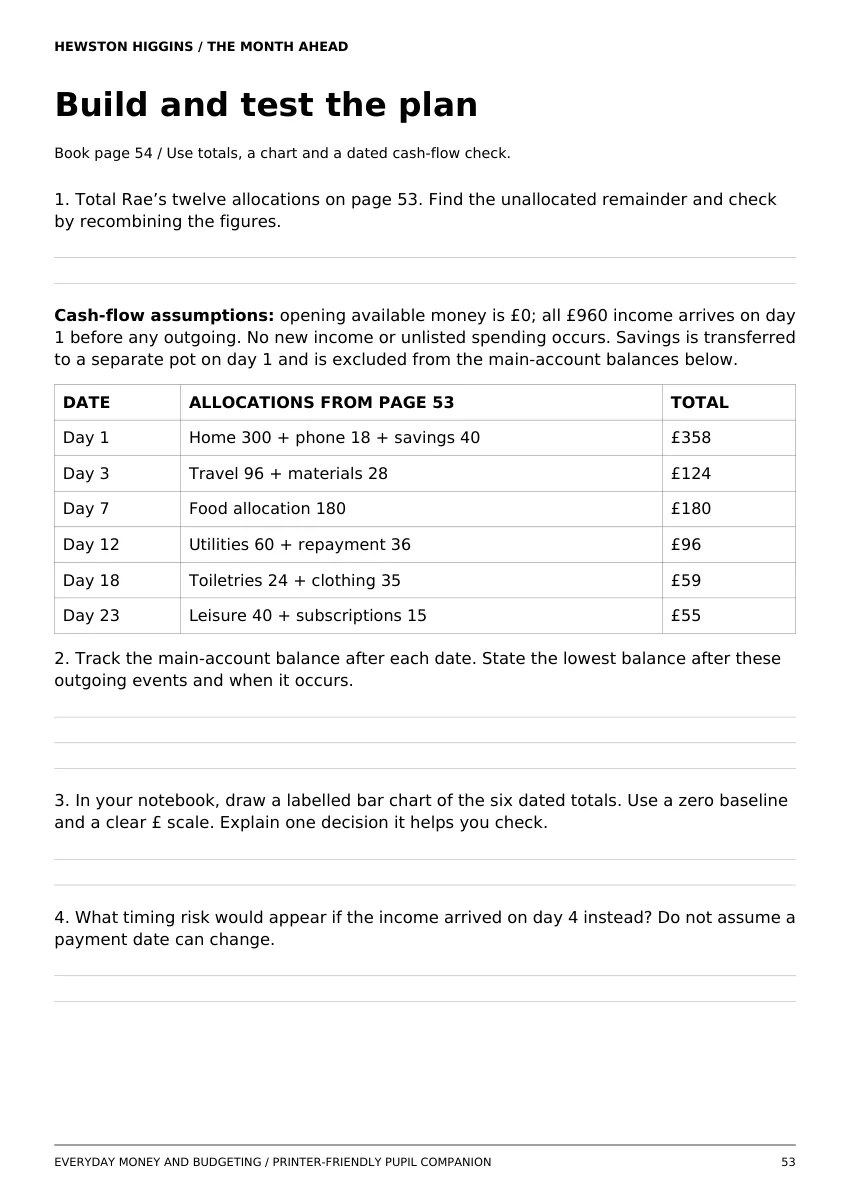
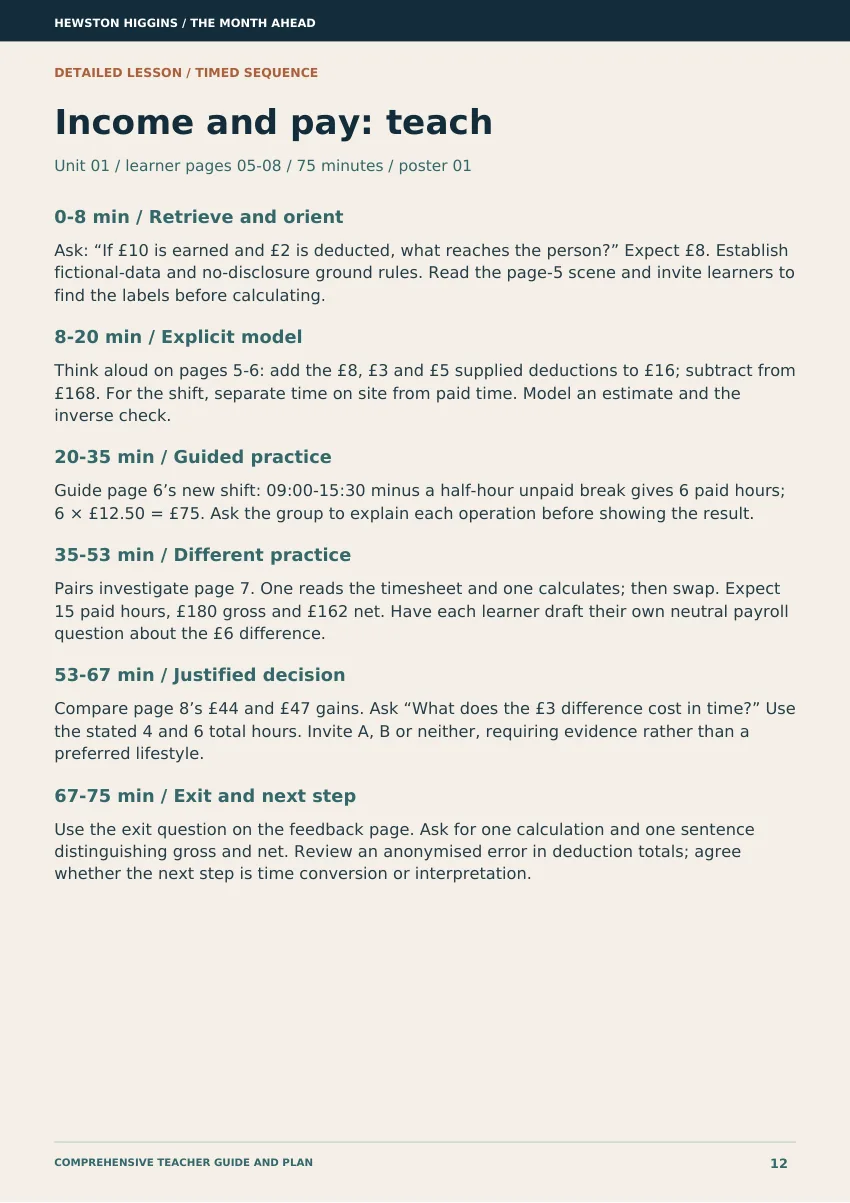
A budget makes more sense to me when you can see the month it belongs to. I put a fictional household’s choices on the page so older learners can change a cost and see what happens next, with room to think through what to do if the money won’t stretch.
A 64-page post-16 learning book using Asha, Ellis and Noor’s fictional money decisions to give calculations a practical purpose. Twelve units cover payslips, budgets, cash flow, value, subscriptions, bills, saving, borrowing, scams, support and shared costs.
Asha balances college with part-time work. Ellis checks training pay and the cost of a possible shared home. Noor compares choices, asks questions and plans ahead. Their fictional month gives learners a practical reason to calculate, compare, check information and explain a decision.
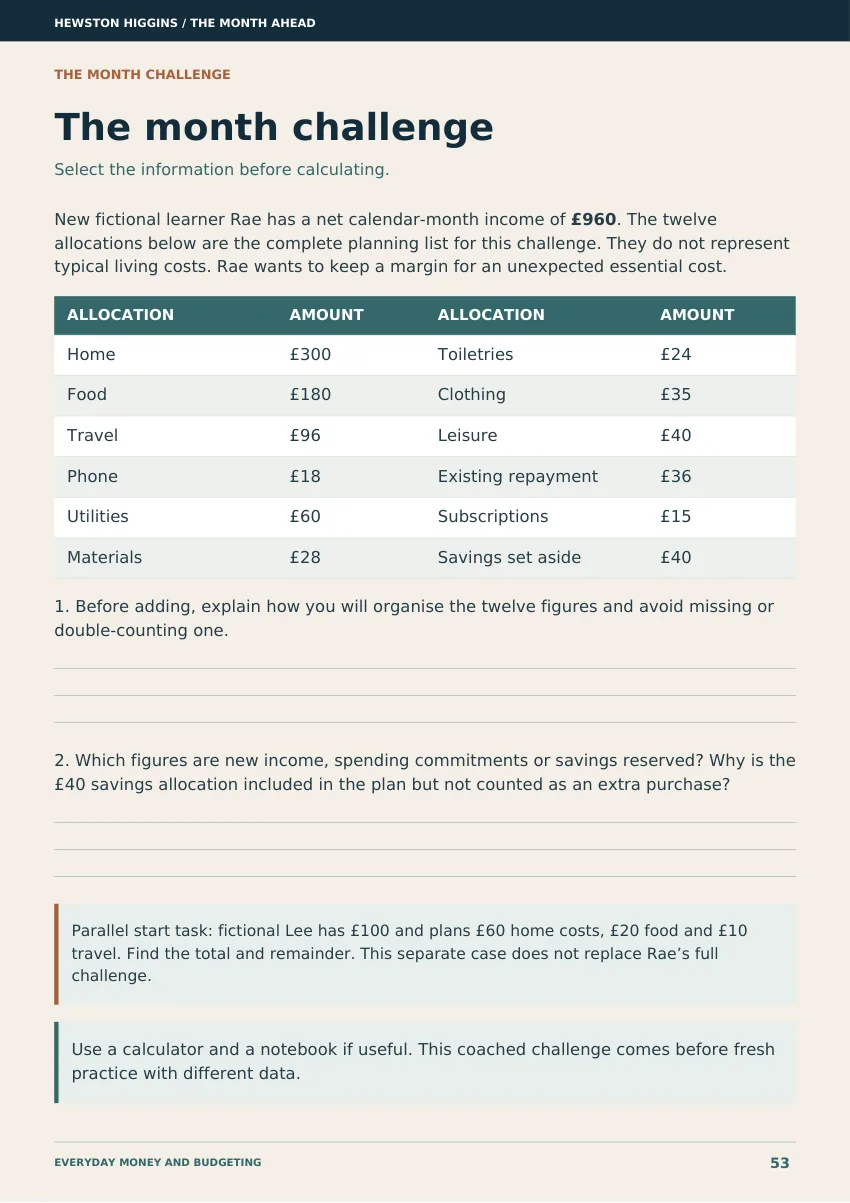
Twelve units explore income and payslips, account records, budgets, dates and cash flow, shopping value, subscriptions, household bills, saving, borrowing, scam awareness, support and shared costs. Worked models lead into guided practice, different examples and justified choices, followed by a connected month challenge, fresh assessment, reflection and glossary.
Designed for post-16 teaching
Use this resource in college, preparation for adulthood, supported learning, employability, enrichment or financial-literacy sessions. Selected Functional Skills mathematics links support work with money, percentages, ratio, tables and charts. The teacher guide maps the intended links and provides accessible teaching routes.
This is a teaching resource, not a complete qualification, accredited assessment or personal financial advice. All learning figures and offers are fictional; supplied deductions, rates and charges are not current legal or product rules. Learners never need to disclose their own household finances.
Display the colour book. Print the matching pupil pages.
The separate 61-page printer-friendly pupil companion includes an introduction and sixty low-ink pages matching book pages 3–62. It retains original tasks, required figures, tables, charts and response space, with source-page labels. Decorative artwork is omitted. Longer responses can continue in a notebook. The help directory remains in the colour book on page 63.
64-page colour learner PDF and separate 61-page low-ink pupil PDF, available through an eligible active membership. A separate 21-page worked answer key is also included for eligible members.
Minimum plan: Family. Your plan’s download allowance and membership licence apply.
84-page PDF with twelve detailed 75-minute units, baseline, a coached month challenge, fresh assessment, complete worked answers, adaptations, discussion prompts and eight reusable teaching records. Suggested complete programme: 18 hours 45 minutes, adjustable to your learners.
Single-classroom / individual-practitioner licence. Also included for eligible members.
Ten distinct designs in two complete ten-page PDF collections: A4 and A3. One ZIP includes both sizes, printing notes and plain-text alternatives. Topics connect directly to the twelve teaching units.
Single-classroom / individual-practitioner licence. Also included for eligible members.
The book, guide and poster masters have been checked at their intended print placement. Lower-resolution artwork has been enhanced using FSRCNN while retaining text, vectors and page geometry. Output sampling does not claim native detail. Website banners are promotional artwork.
Ten posters, linked to the learning
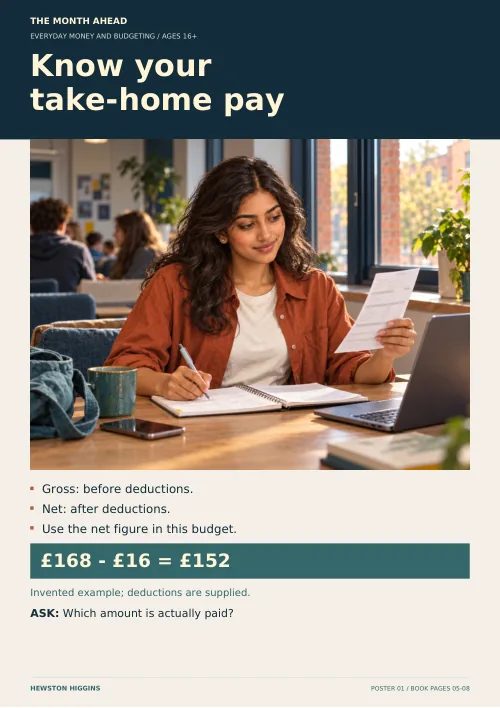
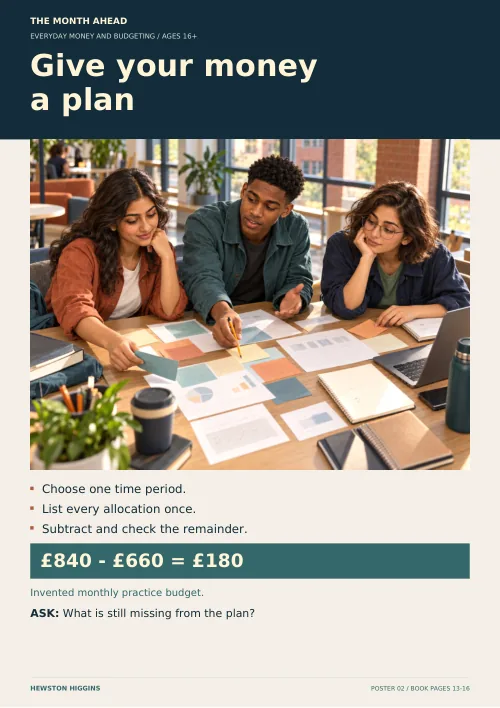
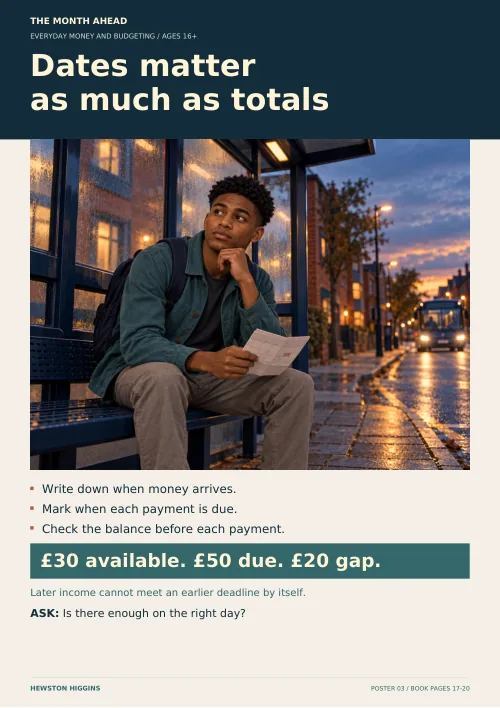
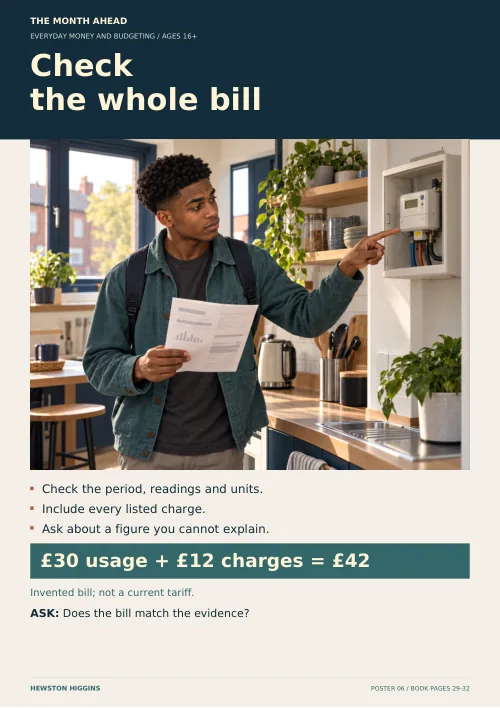
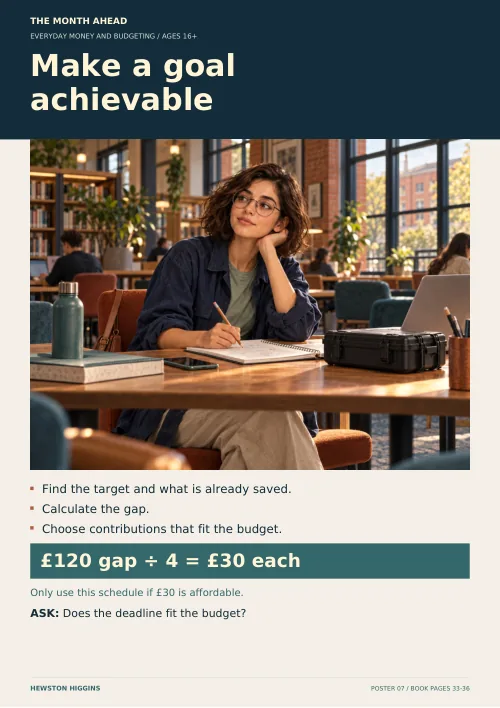
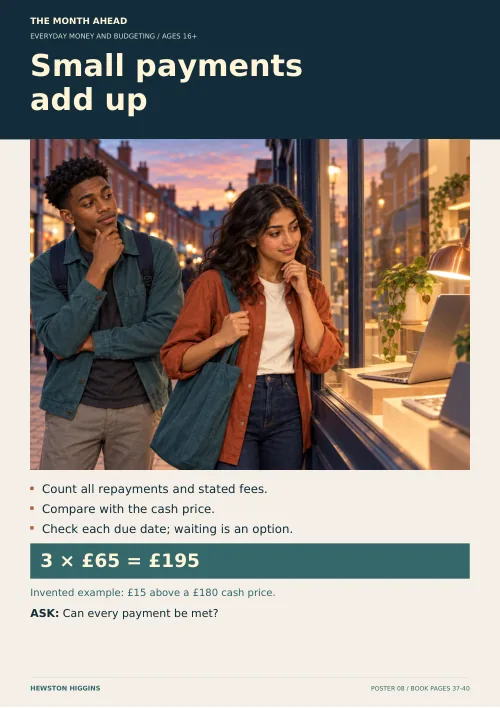
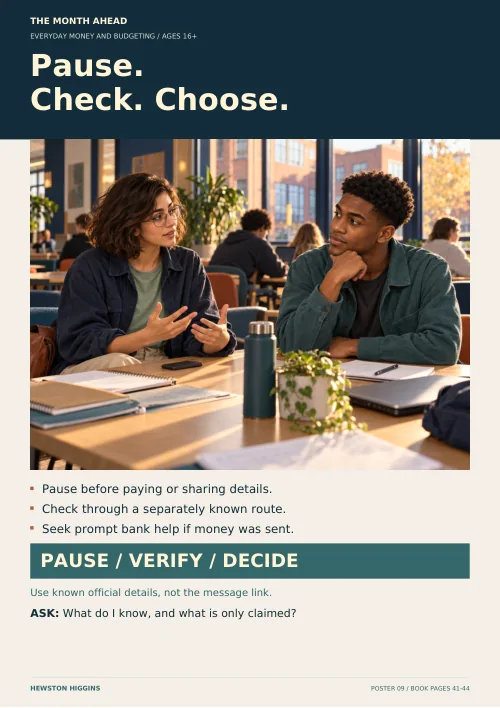
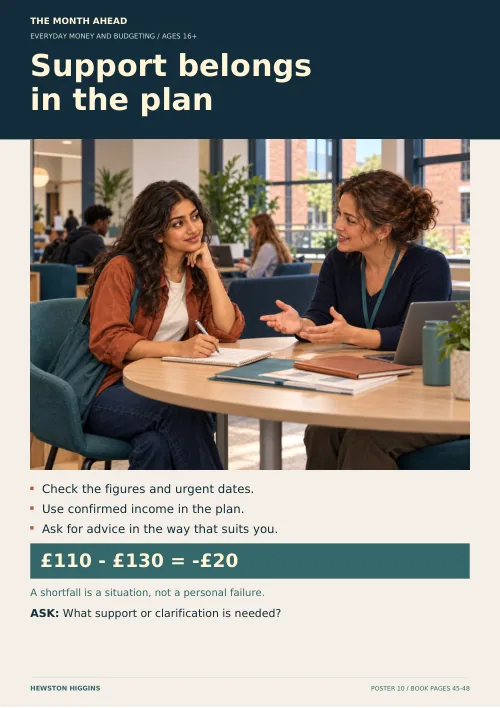
Net payA budget you can explainCheck the datesCompare unit valueRead the termsCheck the whole billSaving goalsTotal borrowing costPause, check, chooseAsk for support
What is included?
64-page complete illustrated learner book.
61-page matching low-ink pupil companion.
84-page comprehensive teacher guide and plan, with complete answers.
21-page standalone worked answer key.
Ten posters in both A4 and A3, with text alternatives.
Eligible members access these as distinct resources. Public teacher and poster purchases are separate; buying either resource does not include the complete learner book.
A 64-page post-16 learning book using Asha, Ellis and Noor’s fictional money decisions to give calculations a practical purpose. Twelve units cover payslips, budgets, cash flow, value, subscriptions, bills, saving, borrowing, scams, support and shared costs.
Learning opportunities
Read a fictional financial record accurately
Compare costs and dates within a budget
Explain a choice and identify information to check
A practical way to use it
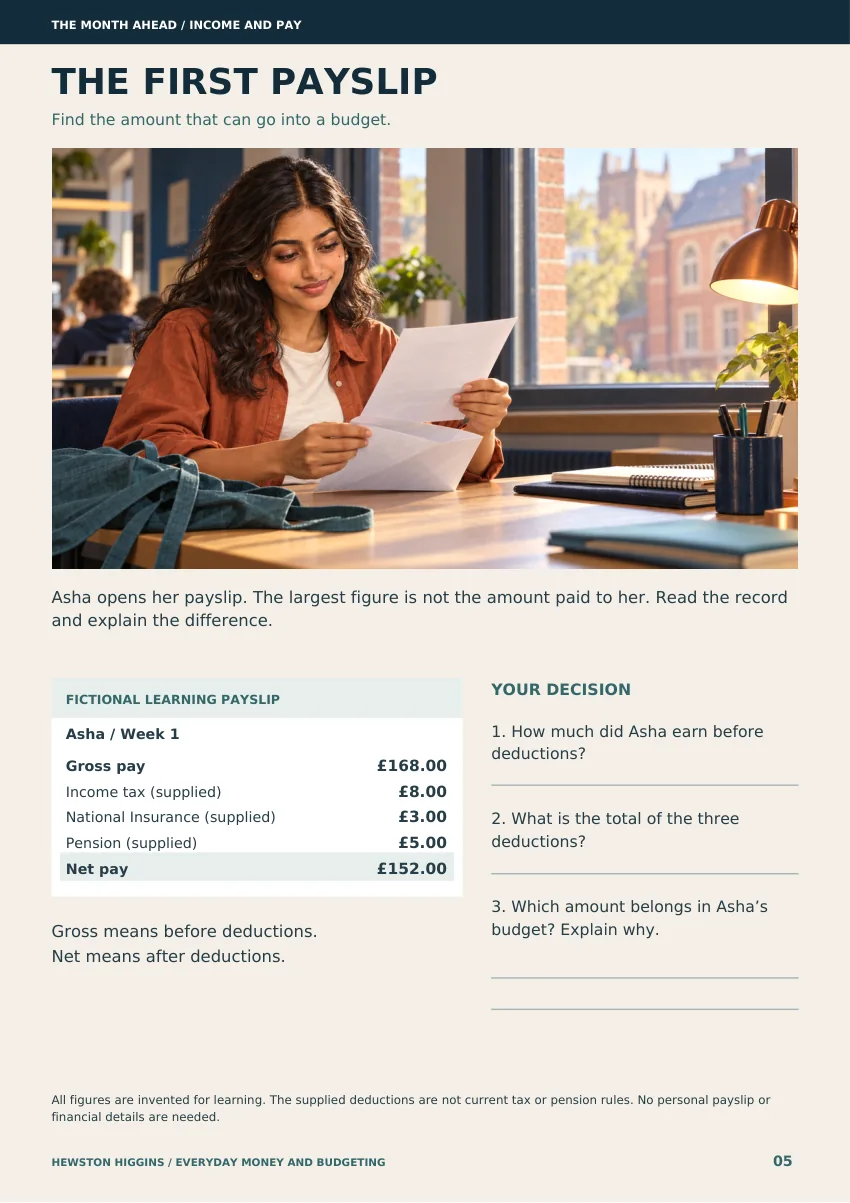
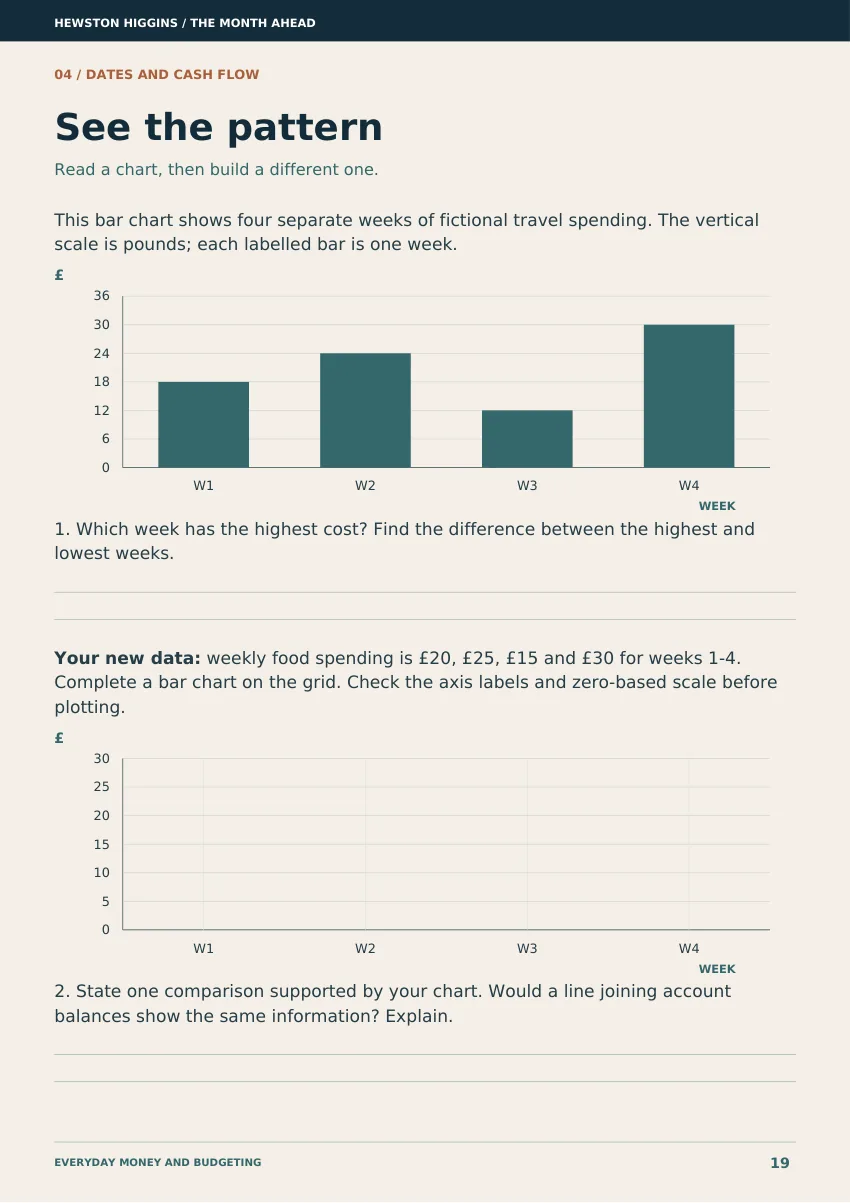
Work through a fictional payslip or cash-flow plan, show the calculation and explain how a changed date affects the month. Use the worked key to discuss a method and a next step.
SEND support and different ways to take part
Use supported reading, chunked calculations, accessible responses and fictional household figures throughout. Suits post-16 supported learning and preparation for adulthood; it is not personal financial advice or an accredited assessment.
A budget makes more sense to me when you can see the month it belongs to. I put a fictional household’s choices on the page so older learners can change a cost and see what happens next, with room to think through what to do if the money won’t stretch.
Choose a print format
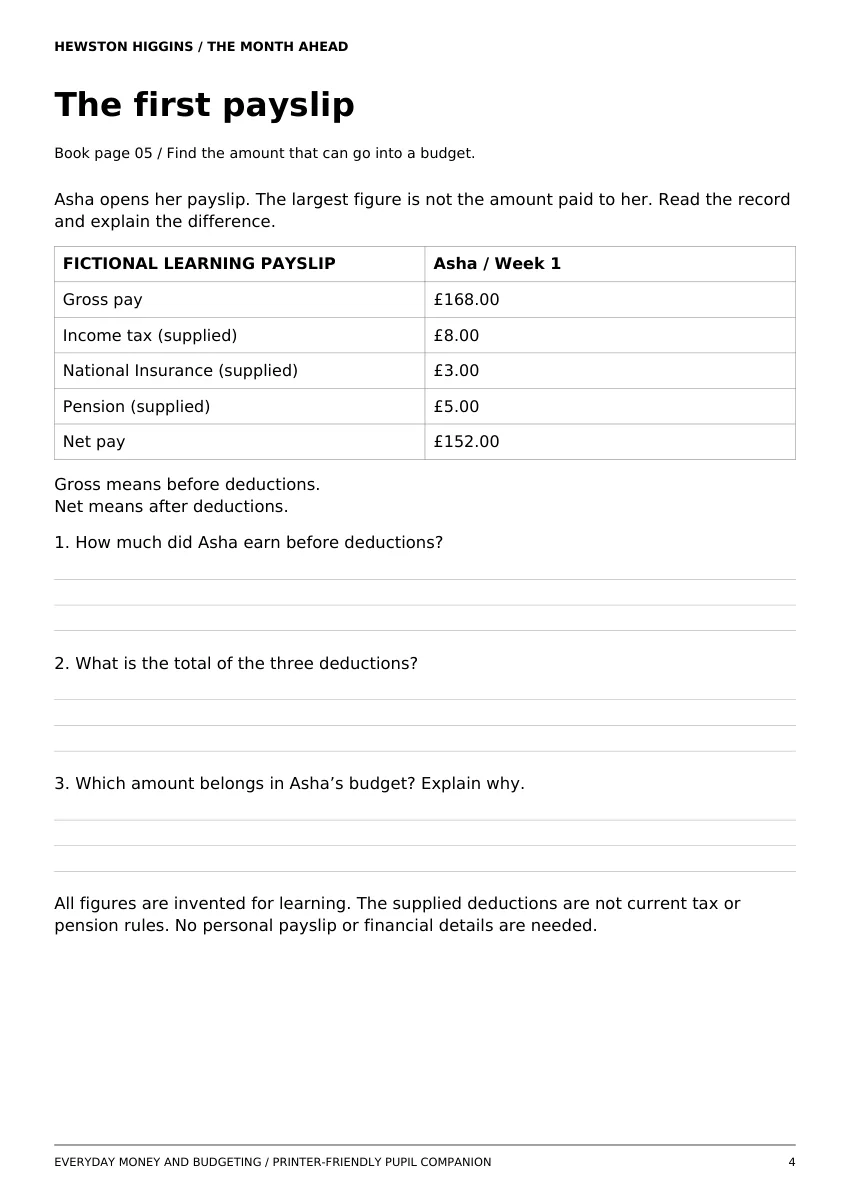
The reading activity above is free to print in black and white on A4 or A3.