Understand structures
Identify a deck, supports and load. Explore how folding paper can change stiffness, and notice structures in everyday surroundings.

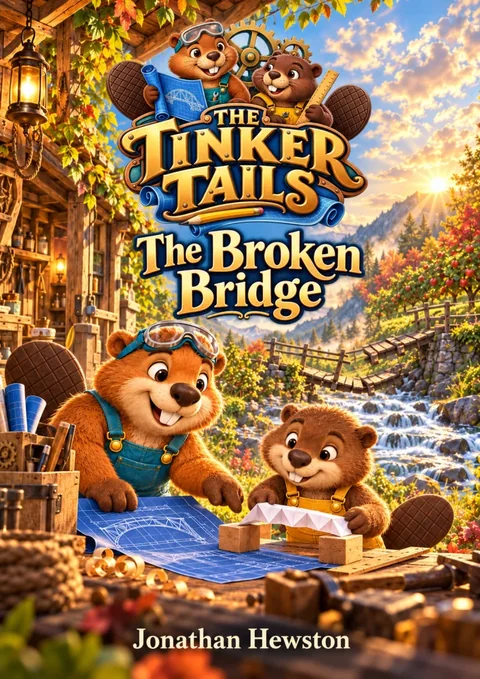
Try the free activities for this book
Free classroom lesson and print formats · Listen
A bridge that has to work gives a drawing a real job to do. I wanted children to have a reason to see what happens when they change a design. Two paper folds and a few counters are enough to start comparing which bridge holds up.
Printed to order. Need it by a particular date? Ask us about dispatch before ordering.
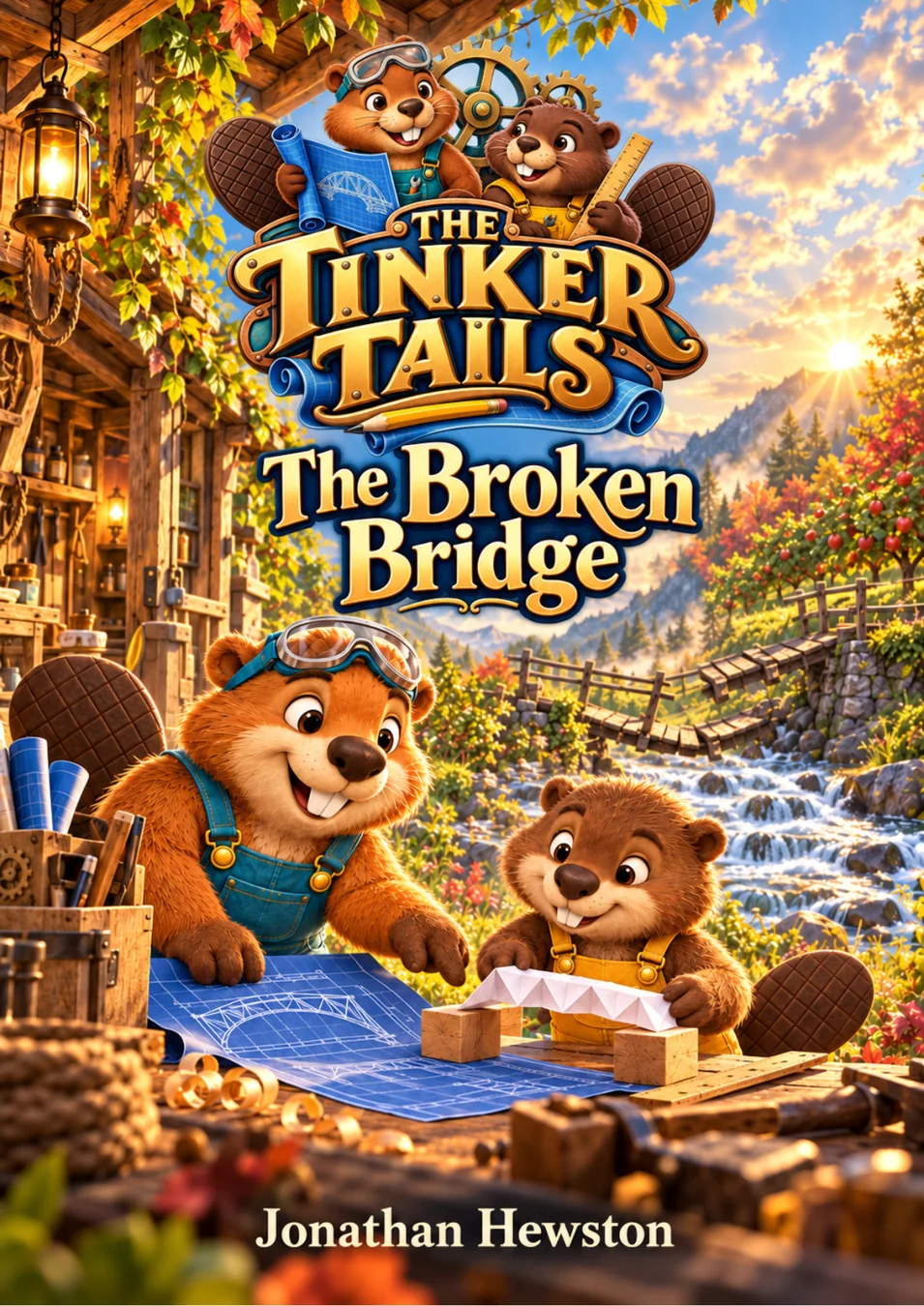
Explore structures and fair comparisons with The Tinker Tails: The Broken Bridge.
Identify a deck, supports and load. Explore how folding paper can change stiffness, and notice structures in everyday surroundings.
Predict a result, draw a labelled design and build a paper model. Keep the comparison fair, record what happened and test one improvement.
Use observations to discuss a design. Think about different users, sequence the making process and reflect on the next question.
Spot bridge problems; label structural parts; compare flat and folded paper; make predictions; identify what stays the same; draw a model; record three trials; plan one improvement; compare results; design for two users; sequence the design process; complete a vocabulary and achievement record.
The model challenge uses a 15 cm clear gap, an adult-prepared sealed 50 g test load and a maximum 10-second test. Children record three trials before a change and three after it. Results are left blank for their own observations.
Approximately ages 6–8, broadly Years 1–3 in England. This is a supported story and practical investigation. Adjust reading, writing and making support to the child.
| Area | Book connection |
|---|---|
| Design and Technology: design | Communicate a purposeful model through talk and labelled drawings; consider users. |
| Design and Technology: make | Select and shape paper for a tabletop model with adult support. |
| Design and Technology: evaluate | Compare a model with the challenge criteria and explain an improvement. |
| Technical knowledge: structures | Explore how folds affect stiffness and how supports carry a deck. |
These are supplementary links to England’s Design and Technology programme of study, especially Key Stage 1 structures. The book does not provide complete curriculum coverage. Discussion, measurement and recording offer opportunities to practise language and number skills.
Use across four suggested sessions: story and prediction; planning and making; testing and improvement; comparison and reflection. Children may respond orally, by pointing, drawing, writing or adult scribing. This supports flexible participation; individual adaptations may still be needed.
An adult prepares the sealed load, checks the supports and supervises every test on a low stable table over a tray. Use a real ruler to set the gap. The activity concerns small models; children must never cross, load-test or repair a real damaged bridge.
eligible active members can access the member reading edition in Books & Reading, plus a separate teaching and edition-notes companion in Teacher Guides. The companion provides materials, suggested sessions, page-by-page assessment guidance and the edition’s review notes.
Eligible members can read the digital edition. The printed paperback is available to order for £12.99.
Three adult-led investigations for ages 6–8. Use two books, paper and counters to explore how a bridge deck changes when you fold it.
The free first lesson includes the complete teacher plan and pupil prediction sheet. The full seven-page PDF includes all three plans, three pupil sheets and teacher reference notes.
Download the complete first lesson free (2-page PDF)
One-time purchase for one classroom or individual practitioner. Members use their plan’s licence.
Explore structures and fair comparisons with The Tinker Tails: The Broken Bridge.
Test paper bridges using the same tabletop span and light counters. Record observations before changing one design feature; supervise the practical task.
Keep the bridge span marked and give pupils a picture sequence for place, test and record. Offer observation or counting roles when handling the model is difficult.
Read the detailed teaching plan for The Tinker Tails: The Broken Bridge — preparation, three flexible sessions, accessible activity choices, learning observations and follow-up.
Teachers can share the book on screen where the edition and licence permit, and use matching printer-friendly activity pages where available.
Explore structures and fair comparisons with The Tinker Tails: The Broken Bridge. Learning opportunities include identify a design need; compare structures fairly; explain an improvement. Suggested use: Test paper bridges using the same tabletop span and light counters. Record observations before changing one design feature; supervise the practical task. For SEND support, adapt the reading pace, explain unfamiliar vocabulary and offer pointing, drawing, AAC, typing or a scribe where helpful. Preview the actual pages to judge fit; one format will not suit every learner.
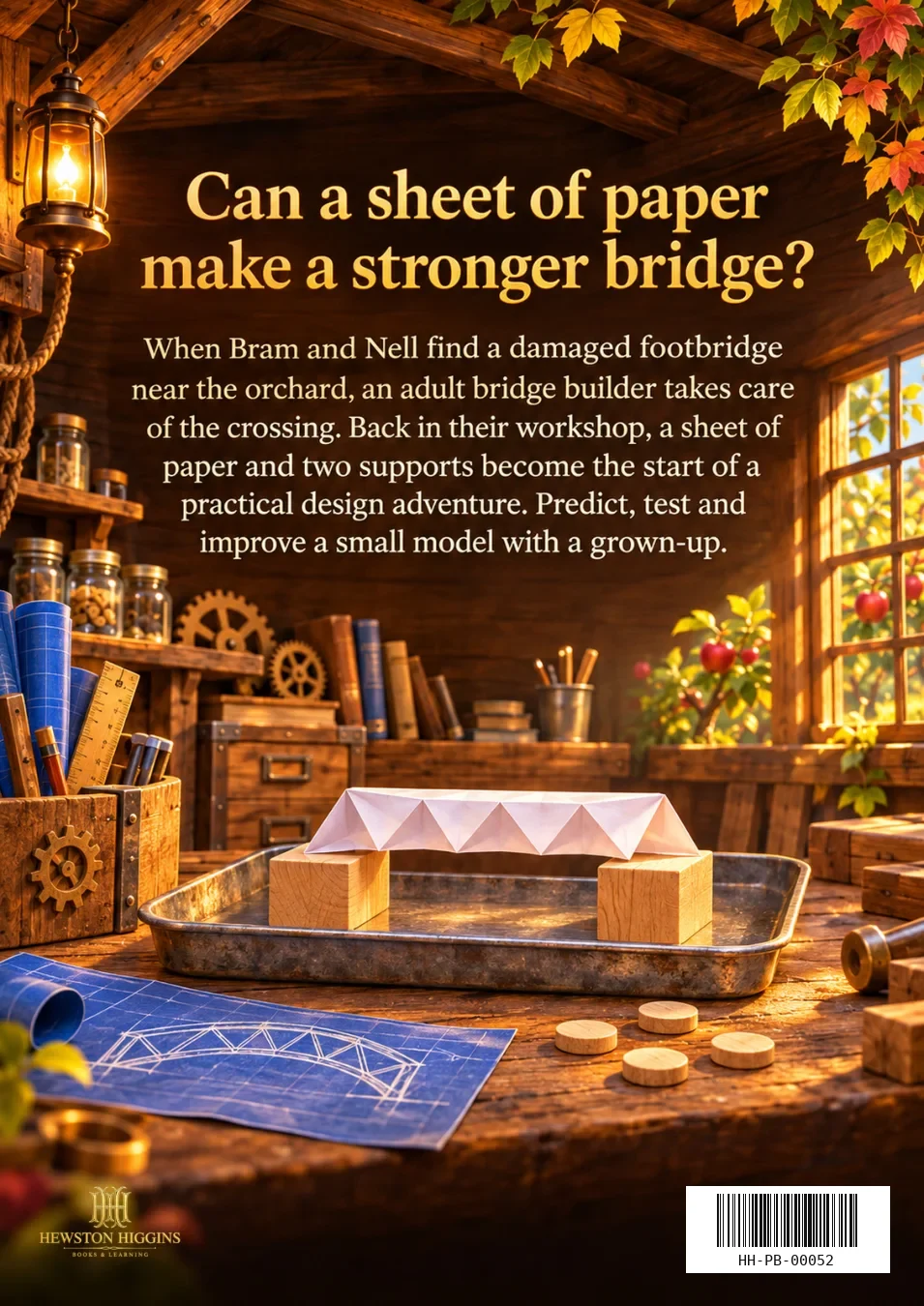
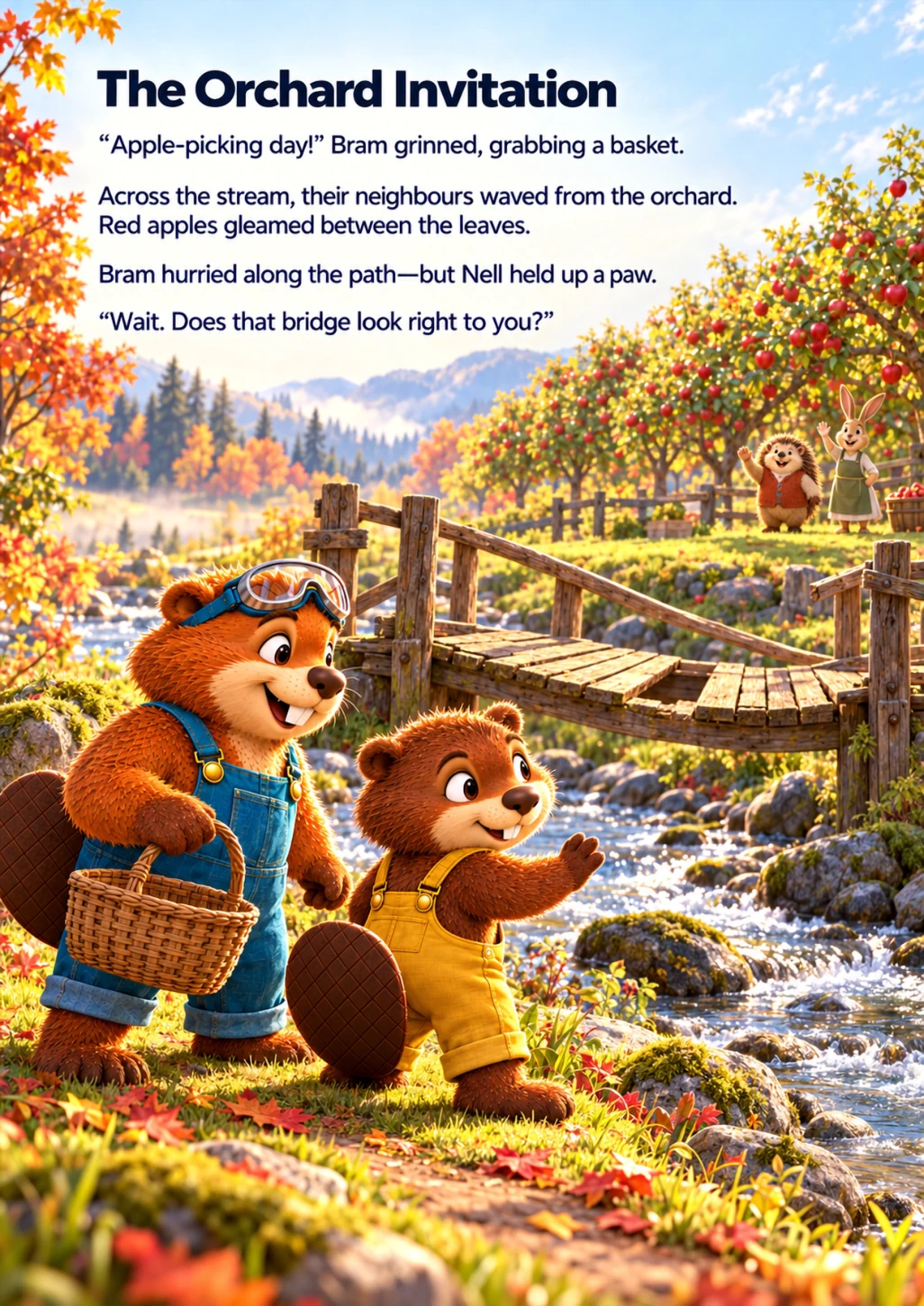
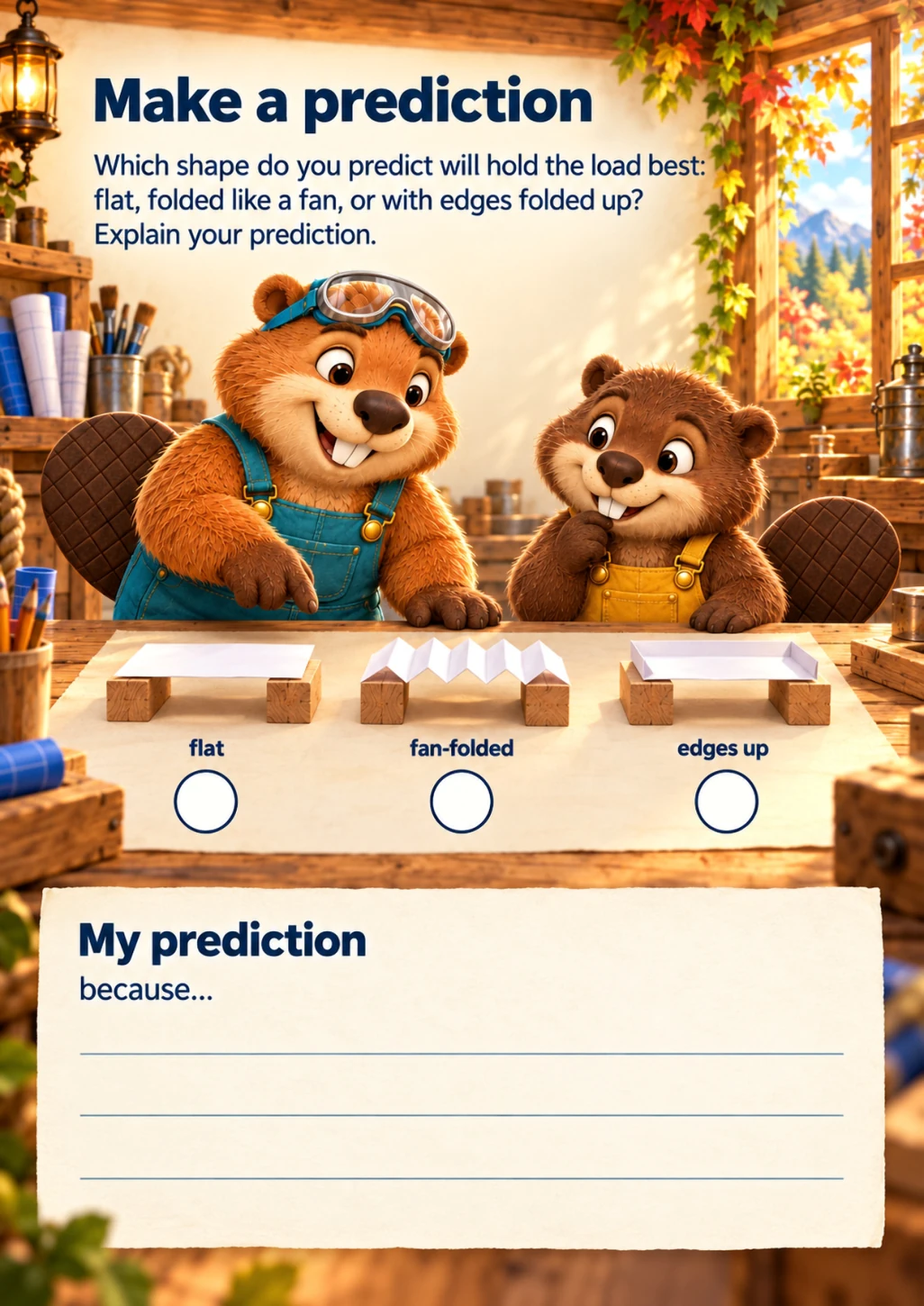
These complete pages come from the approved digital review edition. Meet the orchard adventure, then predict which paper shape might hold a small test load. The original wording, pictures and response space are preserved.
An adult prepares and supervises the small tabletop-model investigation using the complete book instructions. Children must never cross, test or repair a real damaged bridge.
Already a member? Find this title in the library
Try the free bridge lesson or get the three-lesson unit.
Paperback available to order for £9.99. Printed using our interim printing arrangements; UK delivery is confirmed at checkout.
UK tracked delivery is £3.99 below £29.98. Free UK tracked delivery on paperback orders of £29.98 or more.
Bring Bram and Nell’s engineering adventure into your classroom with ten cinematic teaching posters. Explore structures, bridge vocabulary, paper stiffness, predictions, planning, fair comparisons, safe model testing, recording evidence, improvements and designing for different users.
Each poster combines a clear teaching point with a short discussion prompt. Use them alongside The Broken Bridge, in a making area, or to revisit the design process after practical work.
Complete bundle in A4 and A3. Includes 20 individual poster PDFs, complete ten-page collections in each size, and printing and licence notes. Digital ZIP download; physical posters and materials are not included.
Eligible members can download this resource under their membership licence and allowances.
The A4 and A3 print files use artwork enhanced from the original illustrations to 300 pixels per inch at each size. Choose the PDF that matches your paper and print at actual size.
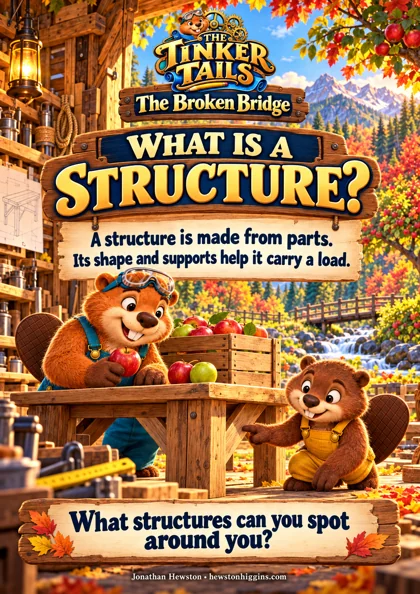
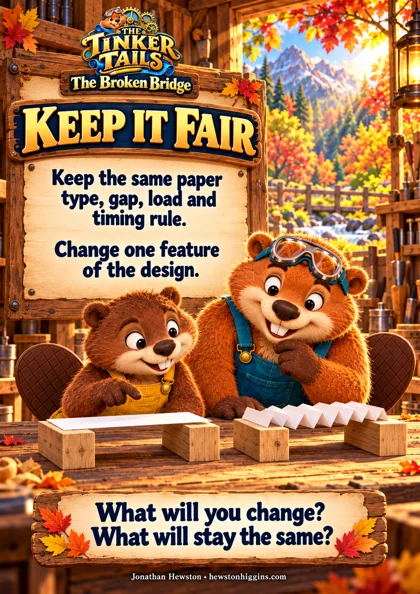
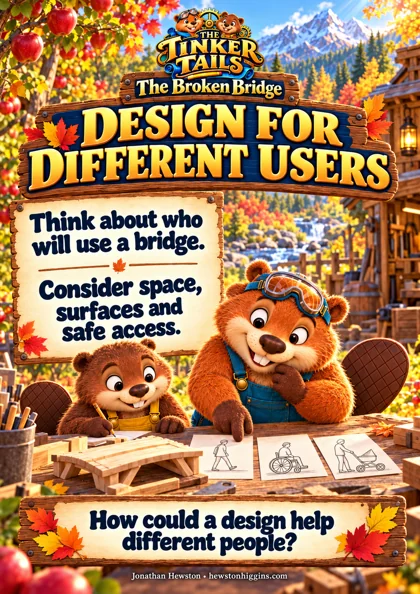
For adult-supported model investigations. The posters supplement the book’s practical instructions; they do not replace them. Never test or repair a real damaged bridge as a pupil activity.
Every active membership includes all published member resources. Choose a file below and sign in to download it within your plan’s allowances.
The Tinker Tails: The Broken Bridge
Look together
How could you compare two paper bridges fairly?
Have a go
Use two equal sheets and the same gap. Fold one sheet, predict which will hold more counters, then test one counter at a time.
A bridge that has to work gives a drawing a real job to do. I wanted children to have a reason to see what happens when they change a design. Two paper folds and a few counters are enough to start comparing which bridge holds up.
The reading activity above is free to print in black and white on A4 or A3.