
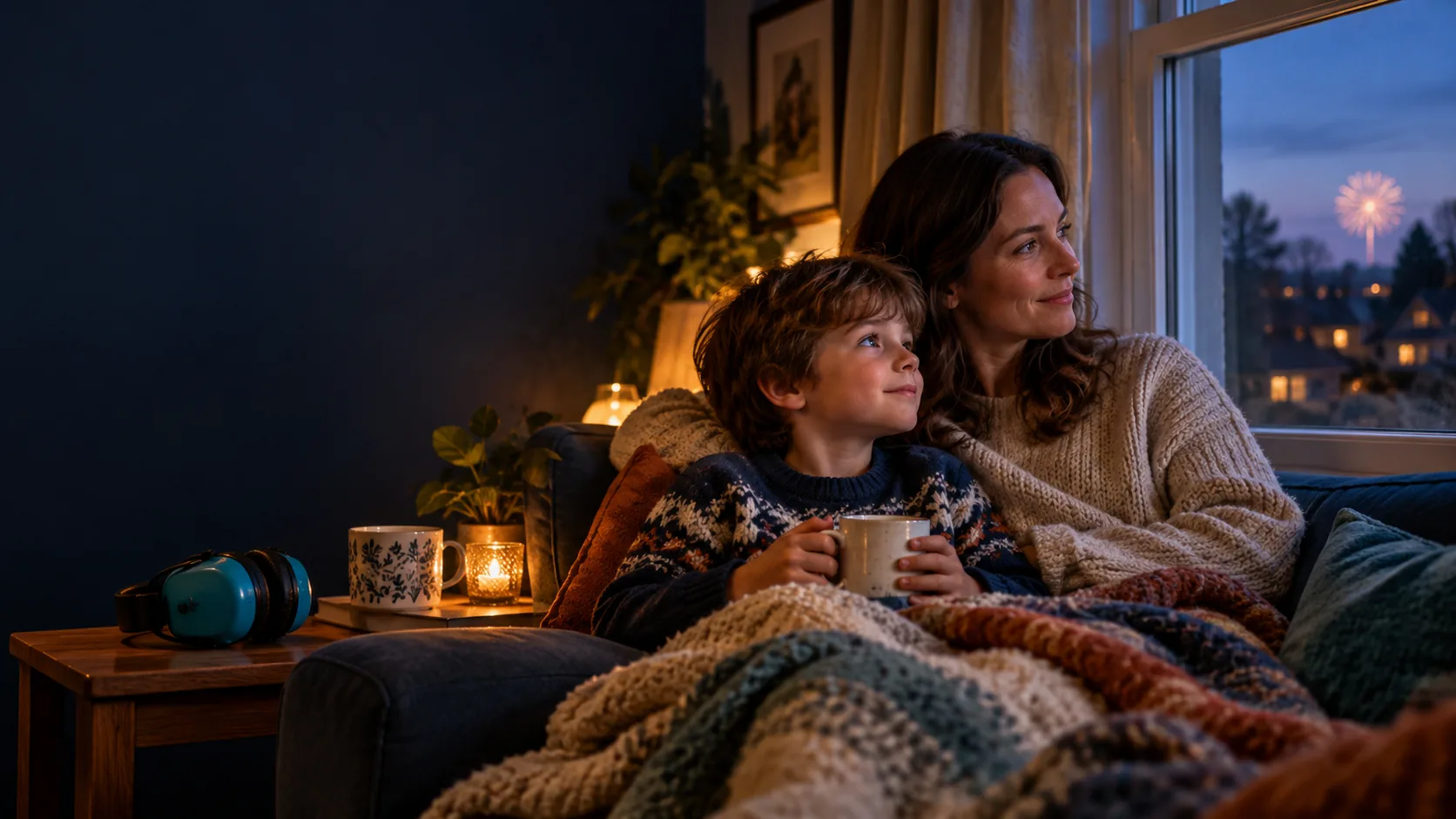
The evening does not have to look the same for everyone
One child wants to watch every colour in the sky. Another likes the colours but not the bangs. A third would rather close the curtains and carry on with their favourite book. All three deserve an evening that takes their preferences seriously.
I’d talk through the evening before you go, especially where you can stand and how you’ll leave if your child has had enough. If there are siblings going too, agree who’ll stay with them if someone needs to go home.
This guide offers an adaptable family plan for children who find fireworks, crowds or unexpected changes difficult. It may be useful for autistic children and other children with sensory preferences or worries, but it does not assume that every child experiences celebrations in the same way. There is no requirement to attend a display, and no promise that preparation will remove every difficulty.
The practical aim is smaller: agree what you can, give the child usable choices and make changing the plan possible. Staying home can be a complete plan, rather than the disappointing version of a better evening.
What the sources say, and what we are suggesting
The National Autistic Society’s Bonfire Night guidance explains that some autistic people find fireworks distressing and stresses involving the individual in planning. Its suggestions include discussing the evening, considering ear defenders and choosing to watch from home. These are options to consider, not a checklist every autistic person needs.
For physical firework safety, London Fire Brigade recommends organised public displays instead of buying your own fireworks. That advice comes from London’s fire and rescue service. It does not mean every public display is accessible or suitable for every family. Check your own local fire and rescue service’s guidance and the organiser’s current arrangements.
The planning questions, examples and indoor activities below are our original editorial suggestions. They are general family and educational ideas, not an individual treatment plan or a guarantee that an event is safe. This article does not list verified local events or give instructions for handling fireworks.
Start with the child’s preferred version of the evening
Begin with a choice that is real. “Would you like to go?” is only useful if “no” is an answer the adults can accept. You might instead offer two workable options: a short visit to an event you have checked, or a familiar activity at home. Explain any limits honestly, including who can stay with each child.
Some children will want more detail before choosing. Ask what they would like to know: how dark it will be, where the toilets are, who is coming or whether there will be music. A child may answer with speech, pointing, drawing or their usual communication system. Give them time without repeatedly asking for a decision.
Avoid using last year’s experience as the final answer. A child who enjoyed a display previously may not want one now. A child who left early might want to try a different arrangement. Ask about the present choice rather than framing it as proof that they are becoming braver.
For siblings with different preferences, consider whether adults can divide responsibilities. If that is not practical, say so kindly and look for another shared option. One child should not have to earn a quiet evening by first tolerating an activity they have already declined.
Check the details behind an accessible-event label
A label such as “family-friendly”, “quiet” or “sensory-friendly” is a starting point for questions. It is not enough information to decide whether a particular child can participate comfortably. Ask the organiser what the description means at this event.
Useful questions include:
- When do gates open, when is the display expected to start, and what happens if it is delayed?
- Will there be amplified music, announcements, flashing lighting, fairground rides or queues?
- Is there a quieter space, and can a family actually reach it during the event?
- Can you leave easily? Is re-entry allowed if someone needs a break?
- What are the paths, seating, toilets and wheelchair access like, including in wet weather?
Ask for a map or photographs if these would help your child. Check the route from the entrance to the viewing area and back out. A quiet space is less useful if getting there requires crossing the busiest part of the site.
Keep uncertainty visible. If the organiser cannot confirm the finish time, do not tell the child it will end at an exact minute. You can explain that there is an expected time, but your family can leave earlier. A quieter display may still involve sudden sounds, busy surroundings or light effects; ask for specifics rather than promising silence.

Make a short plan with an exit built in
An evening plan can be a few pictures, a spoken conversation or a short written note. Use the format your child already understands. Include the parts that matter to them rather than producing a beautifully decorated timetable that nobody uses.
For a visit, the sequence might be: put on coats, travel, find the agreed viewing place, choose whether to stay, return home. For an indoor evening, it might be: choose an activity, have a familiar snack, follow the usual bedtime routine. Put the “leave” or “stop” option into the plan from the beginning.
Agree how the child can communicate that choice. It might be a word, a hand signal, a picture or a message on their usual device. Rehearse the adult response too: “You want to leave. We are going to the exit now.” If getting out takes a few minutes, explain that before arriving.
Adults can decide practical responsibilities in advance: who carries the bag, who supports each child and where everyone meets if separated, following the venue’s arrangements. Keep children supervised throughout. Avoid relying on a child to remember a complicated set of instructions in a busy place.
Our guide to using a visual timetable offers more ideas for making a sequence clear. The purpose here is information and choice, not using a picture schedule to insist that every planned activity must be completed.
Choose familiar comforts without promising they will fix everything
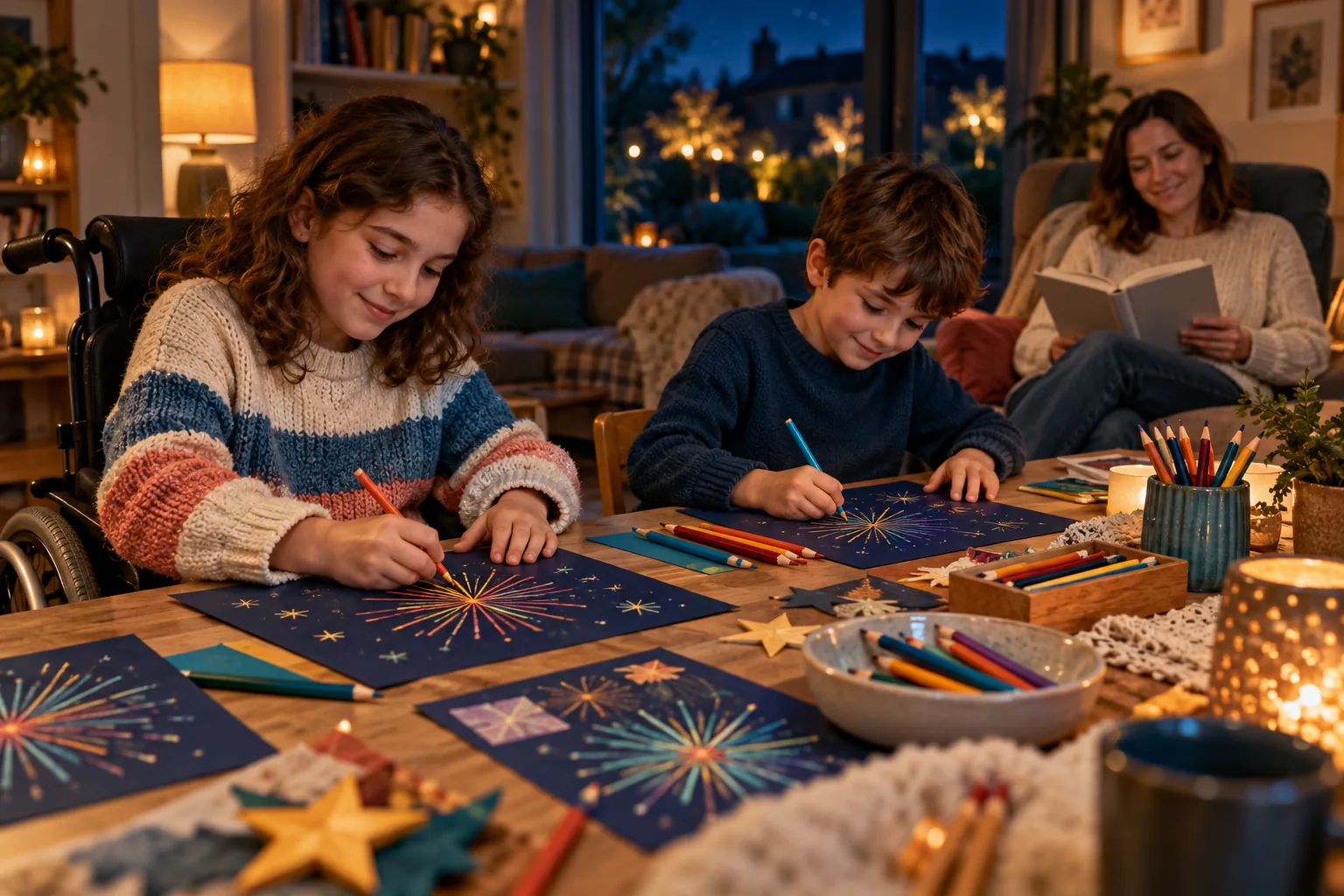
Pack what your child already finds useful, within the venue’s rules. This could be a familiar object, suitable warm clothing, their usual communication support and ear defenders they are comfortable using. Ask the child which things they want, rather than turning the bag into a collection of unfamiliar equipment.
Try any new item in a comfortable setting first. An event entrance is a poor place to discover that an unfamiliar headband feels unpleasant or that a zip is difficult to manage. Keep useful items easy to reach instead of at the bottom of a crowded bag.
Ear defenders do not make every environment suitable or remove the need for a safe viewing distance. Follow the product instructions and the organiser’s safety directions. RNID’s guidance on choosing hearing protection explains the importance of equipment designed for that purpose and a suitable fit. Do not assume an ordinary music headset provides the same protection.
If a child dislikes an item, listen to that information. Do not make wearing it the price of being allowed to leave. You may need a different plan, including staying home. A good support is something the individual can use, not something that looks helpful in an adult’s checklist.
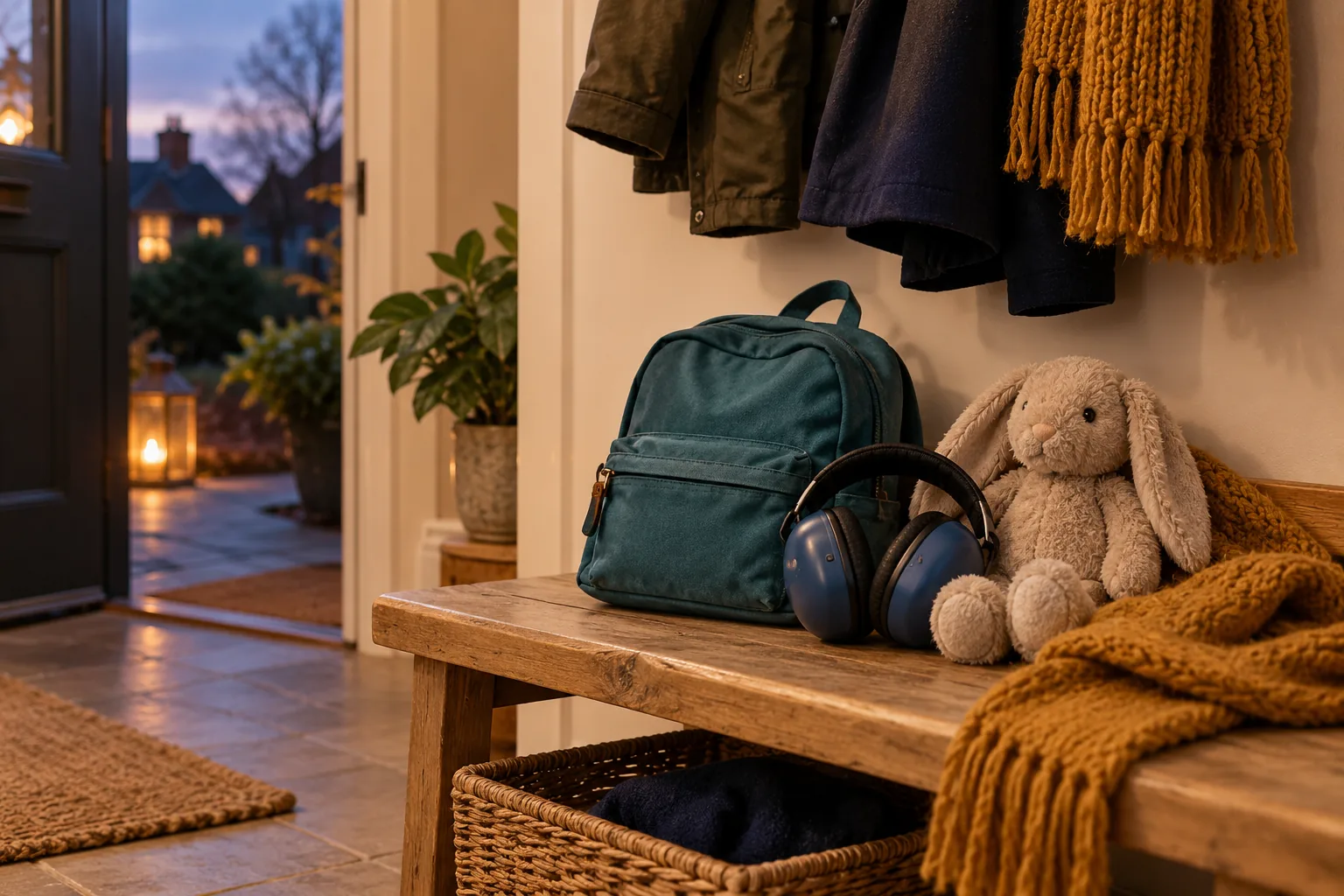
Give the home option its own enjoyable purpose
An indoor evening does not have to imitate the display outside. Let the child choose something with its own appeal. Close curtains if they prefer and keep familiar activities available, while recognising that outside noise may still be audible.
Here are three simple, optional activities that need no fire, sparklers or flashing equipment:
Make a colour-burst picture. Offer navy paper and coloured pencils or crayons. Children can draw lines, dots, spirals or something completely unrelated to fireworks. There is no correct pattern to copy. Keep materials age-appropriate and use those the child enjoys handling.
Invent a night-sky story. Begin with a character who notices a light through a window. The child chooses what it is: a distant lighthouse, a spacecraft or a neighbour’s lamp. They can tell, draw, type or act out what happens next. A story does not need to become a writing assignment to count as a worthwhile activity.
Create a small evening choice menu. Put two or three familiar activities on cards: a book, a puzzle or drawing. The child chooses one and can change later. Older children might prefer a game, an audiobook or a shared film; keep the options respectful of their age and interests.
Do not introduce a fireworks video without checking first. Someone who dislikes the subject may not want a screen version either. If they request one, preview it, retain control of sound and stop when they ask. Watching a video is an option for enjoyment, not a test to prepare a child to withstand a live display.
If the evening becomes too much, follow the agreed choice
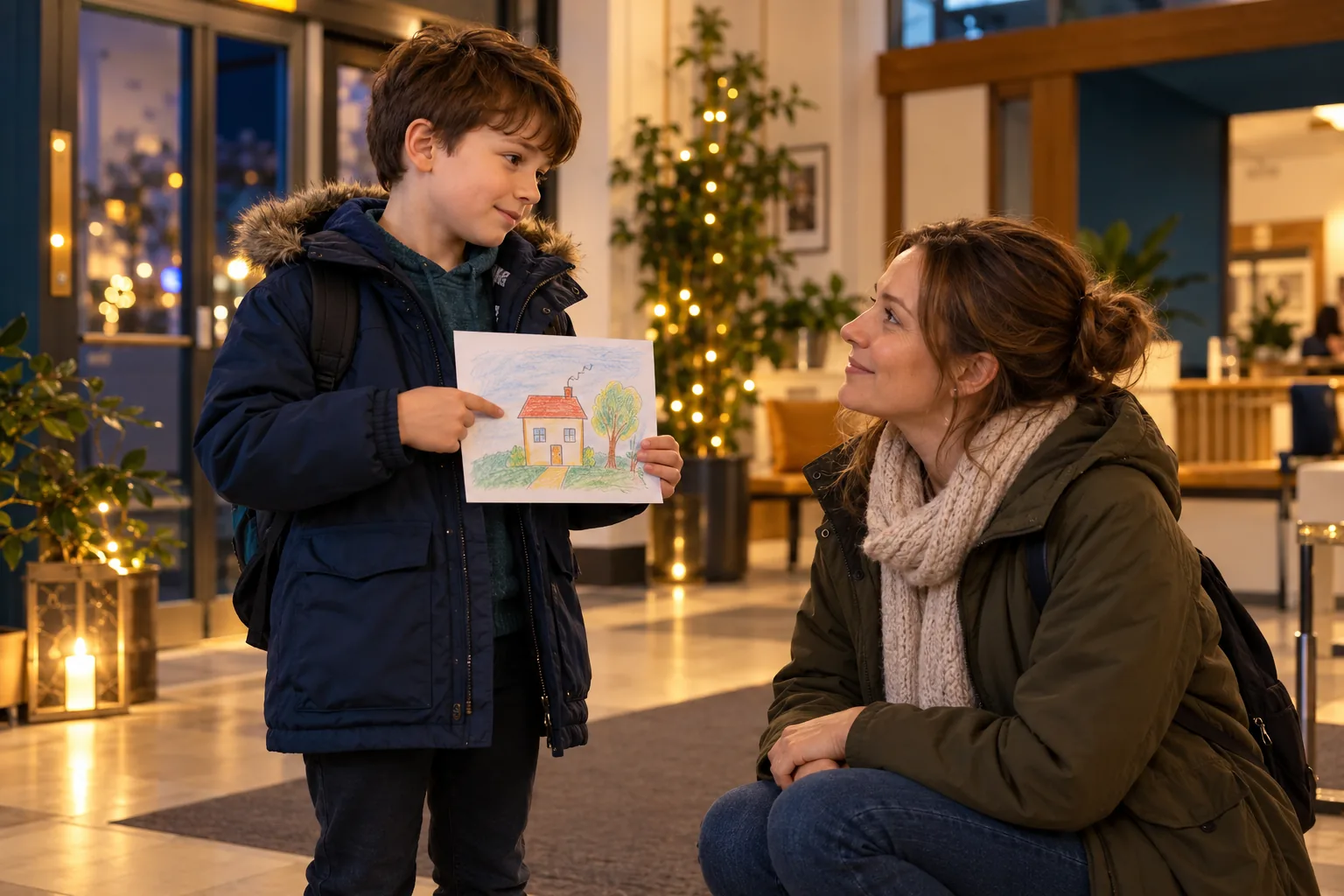
Preparation can help adults respond consistently, but it cannot guarantee that a child will feel comfortable. If the child asks to leave or stop, act on the plan. Avoid negotiating for one more firework because the finale is about to start or because leaving feels inconvenient.
Use brief, familiar language and offer the next practical step. A child does not need to explain their sensory experience in detail before you help them leave a busy place. Keep communication supports available and maintain supervision while moving to the agreed exit or quieter location.
At home, a change might mean stopping the themed activity and returning to something familiar. It is fine for the evening to become ordinary. You do not need to rescue the celebration by offering a succession of new distractions.
Later, when the child is ready, ask one useful question: “What should we keep or change next time?” Accept a short answer. You can note the child’s preferences alongside practical information such as a difficult queue or a helpful seat. Avoid describing leaving as failure; it gave you information about what worked and what did not.
A useful approach for schools and community groups
If you are discussing Bonfire Night in class, avoid assuming every child will attend a display. Invite contributions about different evenings, including staying home or not celebrating. Children can explore colour, light, stories and seasonal changes without recreating sudden bangs.
Tell families about planned activities in advance, particularly anything involving unexpected noise or lighting. Offer a meaningful alternative and explain it clearly. An alternative works better when a child can join it without having to become visibly distressed first.
Keep firework safety separate from sensory choices. London Fire Brigade warns that sparklers burn at very high temperatures and should not be given to children under five. They are not a harmless substitute for fireworks. For school or group events, follow the organisation’s safety procedures and current fire-service advice rather than treating this article as an event risk assessment.
For a quiet shared activity, browse our family resources and samples or learning resource collection. Check each item’s audience and access details. Resources can support conversation or creative time; they do not promise to prevent distress or replace individual support.
Sources and scope
- National Autistic Society: Bonfire night and fireworks — top tips. UK charity advice; page states last reviewed 4 November 2020.
- London Fire Brigade: Fireworks safety. Primary safety guidance from London’s fire and rescue service. Consult your local service and current organiser information for your location.
- RNID: Choosing the right hearing protection. UK charity guidance on purpose-designed hearing protection.
Sources checked 30 October 2026. This is a practical planning guide, not a report of new legislation or a list of verified 2026 events. Family scenarios and creative activities are editorial examples. Images are AI-created illustrations of imagined scenes, not photographs of customers, real events or evidence of outcomes.