
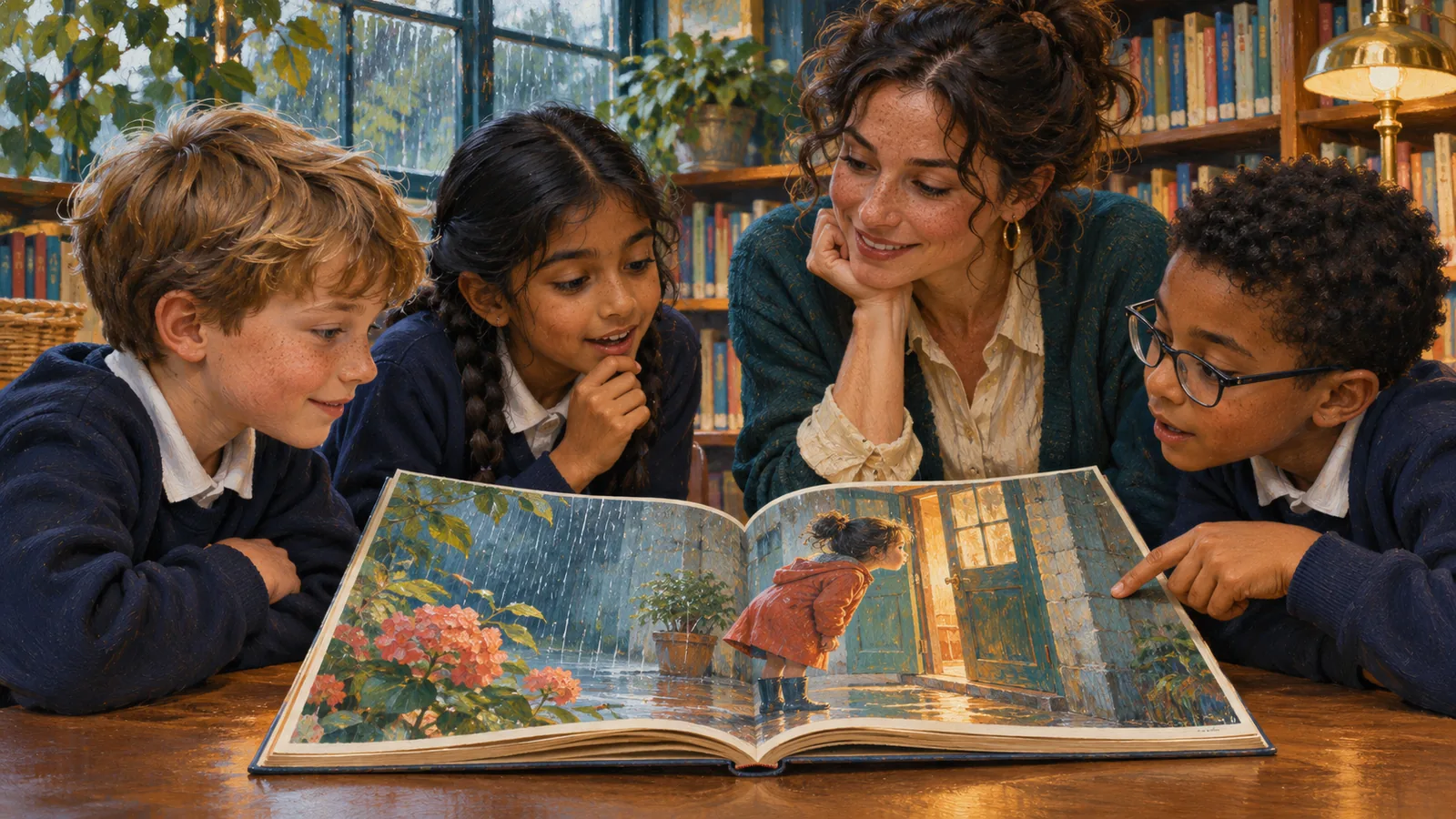
A child can tell you what happened in a story and still find “How do you know?” hard to answer. Sometimes the question arrives too quickly. Sometimes they know what they mean but cannot find the words. Sometimes the clue adults think is obvious depends on something the child has never seen before.
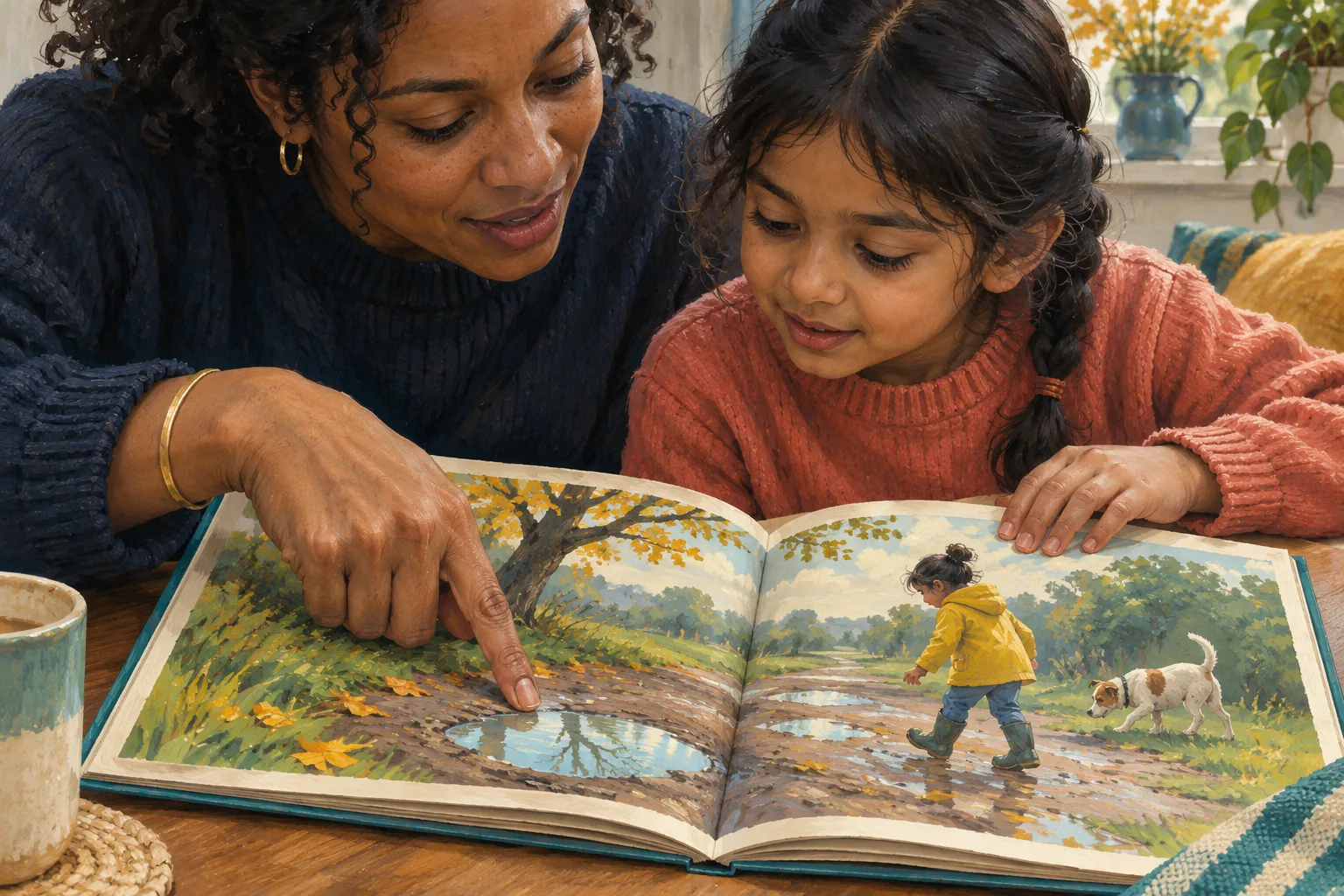
An inference is an idea you work out from clues in the story. I’d ask, ‘What gave you that idea?’ Then look back together. A child can point to a picture or a line on the page if that’s easier than explaining it straight away.
Find one clue together
Suppose the story says: “Amira pushed open the kitchen door. A little pool of water spread beneath the coat hooks.” The water is a detail the author gives us. “Someone came in from the rain” is a possible explanation. There could be another explanation: perhaps a water bottle leaked. “Someone will slip” is a prediction about what could happen later. Those are three different jobs for a reader.
I made up this example for the activity. Check the words together first. Here, a pool is a patch of water on the floor. You can sketch the door, the hooks and the puddle if that gives the child somewhere to point.
A picture can help with the setting and give a child somewhere to look. If an illustration shows a detail that the words leave out, name where it came from: “You saw the umbrella in the picture; the sentence didn’t tell us it was there.” When the aim is to make an inference from the written text, return to the actual words. And when the aim is to practise reading a new word, use the child’s usual decoding approach. This conversation is about meaning, not guessing what a printed word says.
Show what a reader does with the clue
Read the two sentences again and say your own thinking aloud once: “There’s water below the coat hooks. I think someone may have hung up a wet coat, because the water is right underneath. The story hasn’t told me what made it wet.” The small word may matters. It gives children permission to make a sensible suggestion before the author confirms it.
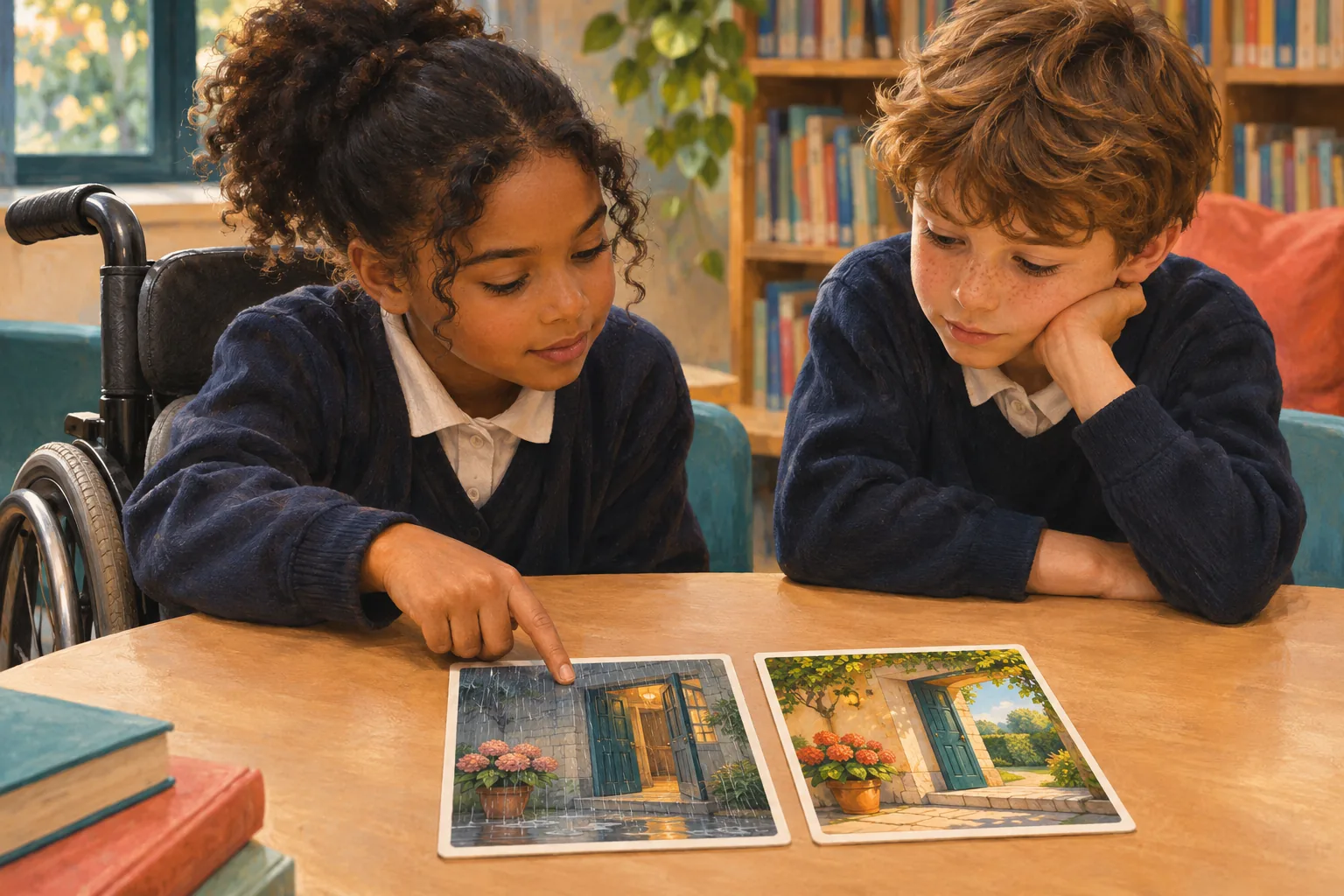
Now leave the text visible. A child can show the words about the hooks, point to the puddle in your sketch, or use a familiar choice system to indicate “wet coat” or “leaking bottle”. If you offer two choices, include room for “something else” or “not sure”. The point is to see which clue the child uses; two neat tick boxes cannot always tell you that. A child who selects a bottle might be remembering a real leak from that morning. That is a useful contribution. Ask where the story gives any evidence for the bottle, and agree what you would need to read next to decide.
If a child points to the hook and signs ‘rain’, try saying, ‘You think something wet was hung up here?’ Give them time to agree, correct you or show you more.
Read one more line and let the answer change
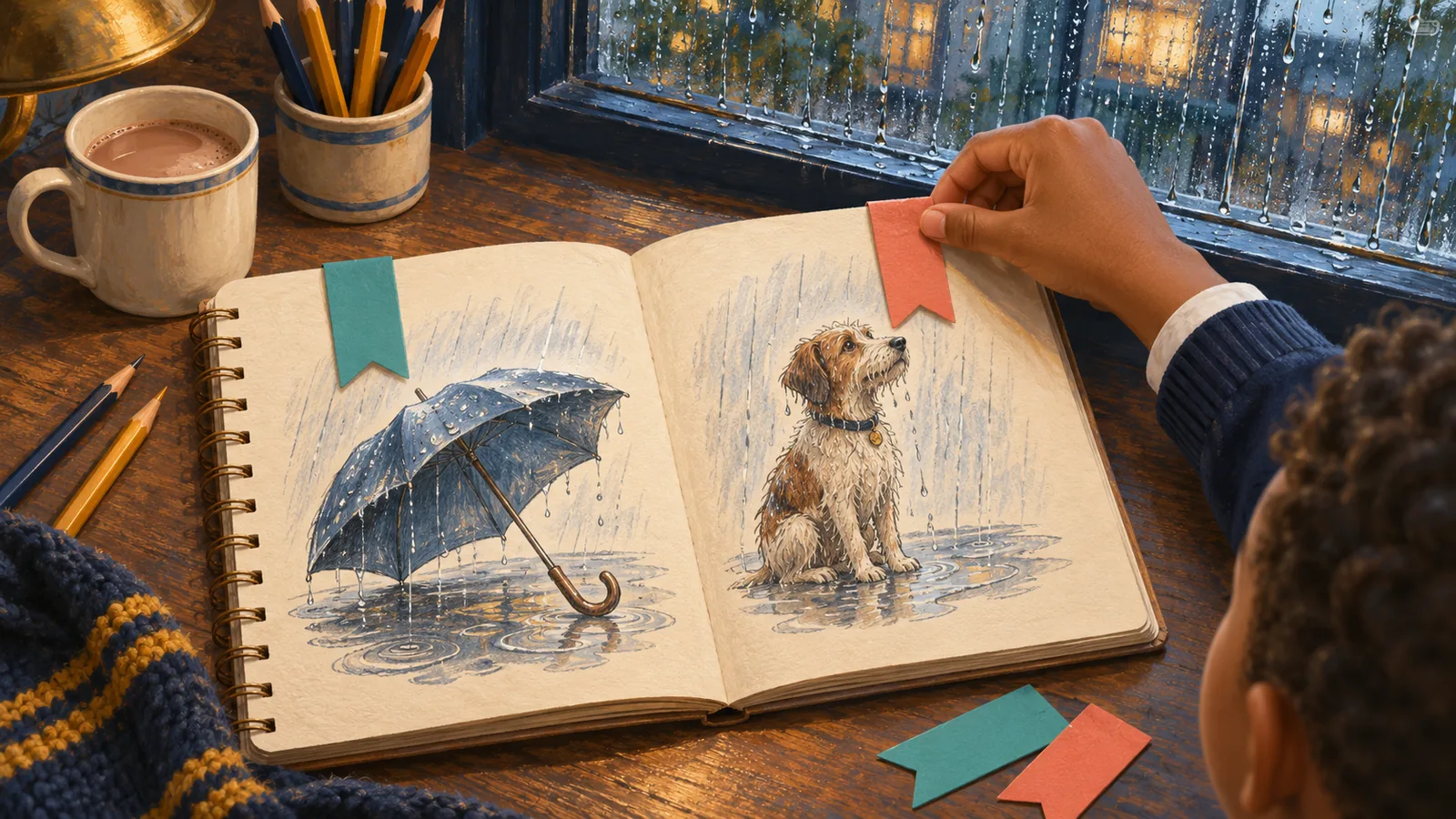
Continue the invented story: “A wet dog shook itself beside the back door. Amira laughed and reached for a towel.” Now there is a dog and a second possible source of water. Say, “I first thought it was a coat. Now I’ve read about the wet dog. That might explain it too.” The dog is a clue; it still does not prove what caused the pool under the hooks. You could finish the example with Amira finding a dripping coat, or leave the cause open and carry on with the story.
This is a useful contrast with a question that has a clear answer on the page, such as what Amira reached for. For a retrieval question, you can show the word towel. For an inference question, you need to explain how one or more details support an idea. If a child says “I don’t know yet”, look together for a detail that might help. They may have noticed exactly where the author has left the reader in doubt.
Try asking why someone puts a towel beside the dog. They might want to dry it or stop the floor getting wet. Ask what in the story helps you work that out, and listen for other explanations the child can support.
Keep the thinking accessible in class and at home
In class, plan one pause in advance. Choose a clue that will survive being read aloud and make sure everyone can return to it. Read the surrounding sentence, allow quiet thinking time, and let pupils rehearse an idea with a partner if that suits them. Offer a small response frame: I noticed … / That makes me think … A pupil can use only the first half. Another pupil can offer a competing explanation and identify what might distinguish the two.
If there’s a lot on the page, help the child find their place with a plain strip of paper or read the part you’re talking about aloud. Keep the full page nearby so they can look back at the picture or the rest of the story.
At home, it may be enough to notice something together: “That door was open on the last page. I wonder why it’s shut now.” If the child wants to turn the page, turn it. Return to the clue later if they bring it up. For children who already associate reading with pressure, our guide to taking the pressure off reading offers ways to keep book time manageable. You can also use our classroom communication ideas when planning how pupils can take part.
Try a complete page from The Vanishing Rainbow
In the current Vanishing Rainbow sample, Little Girl opens the green door and Rupert goes through first. Ask, “What suggests Rupert is ready to explore?” Look for his front paw already through the doorway. The narration tells us who went through first. His eagerness is something a reader can infer.
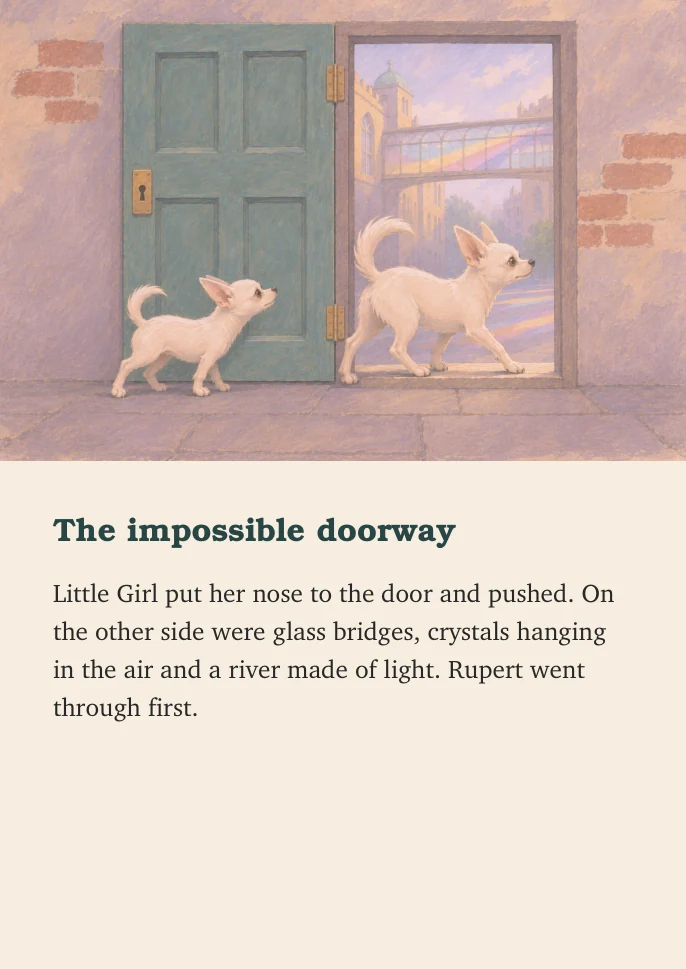
Read more on the current book page. The reading question above can be used with the sample on this page.
What to notice next time
For a teacher or SENCO, a short note can be more useful than a score: “Found the clue after the sentence was reread; chose an explanation without a prompt.” Compare that with “Could talk about the picture but did not yet locate the words.” The next step differs. One child might benefit from another chance to connect a clue to an explanation. The other may need help navigating the text or hearing the particular sentence again. Keep the record about the task and the help given, rather than labelling the child’s ability from one conversation.
Try another short example on a different day. Change one thing at a time, like the length or the way the child answers. Let them point, draw or tell you if that makes it easier to share their idea.
What the guidance says
The Department for Education’s English programmes of study for England include inference and giving evidence for an interpretation in Key Stage 2. The Education Endowment Foundation’s reading comprehension evidence summary discusses explicit modelling, prior knowledge and opportunities for pupils to practise. It distinguishes understanding a text from the ability to answer written questions. Both sources were checked on 6 November 2026. The examples and adaptations here are practical suggestions; the guidance does not evaluate this particular book or activity.