
Children's books • learning worlds • SEND resources • school programmes
Hewston Higgins Books & Learning
Written by Jonathan Hewston • Sources reviewed October 2026 • Educational information, not clinical advice.
SEND topic resources

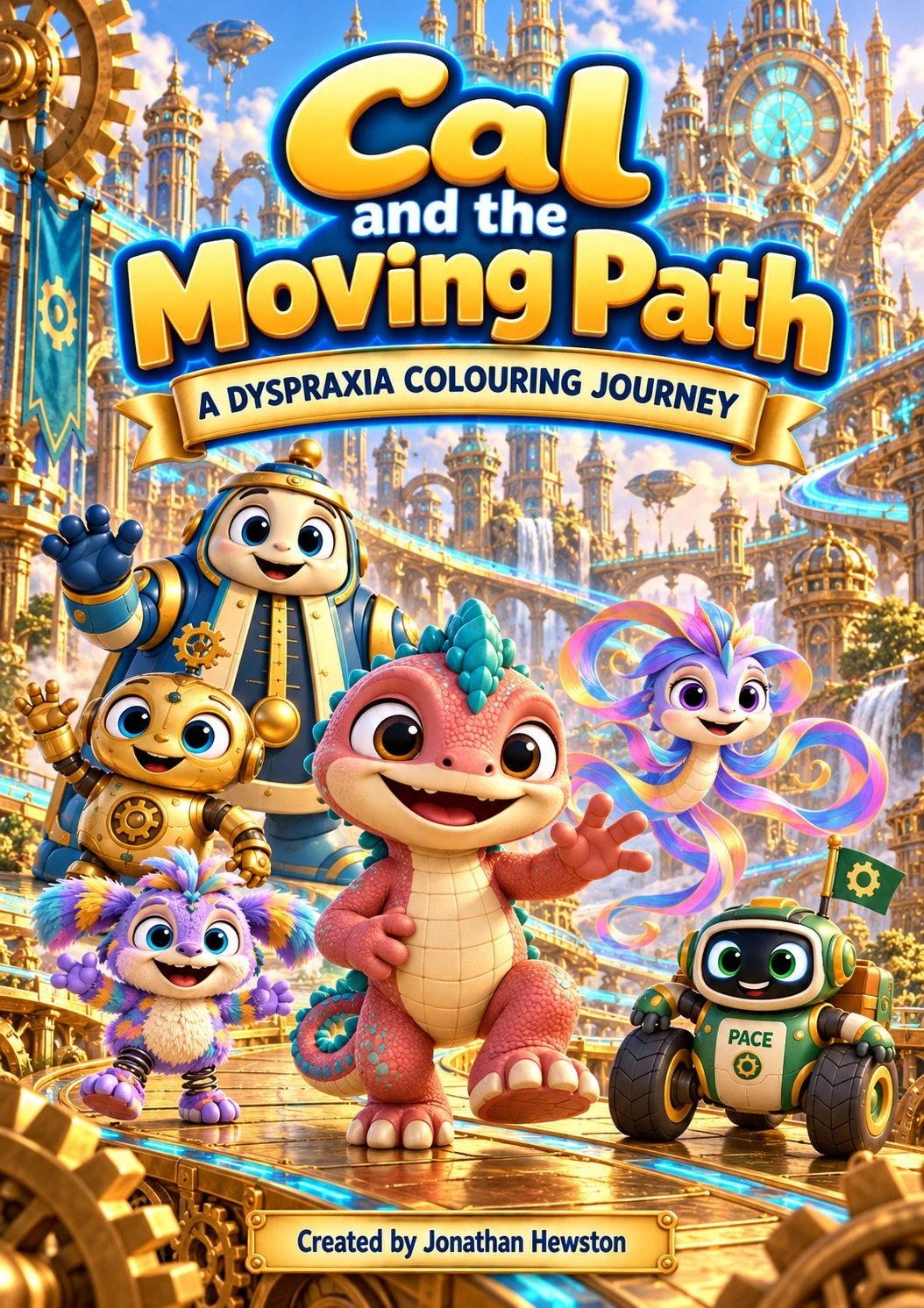
Dyspraxia books & Moving Path resources

A world about pace, movement, planning, trying again and finding approaches that work for the individual child.

What the resource is designed to do

Make the topic easier to approach and talk about.

Rather than presenting dyspraxia as a list of deficits, the Cal format uses story, characters and practical prompts to explore different experiences, strengths, challenges and possible supports.

  • Explore movement and planning without comparison or shame
  • Normalise different paces and ways of completing tasks
  • Use small steps and supportive characters
  • Focus on effort, adaptation and confidence

These are educational resources, not diagnostic or therapeutic materials.

Dyspraxia books & Moving Path resources
Detailed guide

Dyspraxia / DCD: practical context for families and schools

What DCD can affect

The NHS describes developmental co-ordination disorder, often called dyspraxia, as a condition affecting physical co-ordination. Difficulties may show up in everyday activities, handwriting, dressing, sport and other tasks.

Breaking actions into steps

NHS treatment information describes task-oriented support that identifies specific activities, breaks actions into small steps and practises them. That makes sequencing and manageable steps particularly relevant themes for a child-friendly discussion resource.

Confidence and comparison

Children who find movement or written tasks difficult may compare themselves with peers. A resource can help separate the difficulty of a task from the child’s worth or intelligence and create space to talk about adaptations.

Everyday adaptations

The right adaptation depends on the child and task. Schools and families may use changes to equipment, timing, task structure or expectations. Moving Path uses a clockwork world to make planning and sequencing visible without claiming to provide occupational therapy.

Professional support still matters

DCD may require assessment and support from health and education professionals. The Moving Path is an educational conversation tool, not treatment or diagnosis.

How we use evidence

Hewston Higgins separates educational design choices from clinical claims. Government, NHS, NICE and EEF sources are used to explain the context; the books themselves are presented as educational resources, not proven treatments.

Written by Jonathan Hewston • Reviewed October 2026
Practical use

Supporting participation when movement and coordination are difficult

Dyspraxia / developmental coordination disorder can affect movement and coordination, but children may also experience practical challenges around organisation, sequencing or completing everyday tasks. Support should be matched to the individual rather than based on a single stereotype.

Reduce unnecessary motor demand

If the goal is to show understanding, consider whether a complicated cutting, copying or handwriting demand is essential to the task. Adjusting the response method can allow the child to demonstrate the intended learning more directly.

Make sequences visible

Activities with several stages can be easier to approach when the order is clear. Visual steps, demonstrations and predictable routines can help some pupils organise what comes next.

Normalise different routes

Cal and the Moving Path uses an adventure framework to explore the idea that reaching a goal may involve a different pace, route or strategy. It is designed as a discussion and activity resource, not as therapy or motor-skills treatment.

Use with professional judgement

Hewston Higgins resources are educational materials. They do not diagnose, treat or replace individual educational, medical or therapeutic support.

Read the evidence and claims policy →