
Children's books • learning worlds • SEND resources • school programmes
Hewston Higgins Books & Learning
Written by Jonathan Hewston • Sources reviewed October 2026 • Educational information, not clinical advice.
SEND topic resources

ADHD books & Busy Brain resources

A character-led way to explore busy thinking, focus, getting started and individual support strategies.

What the resource is designed to do

Make the topic easier to approach and talk about.

Rather than presenting ADHD as a list of deficits, the Cal format uses story, characters and practical prompts to explore different experiences, strengths, challenges and possible supports.

  • Explore how different brains can feel busy in different ways
  • Notice what can affect focus and getting started
  • Discuss strategies without suggesting one answer works for everyone
  • Use visual activities and reflection prompts to continue the conversation

These are educational resources, not diagnostic or therapeutic materials.

ADHD books & Busy Brain resources
Detailed guide

ADHD: practical context for families and schools

Understanding ADHD in children

ADHD can affect attention, activity levels and impulse control, but it does not look the same in every child. NHS guidance notes that support may involve changes at home and school, and suggests discussing adjustments with a SENCO. A useful educational resource should therefore avoid assuming one universal profile and instead offer multiple routes into discussion.

Attention, instructions and manageable steps

NHS guidance gives examples such as splitting tasks into shorter chunks and giving clear, simple instructions one at a time. In school, that can translate into reducing unnecessary load, making the next step obvious and giving children a clear route back into the task if attention drifts.

Organisation and working through a task

Some children may find multi-step activities harder to organise. Checklists, visible prompts, worked examples and predictable routines can make task demands easier to navigate. Busy Brain uses visual worlds and connected activities to make the sequence memorable, but it should sit alongside good teaching and individual support.

Movement and regulation

Children do not all regulate attention in the same way. NHS advice includes making time for physical activity and discussing school adjustments with the SENCO. Classroom resources can therefore allow for active participation and varied ways of responding rather than assuming sitting still is the only route to engagement.

Using books without over-claiming

A book can help create language for a conversation, normalise difference and provide a shared reference point. It cannot diagnose ADHD or replace assessment, clinical care or an individual education plan. Hewston Higgins materials are designed as educational supports rather than treatments.

How we use evidence

Hewston Higgins separates educational design choices from clinical claims. Government, NHS, NICE and EEF sources are used to explain the context; the books themselves are presented as educational resources, not proven treatments.

Written by Jonathan Hewston • Reviewed October 2026
Practical use

Using ADHD resources in everyday teaching

A useful ADHD resource should do more than name common traits. In practice, adults often need material that helps a child notice what is happening, talk about it without shame, and try a manageable next step. That might mean discussing attention, movement, waiting, organisation, memory, frustration or the need for a pause.

Keep the demand clear

For classroom use, reduce avoidable ambiguity. Give one clear instruction, show what success looks like and break longer tasks into visible stages where appropriate. A story or character can make the discussion feel less personal while the adult still connects the idea back to the child's real situation.

Use resources as a prompt, not a label

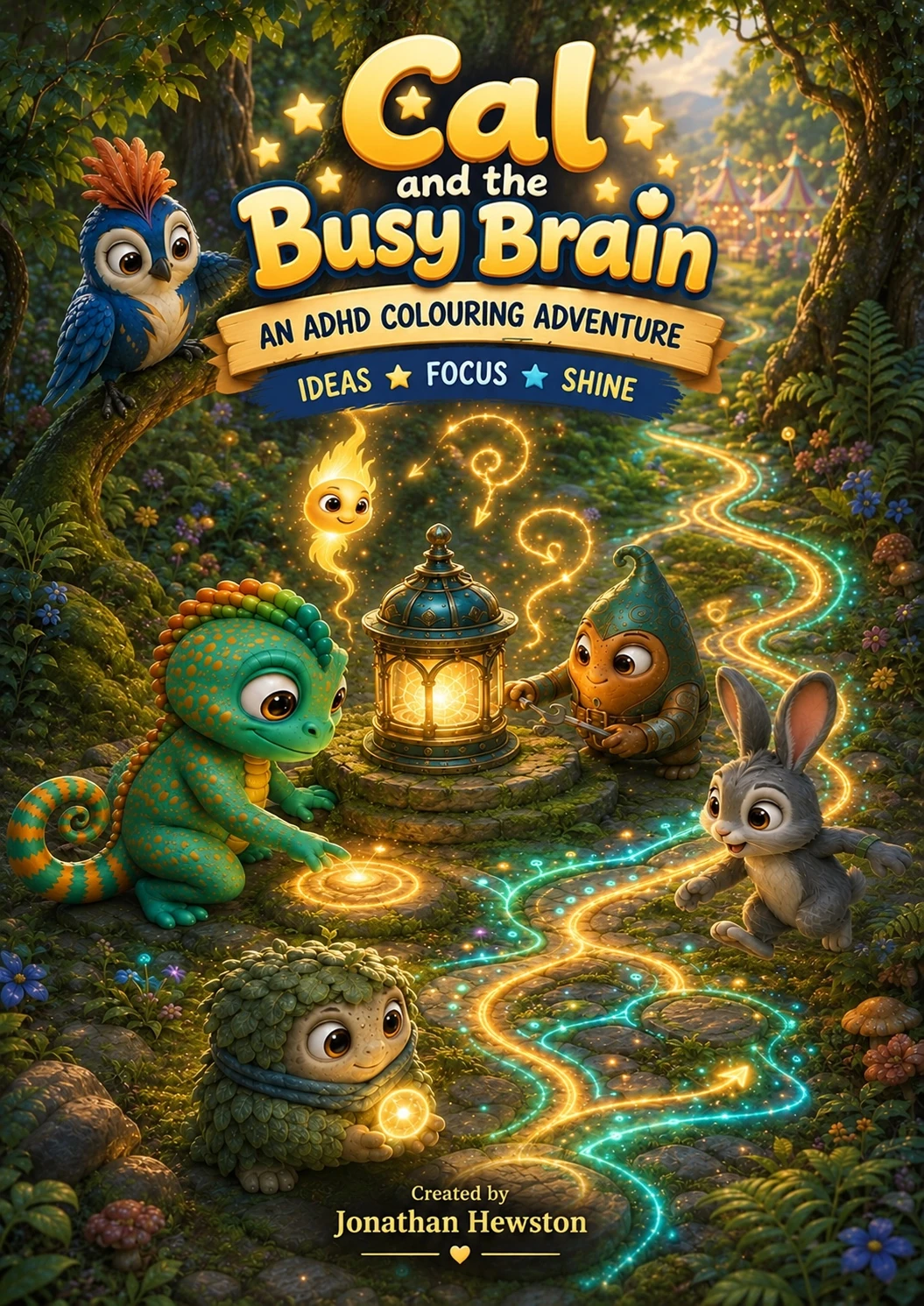
Children with ADHD are not all the same. A page that resonates with one pupil may not describe another. The purpose of a book such as Cal and the Busy Brain is to open discussion and provide a structured activity route, not to tell a child what ADHD must feel like.

Build in return points

Resources become more useful when adults can revisit them. A teacher might read a section, use a related activity later in the week, and return to a familiar character or phrase when a similar classroom situation arises. That continuity is one reason Hewston Higgins links books with follow-up resources rather than treating each page as a one-off worksheet.

Use with professional judgement

Hewston Higgins resources are educational materials. They do not diagnose, treat or replace individual educational, medical or therapeutic support.

Read the evidence and claims policy →