Different ways to communicate
Use the same scene to explore speech, writing, drawing, pointing or a pupil’s established communication method.

Try the free activities for this book
Free classroom lesson and print formats · Listen
Sometimes the people around you have already worked out how they think you should join in. I wanted to put the choice back with the young person. This story gives readers a chance to practise saying what would work for them, in words they’d really use.
Printed to order. Need it by a particular date? Ask us about dispatch before ordering.
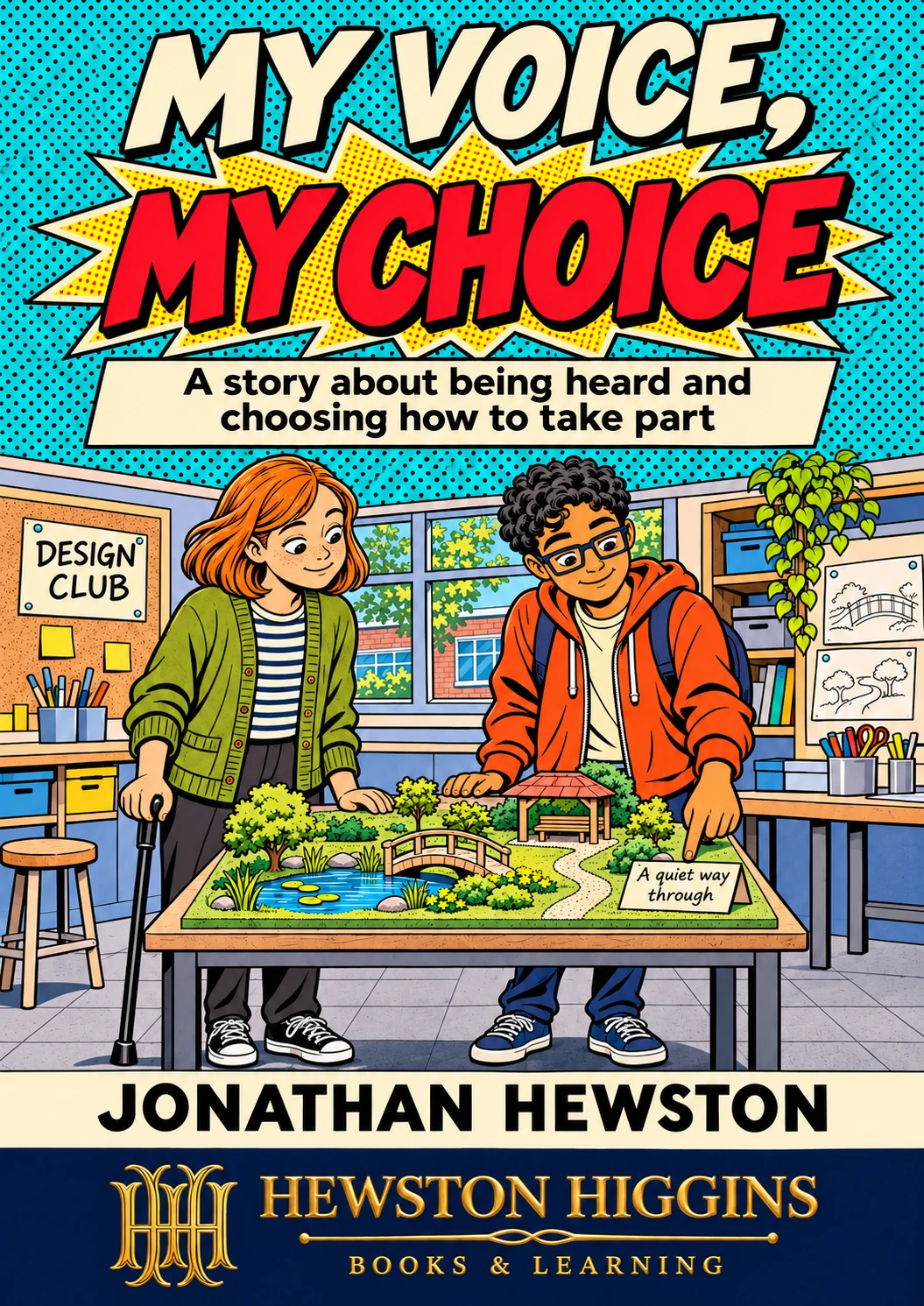
An illustrated story for ages 10–14 about being heard and choosing how to take part.
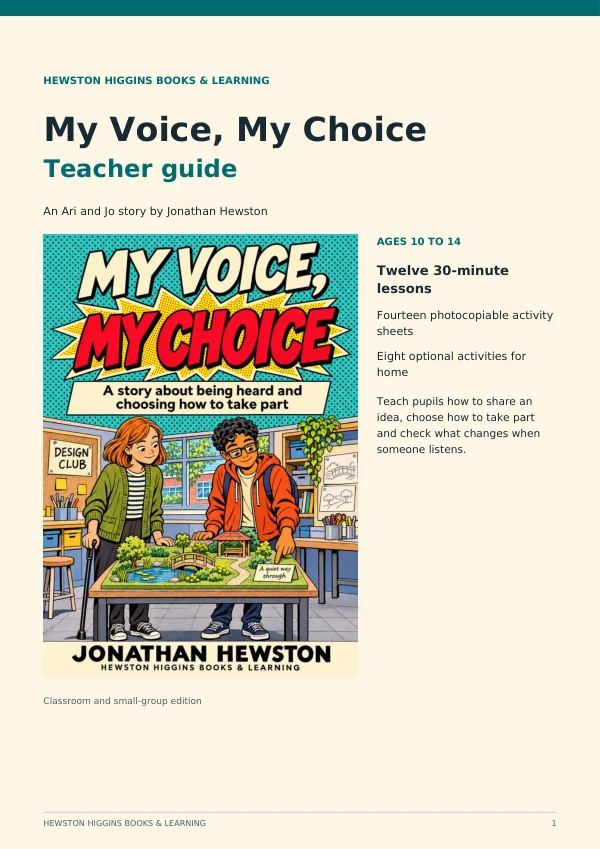
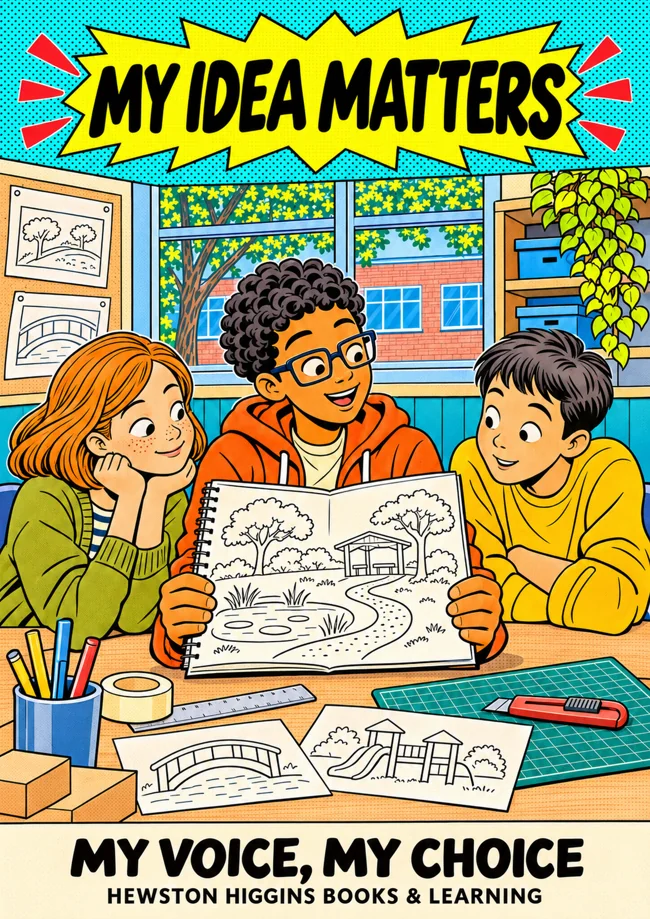
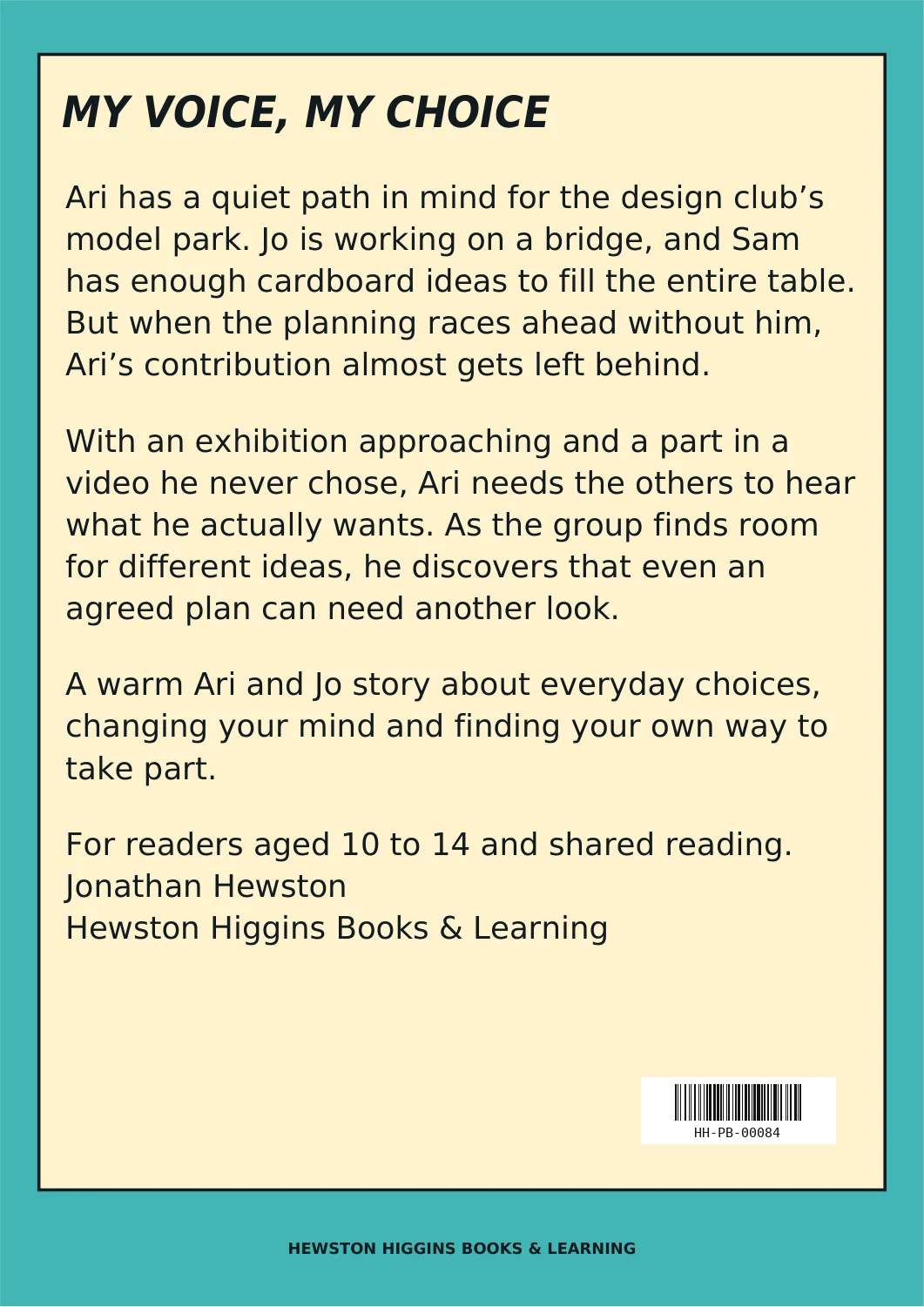
The design club has a week to build a model park. Jo is working on a bridge, Sam has plans for the playground and Ari has drawn a path that goes around the busiest part of the park. As the group makes decisions, Ari’s idea is left off the list.
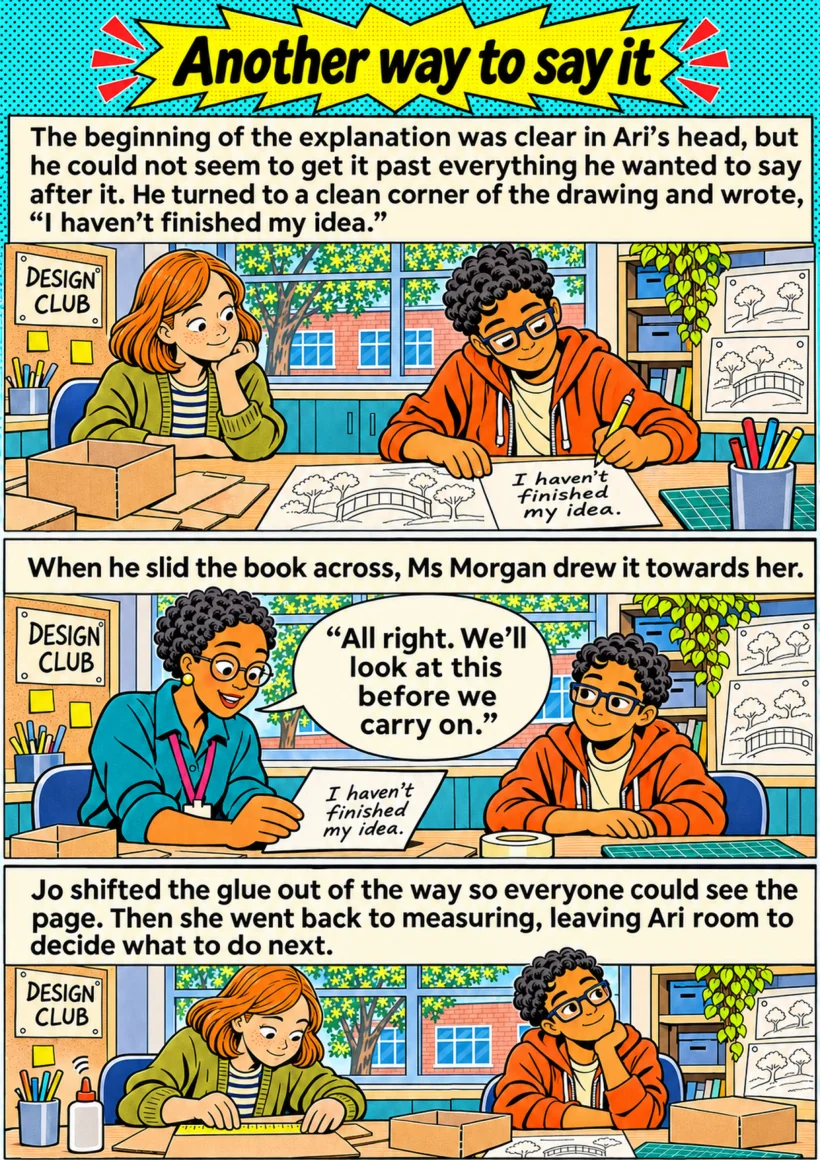
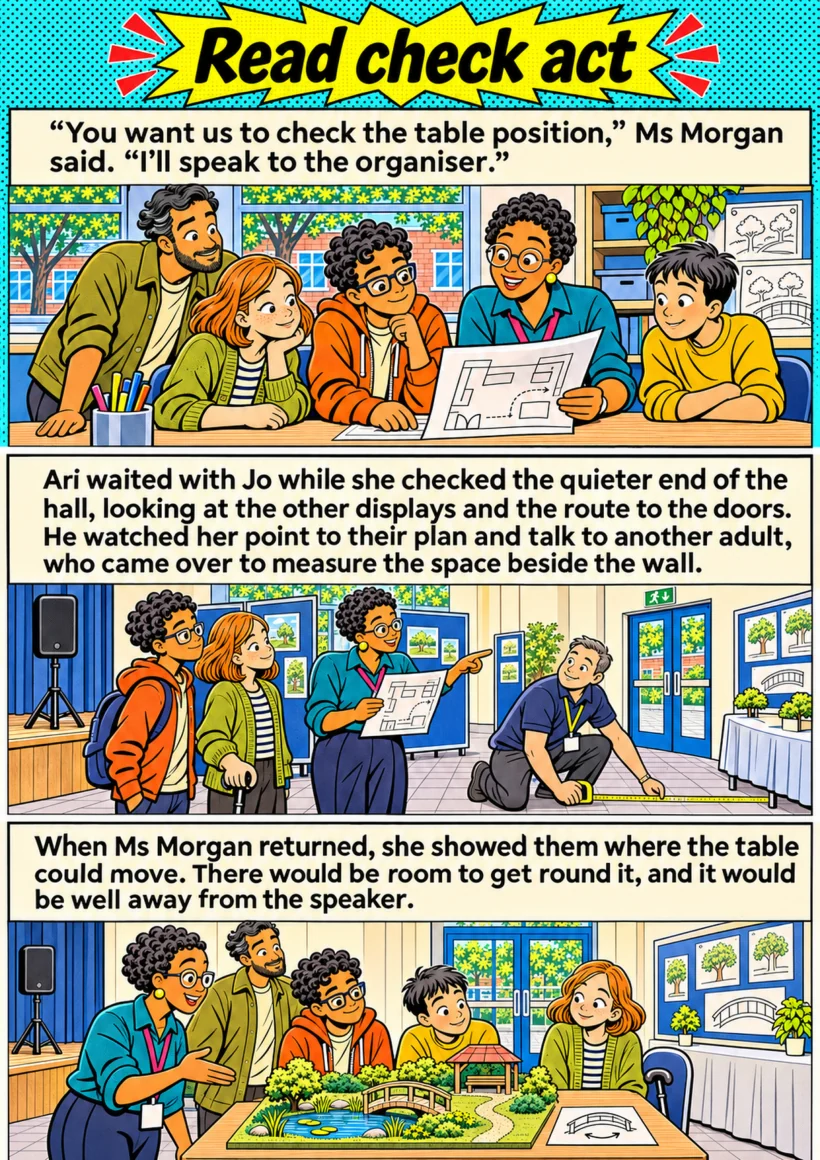
Ari uses his sketchbook to get the whole idea across. As the exhibition gets closer, he has more decisions to make about speaking to visitors, appearing in a video and what would help if the room gets busy. When the table moves, the group has to check whether the agreed plan still works.
The story follows what happens after someone shares a message. Friends and adults make time to listen, ask before sharing, check what was agreed and make changes that others can see.
Use the same scene to explore speech, writing, drawing, pointing or a pupil’s established communication method.
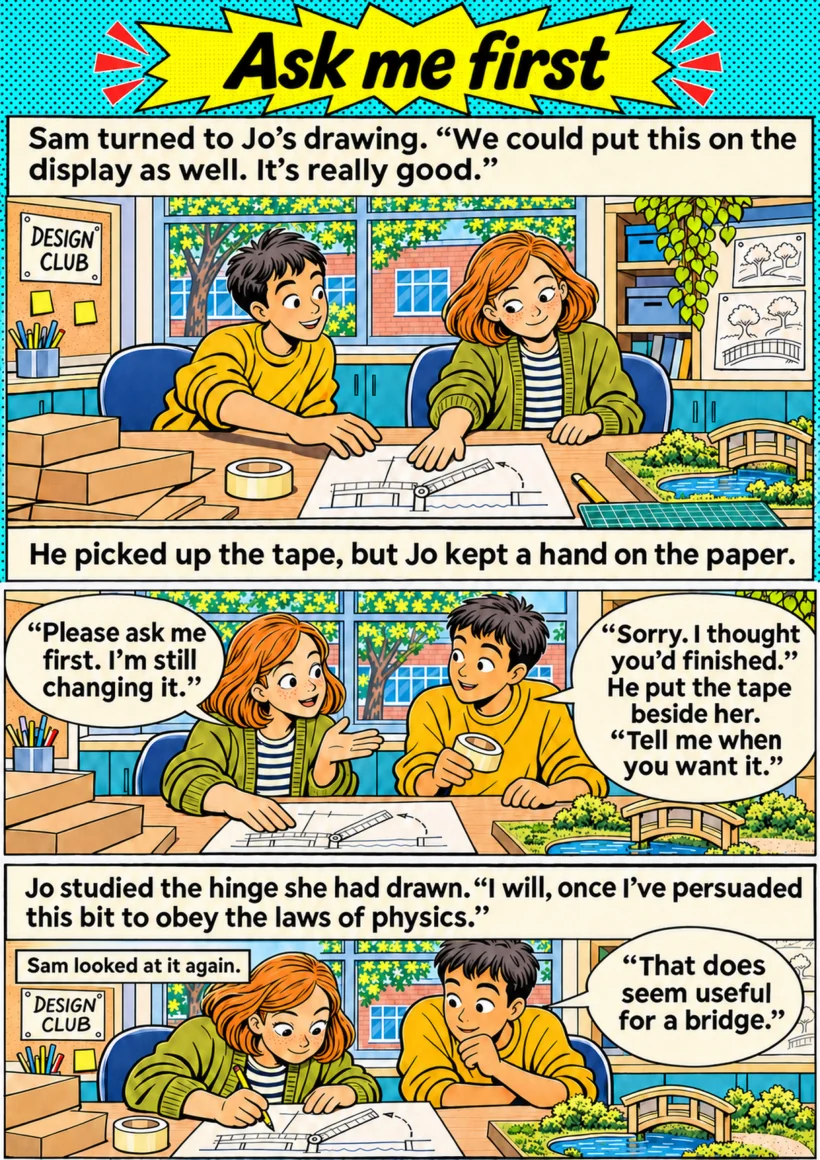
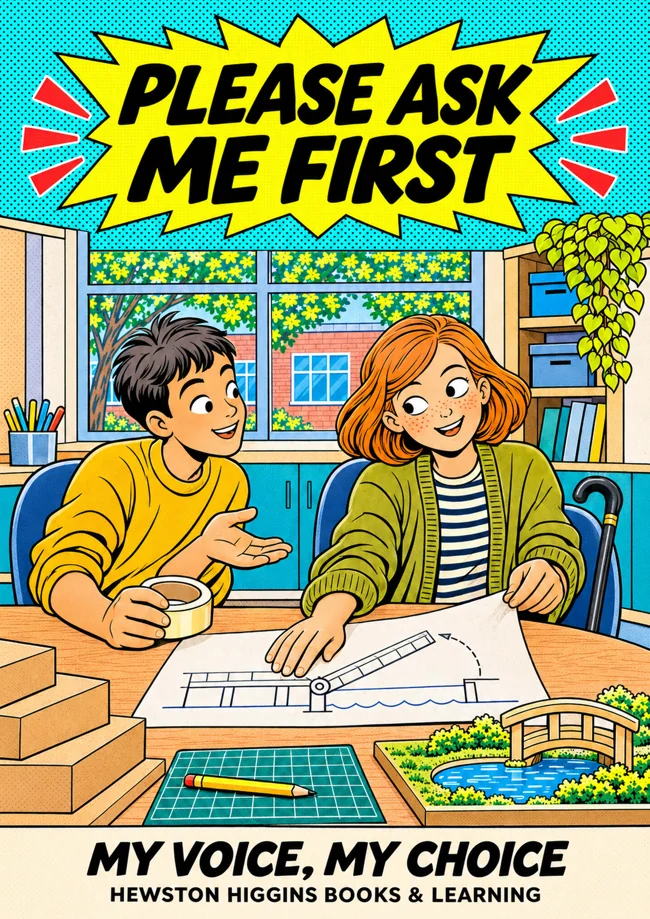
Practise asking before sharing someone’s work or including them in a video. Talk about how preferences can change.
Look at how the layout, timing and available roles shape who can take part. Use the story to try a pause, a quieter space or a different job.
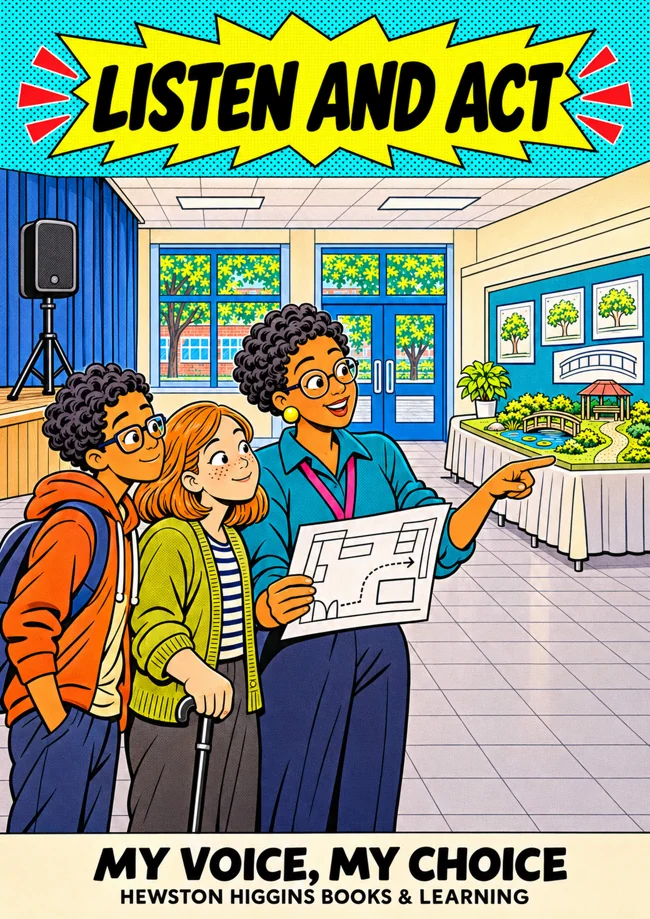
Check the whole message, agree who will act and come back to see what changed.
For ages 10–14 in classrooms, SEND groups, libraries and at home. Read a short scene together or use the fictional characters for discussion so pupils can choose how much to share.
Ari sketches a route around the busiest part of the model park and works out how he wants to contribute to the exhibition.
Jo has plans for a lifting bridge. Sam has ideas for a playground and a sign. As they build together, they learn to make space for each other’s ideas and choices.
Ms Morgan helps the group check decisions, try the room and put agreed support into practice.
It is written for ages 10–14 and can be read together at school, in a small group or at home.
Read aloud, share a short extract or discuss the fictional characters. Pupils can speak, write, draw, point, use their usual communication method or pass.
The 36-page colour PDF includes the complete story, two original pupil activities and reading notes for adults. The teacher guide and poster pack are separate resources.
Four actual pages from the complete colour edition. Select a page to enlarge it.
Already a member? Find this title in the library
36 A4 PDF pages, with the illustrated story, two pupil activity pages and reading notes for adults.
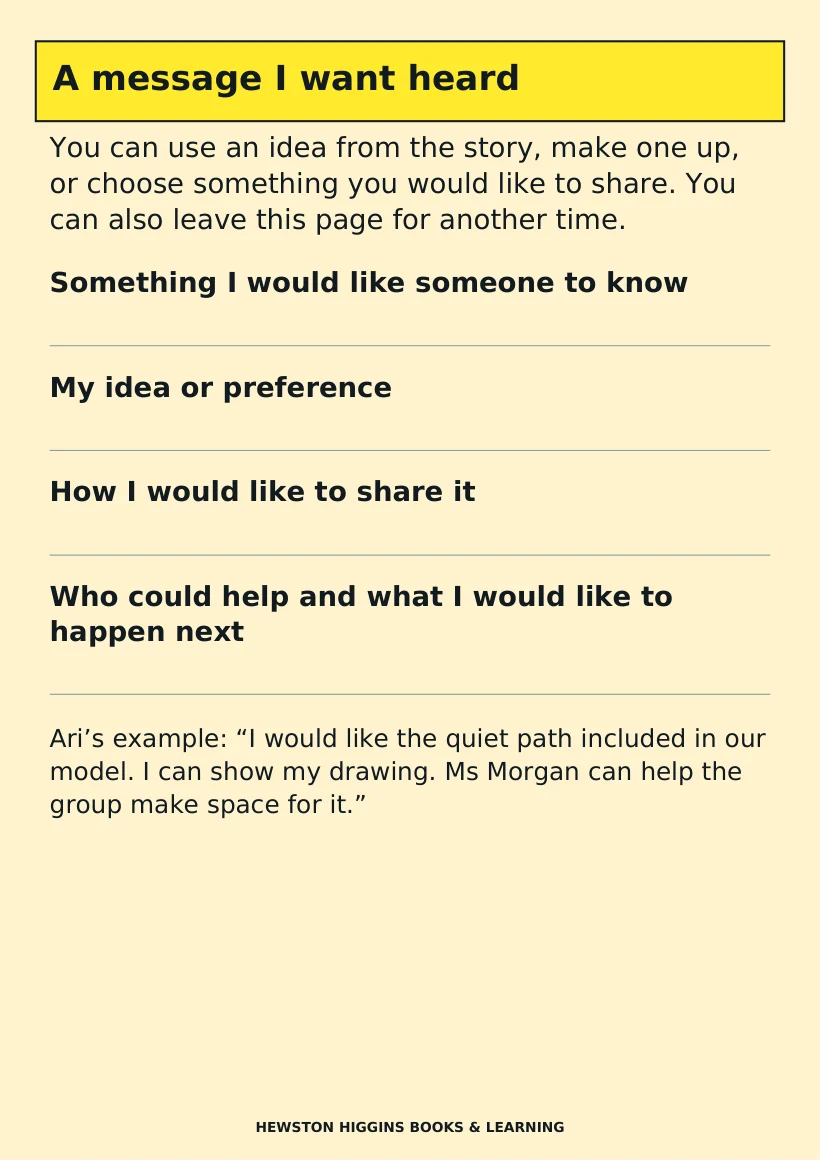
Open member reading editionTwo low-ink A4 sheets reproduce the book’s original prompts on sharing a message and updating a choice.
Find the printable pagesA4 full-colour paperback with 34 interior pages. Printed to order. UK delivery is confirmed at checkout.
See the shop collectionComplete book PDFs are included with eligible membership. Member licences and download allowances apply.
The 46-page A4 guide includes 12 timed, 30-minute lessons tied to the story, 14 photocopiable sheets, worked examples, assessment guidance and eight optional home activities.
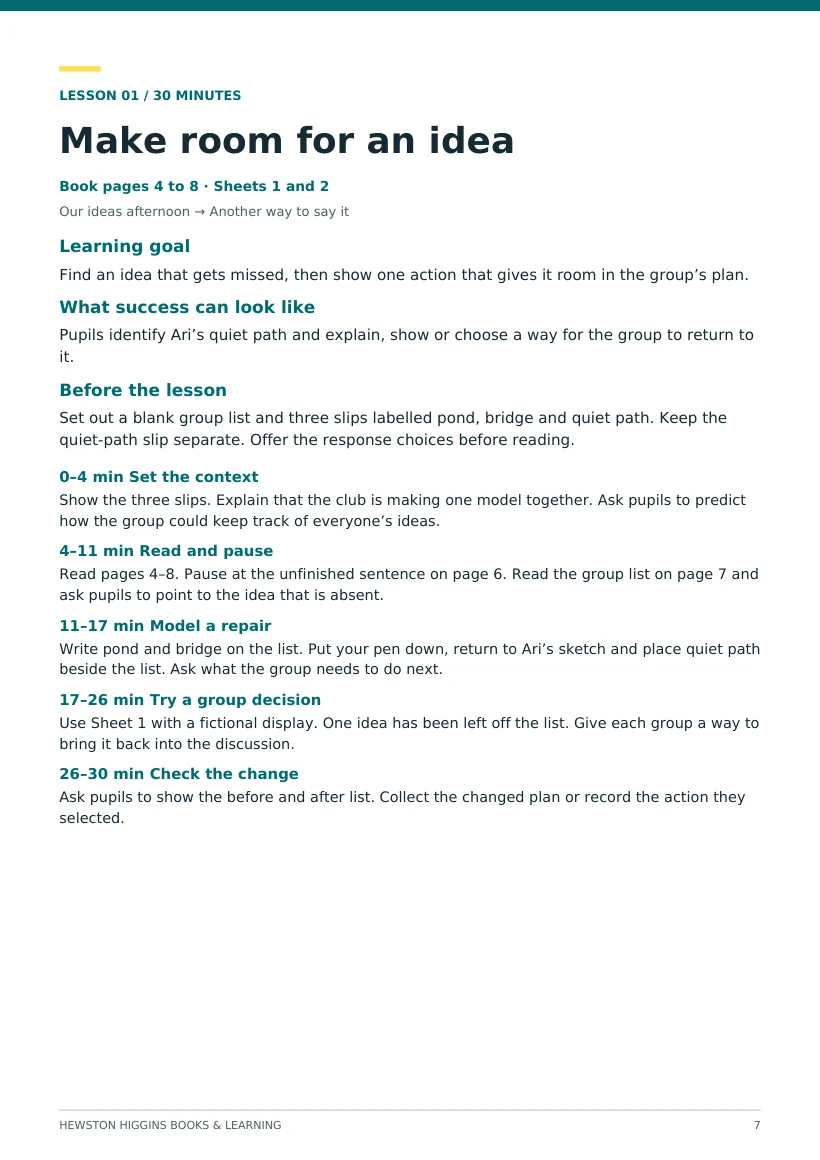
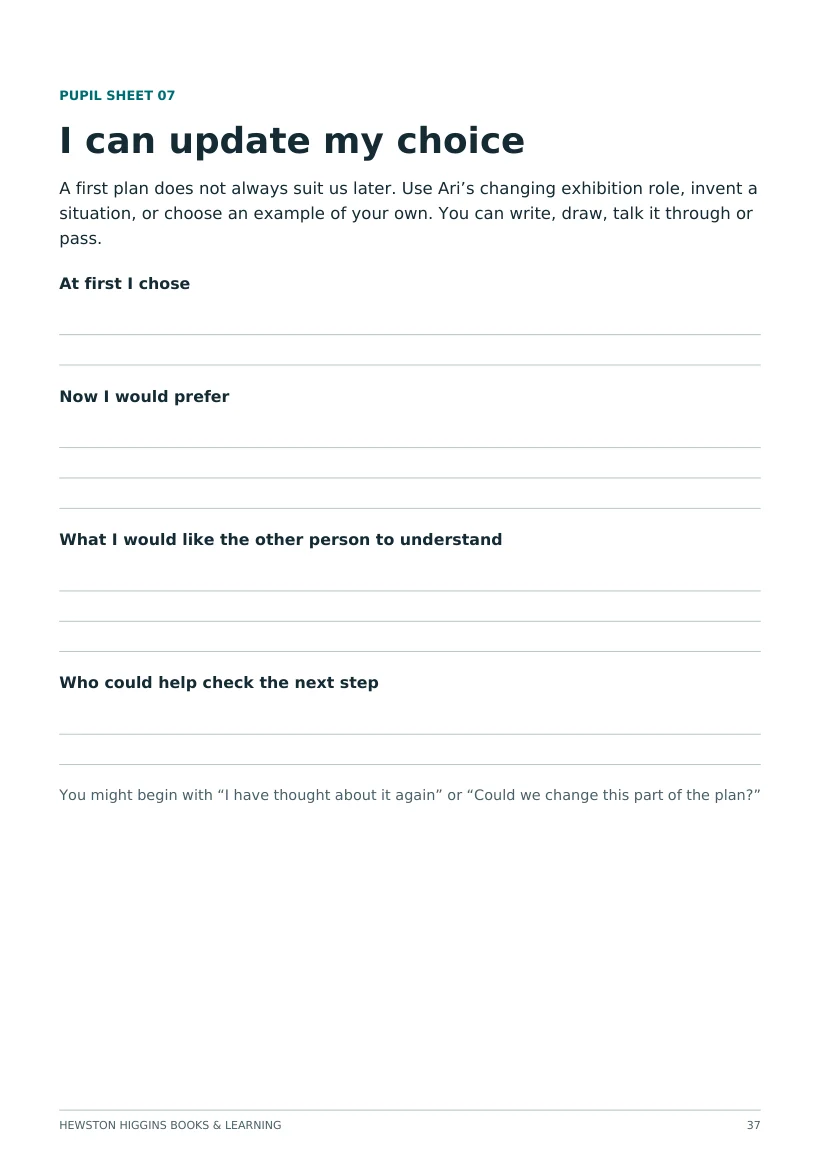
The guide includes prompts for speaking, writing, drawing and pointing, alongside suggestions for adapting tasks and recording how adults follow through.
Ten illustrated designs supplied as 20 high-resolution JPEGs, with each design in both A4 and A3. Messages cover making room for ideas, allowing time, asking first, checking the plan and acting on what was heard.
Every active membership includes all published member resources. Choose a file below and sign in to download it within your plan’s allowances.
My Voice, My Choice
Look together
How might Ari use a note or drawing when he still has something to say?
Have a go
Offer a character two ways to contribute. Draw the moment another person waits for the choice.
Sometimes the people around you have already worked out how they think you should join in. I wanted to put the choice back with the young person. This story gives readers a chance to practise saying what would work for them, in words they’d really use.
The reading activity above is free to print in black and white on A4 or A3.