Questions and communication
Speak, point, write, type, sign or use established AAC. A prepared message can be useful, and the learner can choose when to share.

Try the free activities for this book
Free classroom lesson and print formats · Listen
When a new school is still just a name, it’s hard to know what to ask. I gave Ari real places to look at and people to meet. A child can use the story to choose what they’d like to find out before their own first day.
Printed to order. Need it by a particular date? Ask us about dispatch before ordering.
One place to begin
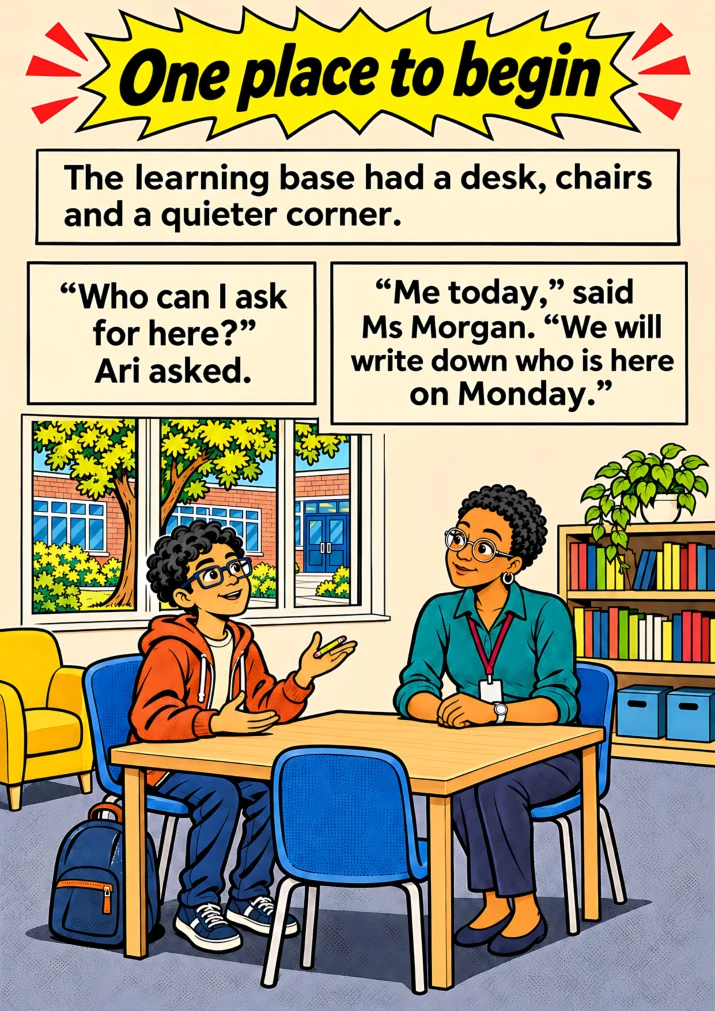
The learning base had a desk, chairs and a quieter corner.
“Who can I ask for here?” Ari asked.
“Me today,” said Ms Morgan. “We will write down who is here on Monday.”
Trying a help request
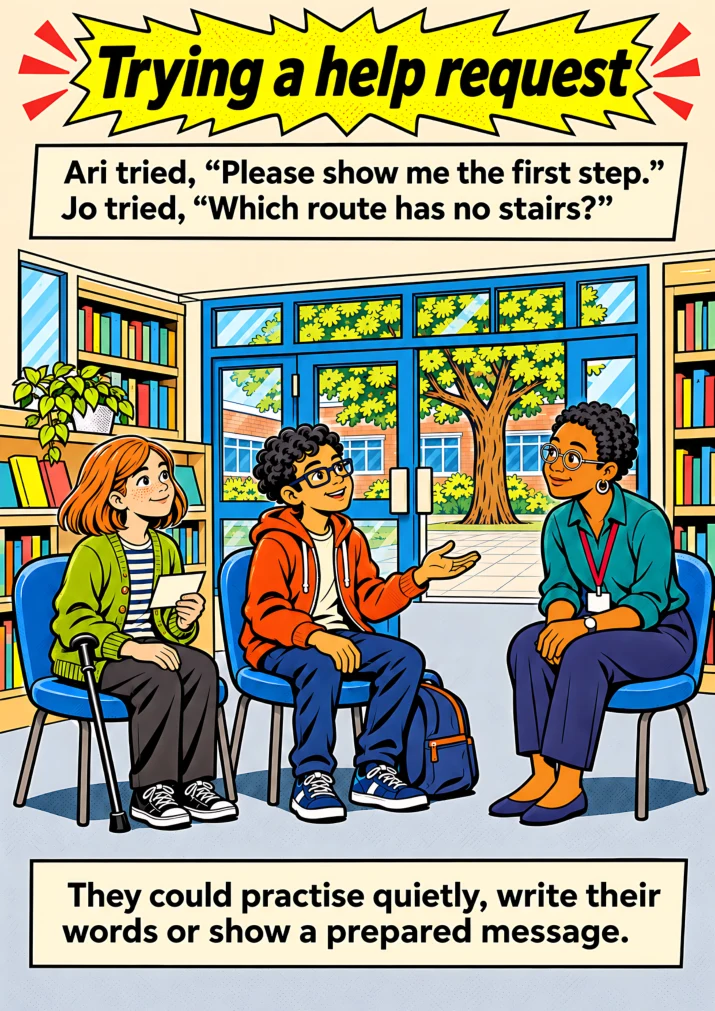
Ari tried, “Please show me the first step.”
Jo tried, “Which route has no stairs?”
They could practise quietly, write their words or show a prepared message.
Updating the plan.
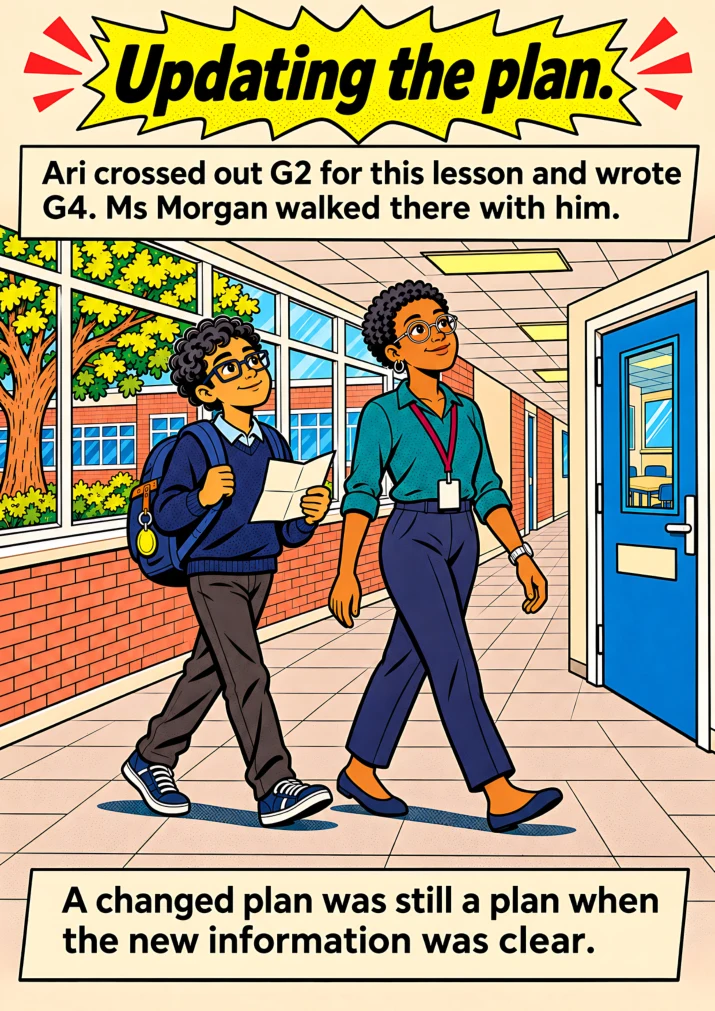
Ari crossed out G2 for this lesson and wrote G4. Ms Morgan walked there with him.
A changed plan was still a plan when the new information was clear.
Complete 36-page reading book, original printable planning pages, ten A4/A3 posters and the detailed teacher/parent pack for eligible members.
Ari knows that his new school will be bigger and that lessons will move between rooms. There are still many things he does not know. A visit with Jo and his dad gives him a place to begin: one person, one question and one useful route.
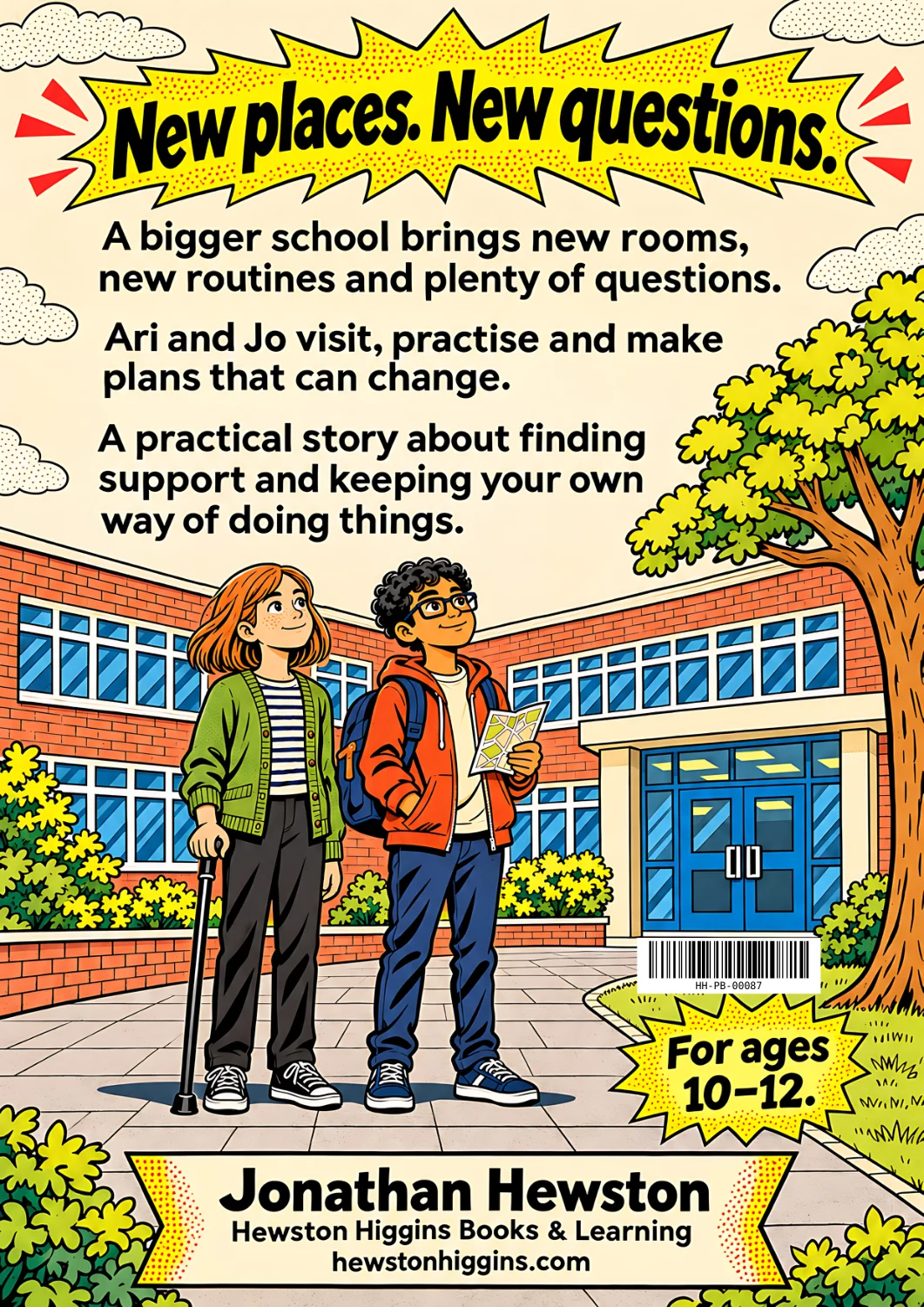
They explore the library, canteen, toilets and classroom codes. Jo asks about routes without stairs. Ari practises asking for the first step, learns that a pause is allowed, and keeps the things that help him. When a classroom changes on the first day, Ms Morgan checks the information and updates the plan with him.
The story ends with a review of what worked and one change for tomorrow. Success can mean asking, checking, pausing or changing the support, rather than doing everything alone.
This is a made-up school. Use the story to ask questions, then confirm the real school’s people, places, access arrangements and backup plans.
Speak, point, write, type, sign or use established AAC. A prepared message can be useful, and the learner can choose when to share.
Identify a named adult, check one route and ask practical questions about lunch, toilets and access.
Ask for time, a quieter place or a checked update. Ordinary support does not depend on completing a lesson or appearing confident.
Record what is confirmed and what is still unknown. Adults take responsibility for checking arrangements and following through.
Designed primarily for ages 10–12, including Year 6-to-Year 7 transition. The comic-style scenes and short planning pages can support discussion with learners who have communication differences, access needs or worries about change. Read together, pause, focus on one question or use the fictional characters instead of personal experiences.
A young person who gathers useful information, keeps familiar supports and practises messages that help others understand what he needs.
Ari’s companion on the school visit. She uses a cane and asks direct, practical questions about access. Her support needs are ordinary parts of the conversation.
Ms Morgan checks arrangements and responds to questions. Ari’s dad helps with preparation and follow-up while keeping Ari involved in his own plan.
Primarily ages 10–12, especially the move from primary to secondary school. Select the parts that suit the learner, setting and communication needs.
The complete reading book, three original printable planning pages, poster pack and teaching/parent pack are included for eligible active members under their existing licence and allowances.
The poster pack has ten designs in A4 and A3. The teaching pack includes a 64-page school guide and a 31-page parent and carer guide. The reading book is listed separately in the member library.
No. The real school must confirm its own arrangements, named staff, accessible routes and backup plans. Use the book and planning sheets to ask and check.
Three actual pages from the complete colour reading edition.
Already a member? Find this title in the library
36 A4 PDF pages: 32 interior pages and four cover surfaces. The previously upscaled artwork is verified at at least 300 ppi at its actual placement.
Open member readingThree low-ink A4 pages reproduce the original school-planning prompts, with clear live text and generous response space. These are listed separately so you can print them without printing the whole colour book.
Find the printable pagesA4 full-colour paperback with 34 interior pages. Printed to order. UK delivery is confirmed at checkout.
See this book’s collectionEligible active members can access the reading book, planning pages, poster pack and teaching pack. Membership licences, release rules and download allowances apply.
The teaching ZIP contains a 64-page detailed Teacher and Parent Guide and a convenient 31-page Parent and Carer Plan. The shorter parent edition repeats the home-session and planning sections for separate use.
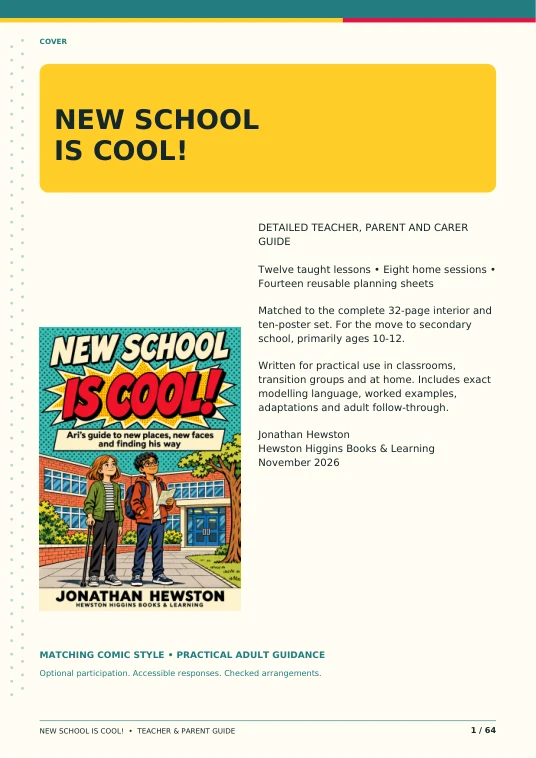
Thirty-minute lesson sequences include learning intentions, preparation, timed teaching, exact modelling language, guided practice, chosen tasks and review. Each has questions and possible responses, access adaptations, optional extensions and home connections.
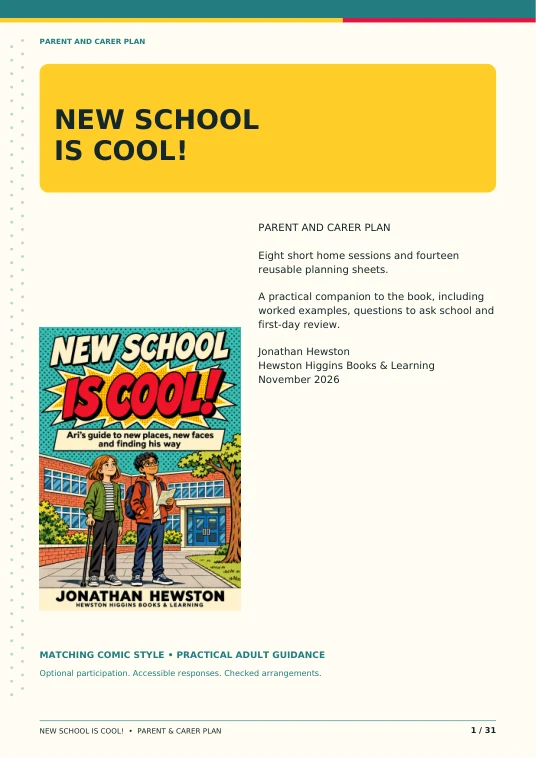
Short, optional sessions cover preparing for a visit, practical access questions, useful messages, what to pack, first-day arrangements and reviewing what helped. Families can use the plan independently of the taught lessons.
Copy sheets, worked examples, book-page and poster references, information-sharing prompts and adult follow-through help turn a useful question into a checked arrangement.
Lessons cover questions; people and places; practical access; timetables; help messages; pauses; routes; familiar supports; first-day plans; changed information; participation; and review.
Use fictional examples and optional participation. The guide supports educational planning alongside the real school’s arrangements and procedures; it does not require personal disclosure.
The same ten illustrated designs are supplied in both A4 and A3: two ten-page PDFs in one ZIP. All twenty PDF pages have artwork verified at at least 300 ppi at its placed size.
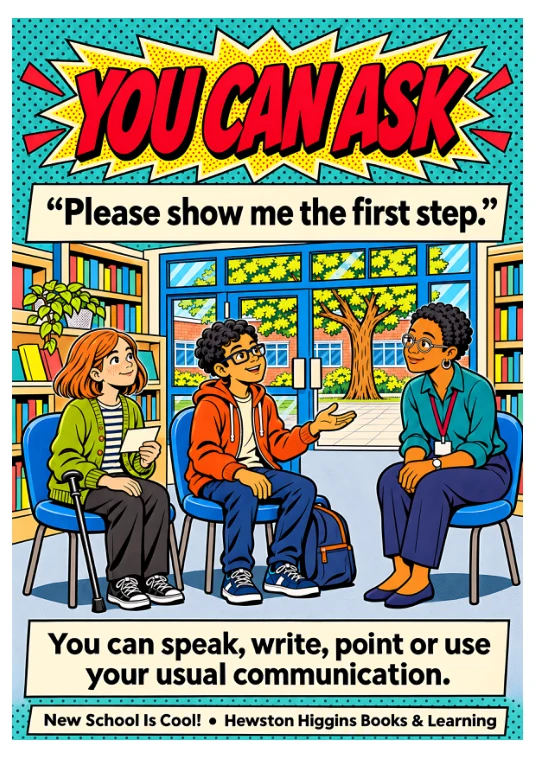
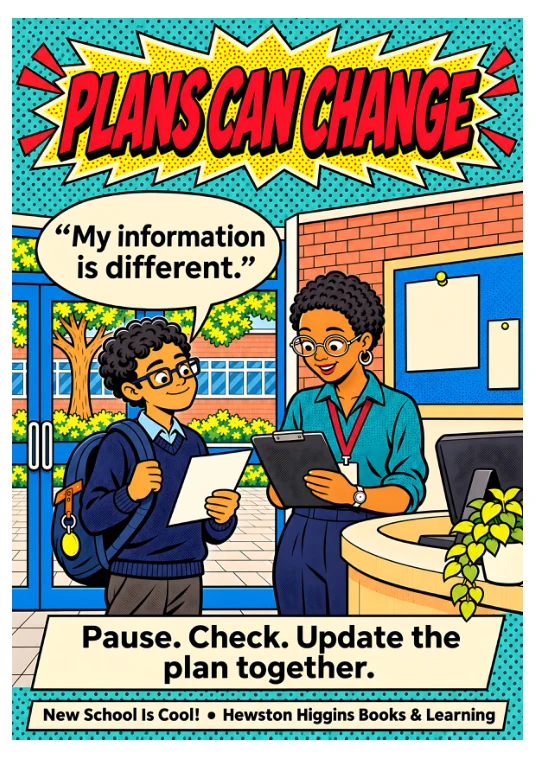
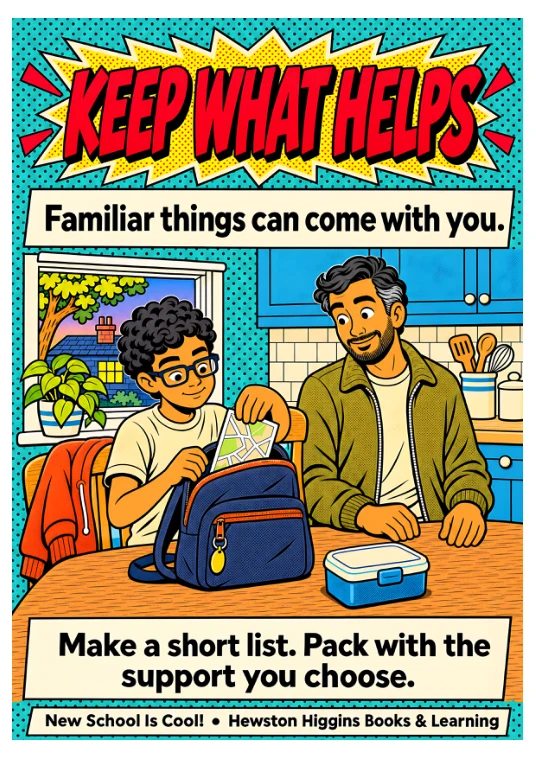
Poster themes include asking for support, one part at a time, useful maps, changing plans, taking a break, practical questions, different support needs, familiar things, choosing when to talk and noticing what worked.
Single-classroom / individual-practitioner retail licence. Use a readable size and the learner’s established communication; a visual poster will not be accessible to everyone.
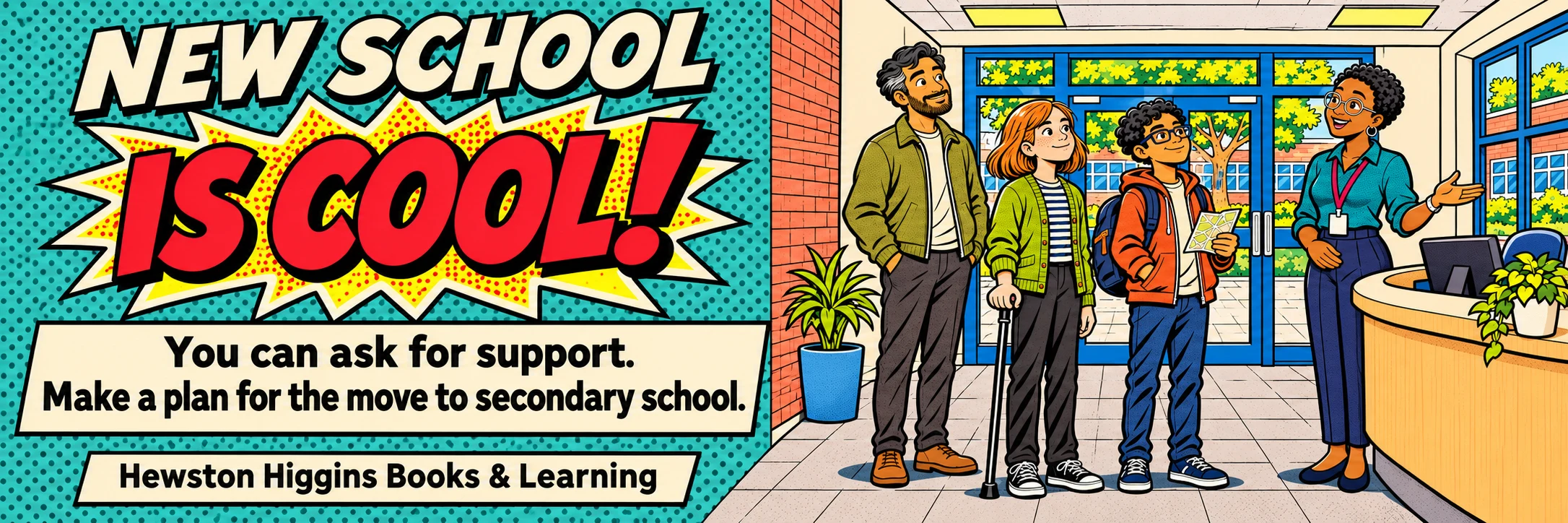
Every active membership includes all published member resources. Choose a file below and sign in to download it within your plan’s allowances.
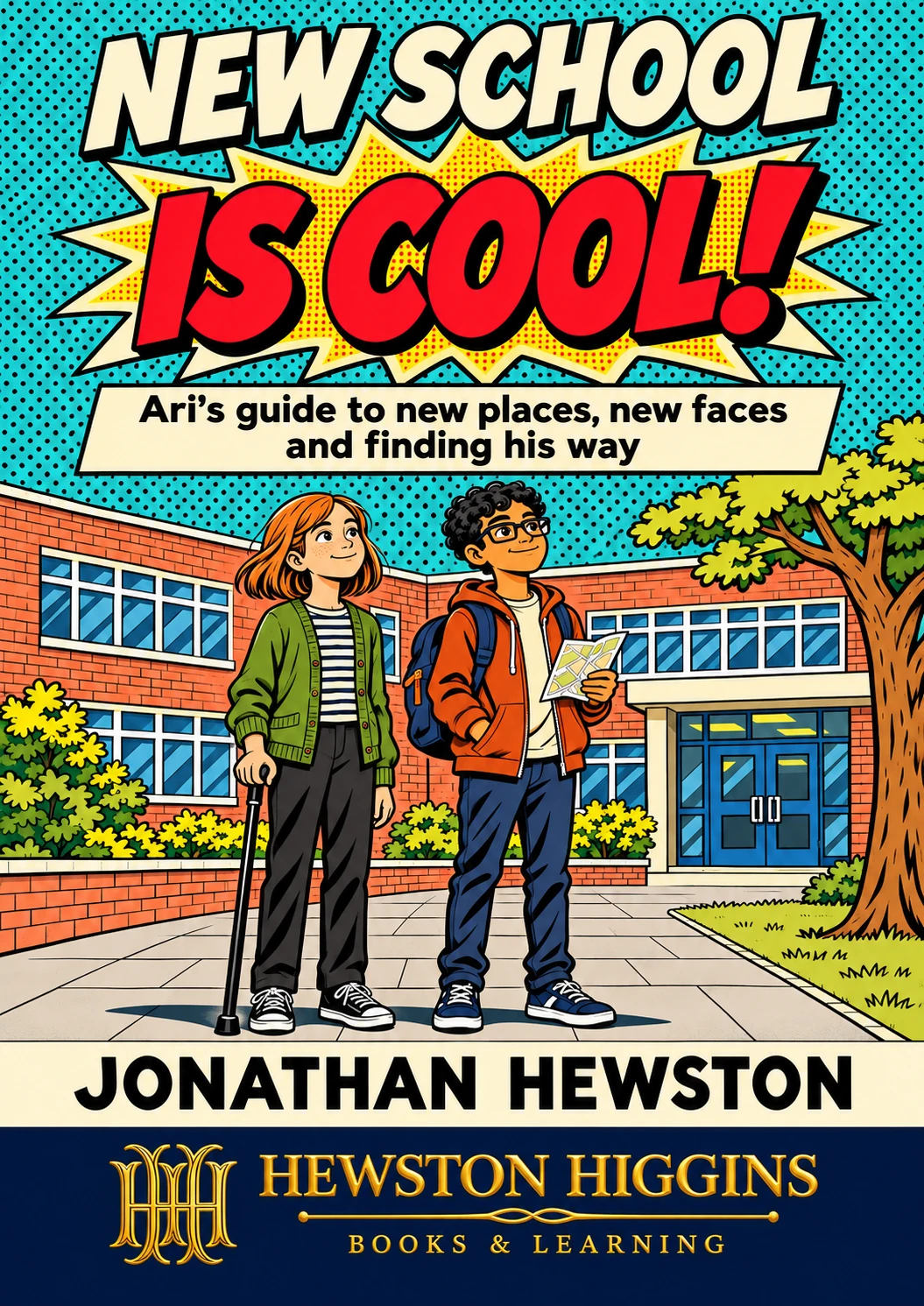
New School Is Cool
Look together
What might Ari want to find before the first lesson at a new school?
Have a go
Make an arrival plan with a place, a person and one question. Add a second place to try if the first is closed.
When a new school is still just a name, it’s hard to know what to ask. I gave Ari real places to look at and people to meet. A child can use the story to choose what they’d like to find out before their own first day.
The reading activity above is free to print in black and white on A4 or A3.