Notice repeated exclusion
Explore the difference between choosing time alone and repeatedly being denied a place in a shared activity. An invitation should offer access and a genuine choice.

Try the free activities for this book
Free classroom lesson and print formats · Listen
Everybody has an opinion about the dragon. The question that interested me was how many of them actually saw what happened. I wrote the story so children can talk through rumours, exclusion and what giving somebody a fair chance might look like.
Printed to order. Need it by a particular date? Ask us about dispatch before ordering.
Ages 8–11. An illustrated fantasy story about repeated exclusion, rumours, prejudice and belonging. Active members can access both reading editions, response sheets, school guide, posters and classroom banners under their licence and allowances. Paperback available to order for £9.99.
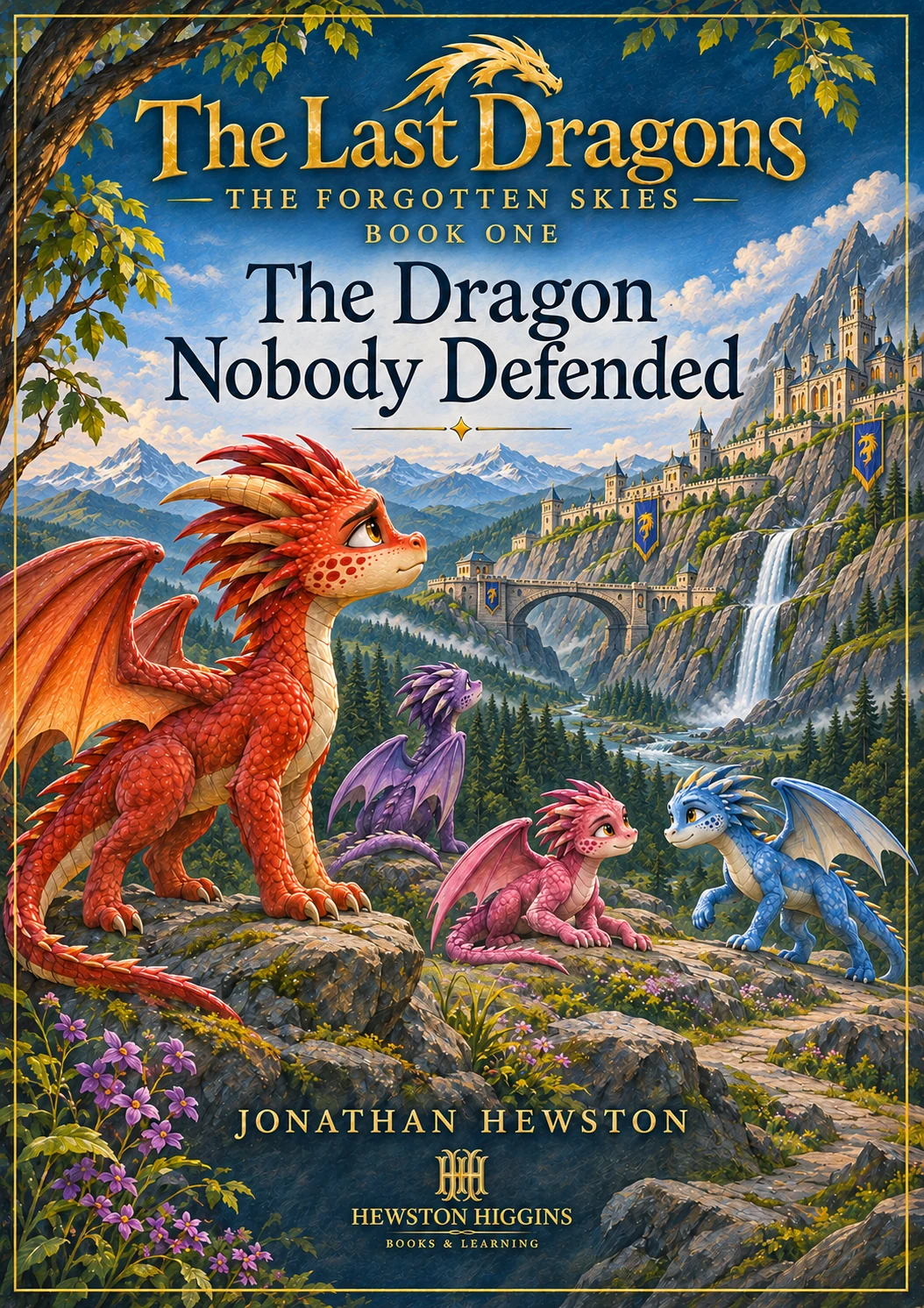
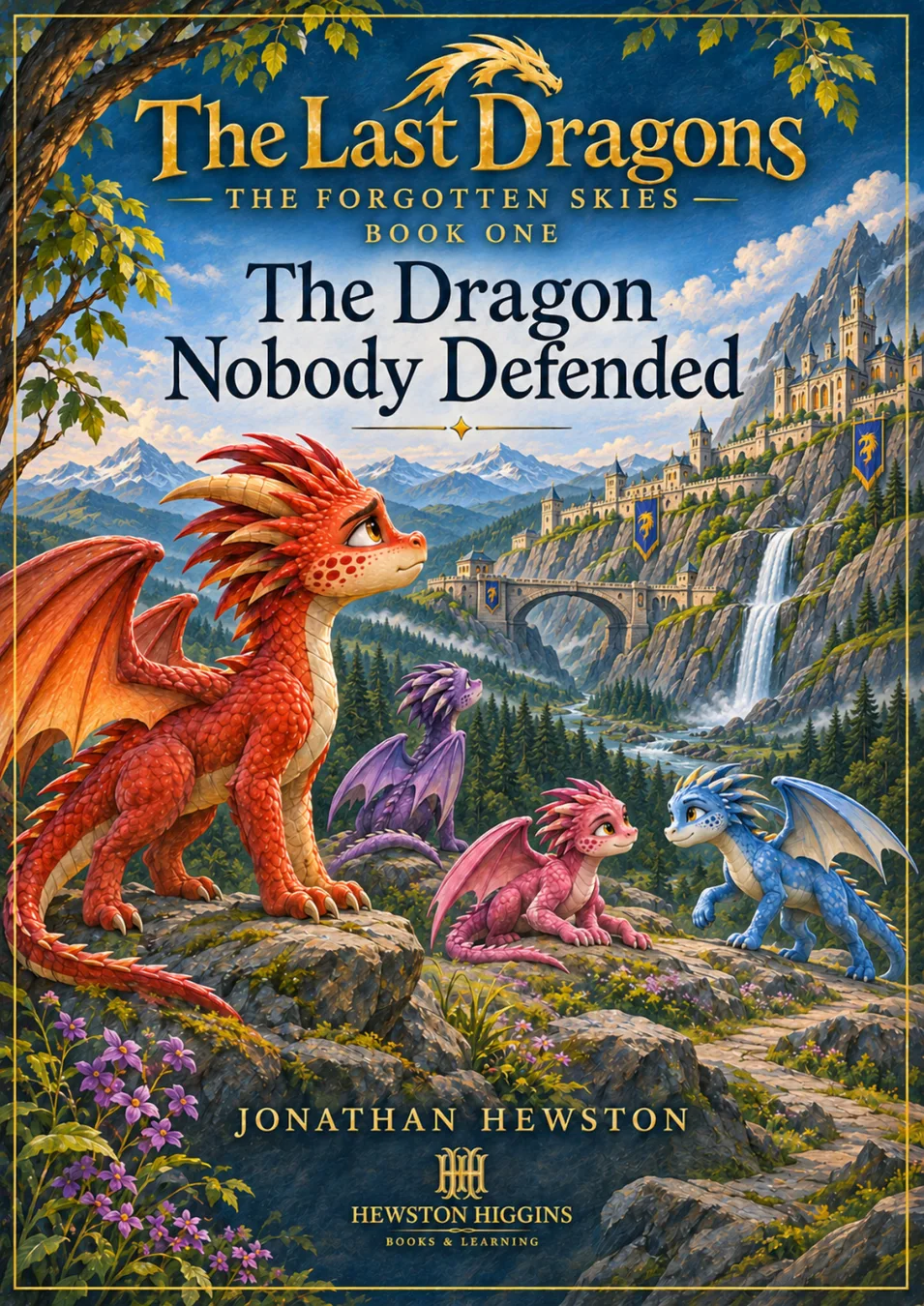
Skyreach rises from a mountain ridge above a river gorge. Its towers promise new lessons, flying practice and friends who might understand. Rufus has packed his satchel, practised a greeting and tried to believe that everyone else will be nervous too.
But the academy already has a story about dragons like him. Nobody quite remembers where it began, and the details change whenever it is repeated. The message stays the same: red dragons cannot be trusted.
A chair stays empty. A team is supposedly full, although places remain. Whispers become claims that sound certain because enough dragons repeat them. When Krax’s behaviour grows more threatening, Rufus needs adults who will listen and act, as well as peers willing to notice what is happening.
Ember, Vesper and Indigo each have choices to make. Elder Cael and the academy guardian have responsibilities of their own. Safety comes before the mystery: hidden records do not have to prove Rufus is special before he deserves protection.
As the group begins questioning the old warning, a missing part of the academy’s history points towards something beyond the ridge. The story closes with the first secret waiting to be explored.
The bullying in this story is a developing pattern of exclusion, intimidation and unfair assumptions. It gives children concrete situations to discuss, without asking anyone to identify a classmate or describe something personal.
Explore the difference between choosing time alone and repeatedly being denied a place in a shared activity. An invitation should offer access and a genuine choice.
Distinguish what someone saw from what they heard or assumed. Repeating a claim can spread harm even when the speaker did not begin it.
Talk about moving towards safety, finding a trusted adult and giving a clear account. Children are not asked to investigate, confront a group or settle the problem themselves.
An apology does not create a right to friendship or forgiveness. Trust needs changed behaviour, time and adult follow-up.
The story keeps adults involved. Pupils do not become responsible for making the academy safe, and the person experiencing harm does not have to appear brave, upset or unusually talented to deserve help.
A red dragon who likes striped stones, difficult cloud shapes and the quiet before everyone else wakes. He is nervous, observant and more than the story others attach to his scales.
The pink dragon whose concern becomes a clear call for adult help. Her choices show that noticing is a beginning; a safe response matters too.
A purple dragon with maps and questions. She listens to Rufus and helps the group examine what the academy’s records actually show.
A blue dragon who has to reconsider what he has accepted and what he has left unsaid. His contribution grows through practical action.
The 64-page guide is designed for adults supporting ages 8–11. It connects the story to ten fully timed 50-minute lessons, with objectives, preparation, teacher wording, discussion questions and model responses.
Schools add their own staff names and reporting routes before use. The guide supports planned teaching and sits alongside the school’s existing procedures.
These optional supplementary activities are available separately in the member library, so teachers can print the pupil sheets without printing the staff guide. They refer to the story and cover inclusion, rumours, evidence, safe help and boundaries. They are not extra story pages or copies of original colouring tasks.
The Dragon Nobody Defended is Book One of The Last Dragons — The Forgotten Skies. The series brings together mountain-academy fantasy, uncertain histories and friendships built through choices. Its mysteries grow from the same question as Rufus’s first day: what happens when a story is repeated so often that nobody thinks to challenge it?
Book One is the first available story. Future adventures are planned; they are not presented as published books.
Explore the seriesExplore a fair beginning with this free pack. No account, payment or newsletter signup required.
The Last Dragons: The Dragon Nobody Defended
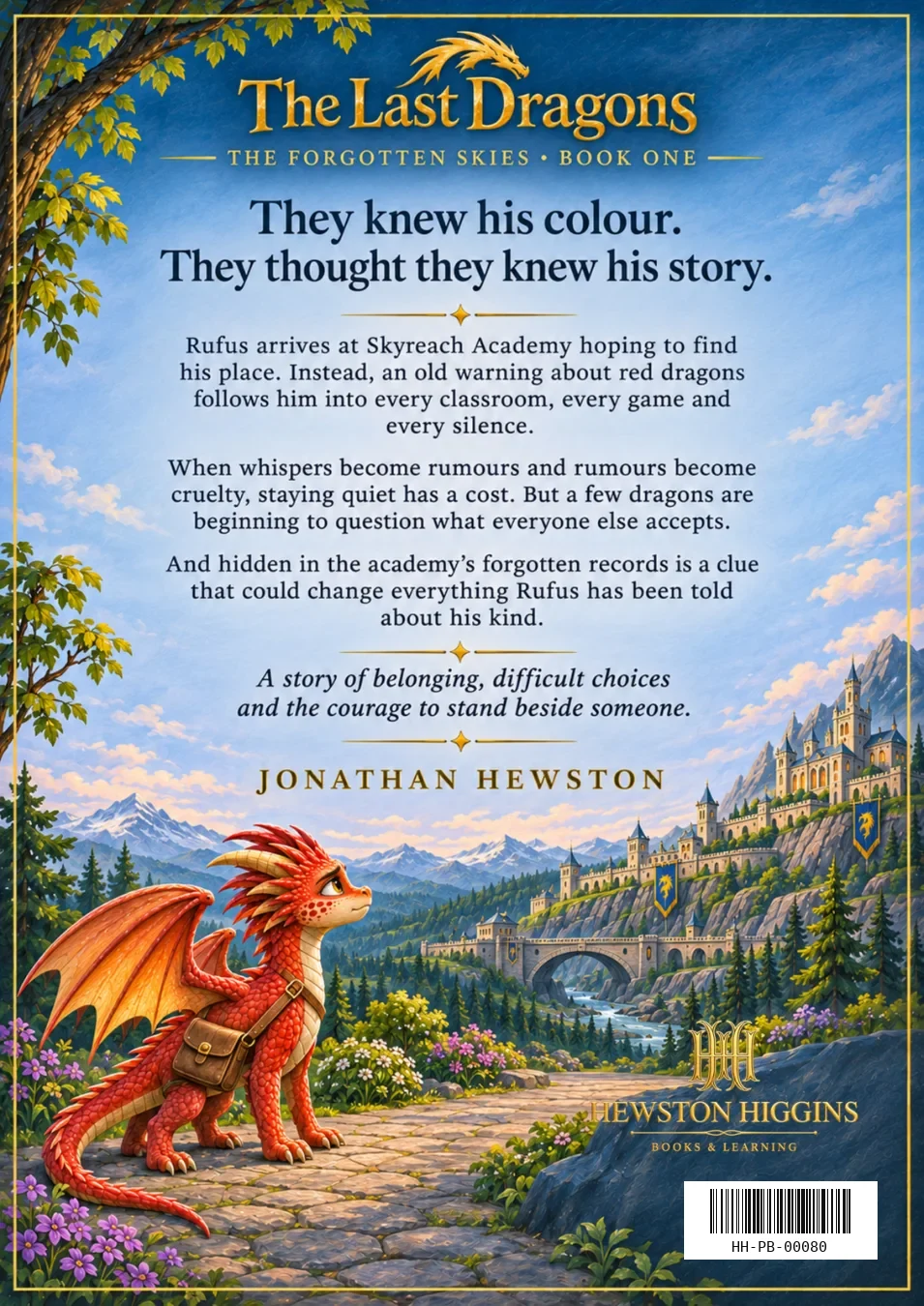
The main audience is ages 8–11, including Key Stage 2 shared reading. Adults can adapt the pace and discussion for the reader. The story includes exclusion, intimidation and a threatening bridge encounter, so preview it if these themes may be difficult.
No. The teaching materials emphasise safer choices, accessible reporting and adult protection. They do not ask pupils to investigate, physically intervene or reenact intimidation.
Yes. It retains every story section. It uses black text on white pages and omits the colour illustrations to reduce ink use. The ten response sheets are a separate resource.
All active membership types include published member resources. Sign in, accept the applicable digital resource licence and use the downloads within your plan’s allowances and scope.
The complete book PDFs are available through eligible membership. Public complete-book sales use paperback editions. The paperback is available to order for £12.99; eligible members can download the school guide.
No. It is a story and teaching resource. Schools retain responsibility for their procedures, accessible reporting routes, protection and follow-up.
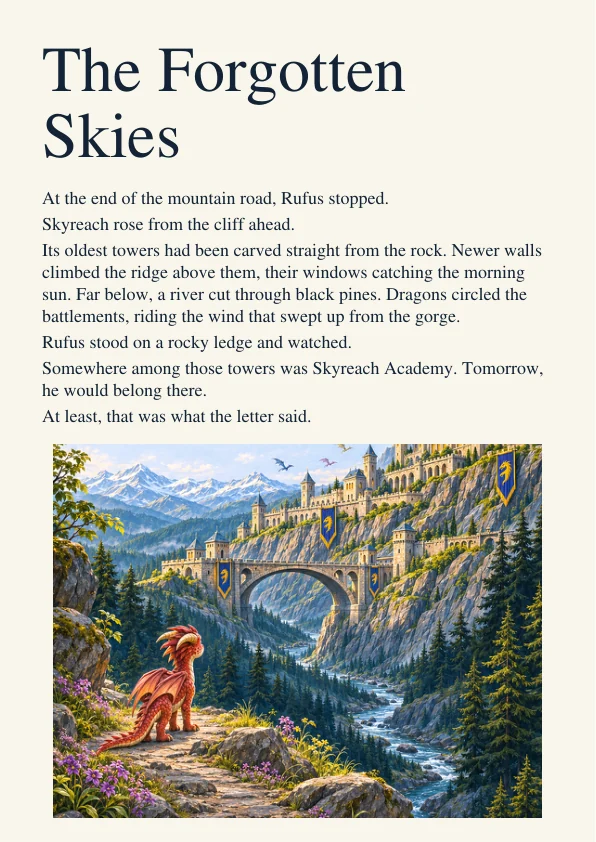
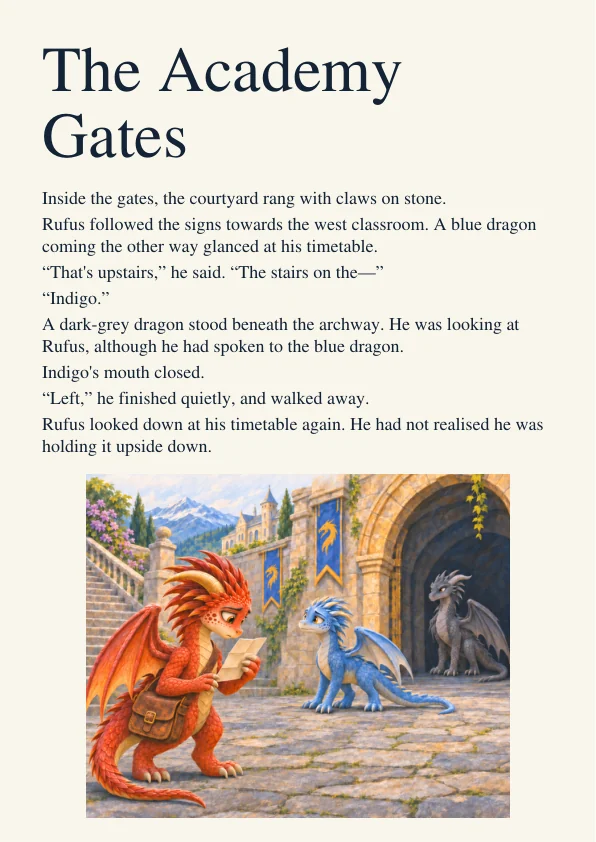
Two sample story sections show the colour reading edition’s shared serif typography and painted illustrations.
Already a member? Find this title in the library
All 48 story sections, with front and back covers: 50 A4 PDF pages. Illustrations have been enhanced to at least 320 ppi at their placed size. The reading text remains selectable.
Open member downloadsThe same complete story text on white A4 pages, with black serif lettering. There are 49 pages: an introduction and 48 story sections. This low-ink version contains no illustrations.
Find the low-ink edition£12.99 · Paperback
UK tracked delivery is £3.99 below £29.98. Free UK tracked delivery on paperback orders of £29.98 or more.
All active membership types include the published member catalogue. Your membership licence, release conditions and download allowances apply. Eligible members can download the complete book PDFs and the school guide.
Bring the story’s language into everyday classroom conversations. Ten illustrated poster designs revisit belonging, unfair assumptions, rumours, exclusion, safe help, clear reporting and the actions needed to rebuild trust.
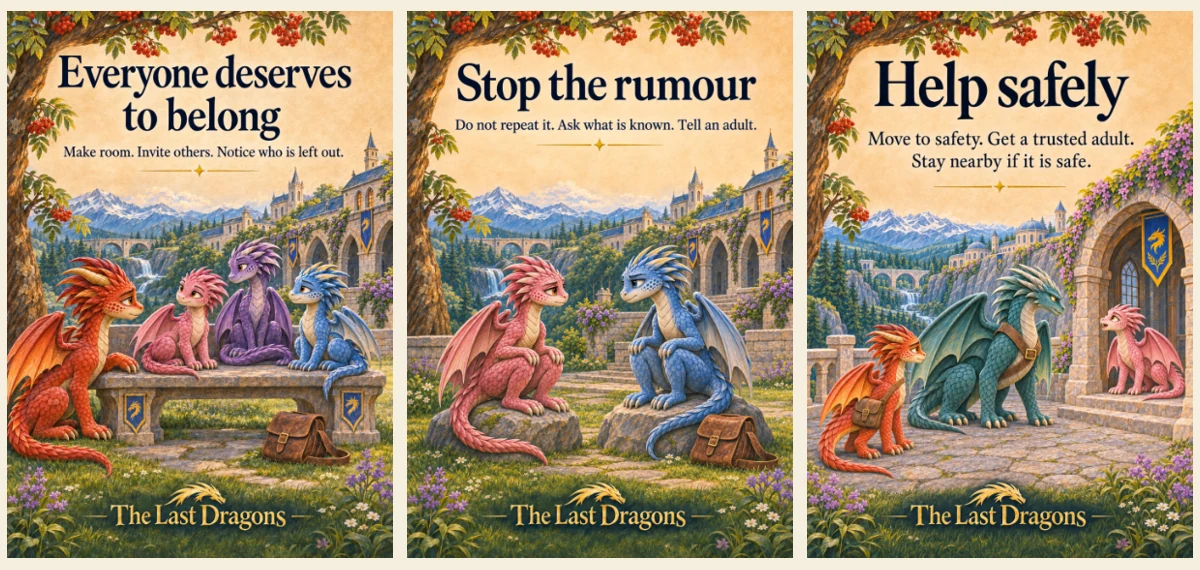
Eligible members can download all ten poster designs in A4 and A3, plus two matching banners and A4 tiles for classroom assembly.
Every active membership includes all published member resources. Choose a file below and sign in to download it within your plan’s allowances.
The Last Dragons: The Dragon Nobody Defended
Look together
What could a classmate ask before repeating a rumour about Rufus?
Have a go
Make two speech bubbles: one that questions the rumour and one that gives Rufus space to speak.
Everybody has an opinion about the dragon. The question that interested me was how many of them actually saw what happened. I wrote the story so children can talk through rumours, exclusion and what giving somebody a fair chance might look like.
The reading activity above is free to print in black and white on A4 or A3.