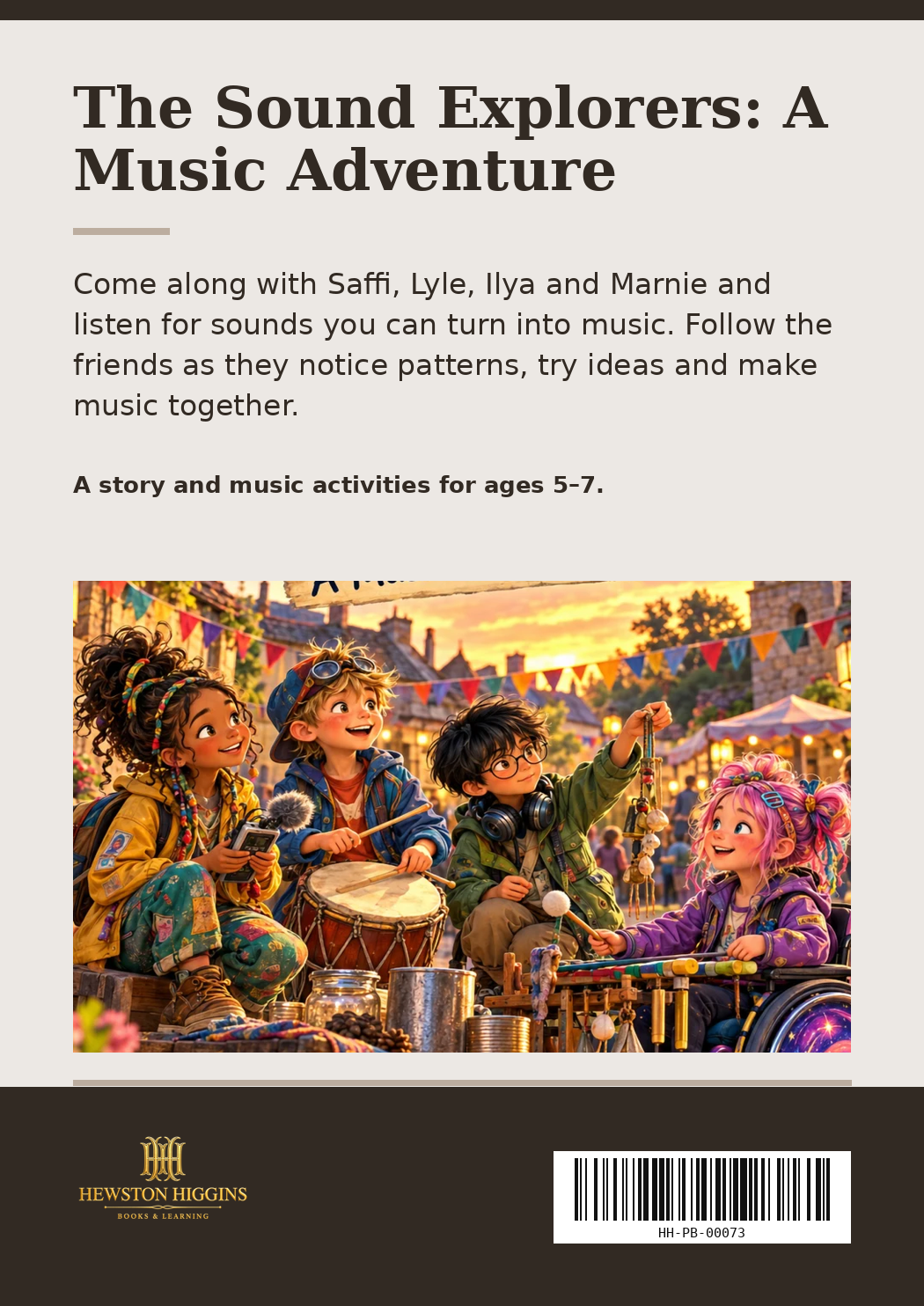
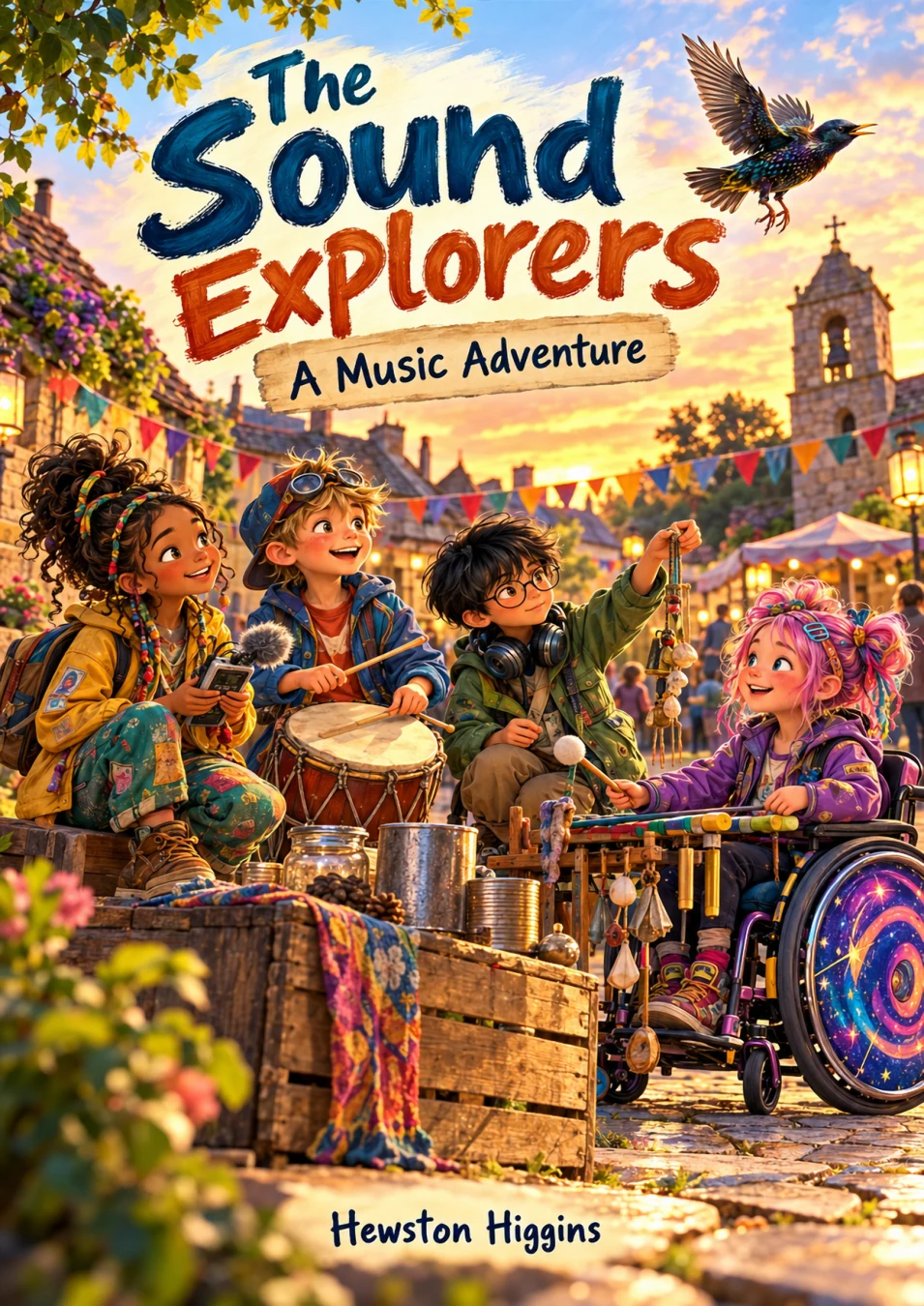
Book artwork for The Sound Explorers: A Music Adventure

The Sound Explorers: A Music Adventure

An active code saves 10% on each book or paid resource. Delivery is separate.

Try the free activities for this book

I wanted children to hear music in the things around them, so I gave the explorers clues they can try out themselves. Tap the same rhythm with two objects and listen to how each sounds. It’s an easy way into talking about musical features using ordinary objects.

Look inside

Printed to order. Need it by a particular date? Ask us about dispatch before ordering.

Look inside
The Sound Explorers: A Music Adventure front cover
Front cover
The Sound Explorers: A Music Adventure sample page 1

Complete reading edition — PDF page 3 of 40

The Sound Explorers: A Music Adventure sample page 2

Complete reading edition — PDF page 5 of 40

About the book

40-page illustrated KS1 music adventure for eligible members. Discover beat, rhythm, pitch, sound colours, dynamics, tempo and composition.

Front cover of The Sound Explorers: A Music Adventure

The complete reading book

The 40-page A4 portrait PDF includes the front and back covers, the complete illustrated story and integrated music activities. Story wording is part of the finished page artwork.

Eligible members can find the book by searching Sound Explorers in the members’ library. Access follows the existing membership licence, plan eligibility and download allowances.

Open the members’ library

What children explore

  • Listening: notice sound sources and describe what they hear.
  • Beat and rhythm: keep an even pulse and build a pattern of sounds and silences.
  • Pitch: compare high and low notes and follow a rising or falling sound.
  • Timbre: choose different sound colours for an idea.
  • Dynamics and tempo: change comfortable loudness and speed deliberately.
  • Composition and performance: order ideas, give cues, rehearse, improve and reflect.

Use voices, body percussion, classroom instruments and safe everyday objects. A tuned instrument helps demonstrate pitch. Children do not need to read staff notation to begin.

Ways to take part

Marnie is a wheelchair user and an active musical leader. Throughout the adventure, the friends contribute through different interests, choices and roles.

The activities offer pointing, drawing, picture choices, communication devices, switches, partner support, visual tracking, directing and listening roles. Children can choose a comfortable way to respond without being required to speak, close their eyes or perform in front of others.

Adults can preview sounds, agree a stop signal and offer quieter spaces or sources. The guide helps teachers adapt tasks to individual pupils and distinguish a musical decision from the movement or communication used to express it.

About this book and its learning purpose

40-page illustrated KS1 music adventure for eligible members. Discover beat, rhythm, pitch, sound colours, dynamics, tempo and composition.

Learning opportunities

  • Recognise a musical feature
  • Compare patterns
  • Create or represent a pattern

A practical way to use it

Make a four-part pattern with quiet instruments, body percussion, symbols or digital tools. Allow silent composition and avoid unexpected loud sounds.

SEND support and different ways to take part

Use a four-box strip for a pattern. Pupils can arrange symbols silently, tap softly or use a digital tool at a comfortable volume. Agree a stop signal before playing together.

Read the detailed teaching plan for The Sound Explorers: A Music Adventure — preparation, three flexible sessions, accessible activity choices, learning observations and follow-up.

Teachers can share the book on screen where the edition and licence permit, and use matching printer-friendly activity pages where available.

Questions about the book and resources

What age is The Sound Explorers for?

The story and musical activities are designed for KS1, typically ages 5–7. An adult can read the story aloud and adapt the practical activities to the group’s experience and access needs.

Is this suitable for SEND music teaching?

The story activities and guide provide different ways to participate, including picture choices, AAC, visual cues, switches and directing a partner. Teachers should choose adaptations around each pupil’s communication, sensory and physical needs.

Do I need specialist music equipment?

Start with voices, soft tapping, body percussion and safe everyday sound sources. Simple percussion supports the group activities; use a tuned source such as a keyboard or xylophone for comparing pitch. The guide lists equipment for each lesson.

What is in the teacher pack?

The ZIP includes a 30-page guide with eleven 30-minute lessons and a separate 20-page printable activity pack. The complete reading book and classroom posters are separate resources.

Are the posters available in A4 and A3?

Yes. The poster ZIP contains all ten designs as individual A4 and A3 PDFs — twenty files. Complete ten-page A4 and A3 collections are also available in the eligible members’ library.

How do I access the complete book?

Sign in to the members’ library and search for Sound Explorers. The complete 40-page reading PDF is available to eligible active members under their licence and allowances. The paperback can be ordered from this page.

Book resources and member downloads

Already a member? Find this title in the library

Order the paperback

Paperback available to order for £9.99. Printed using our interim printing arrangements; UK delivery is confirmed at checkout.

UK tracked delivery is £3.99 below £29.98. Free UK tracked delivery on paperback orders of £29.98 or more.

Turn everyday sounds into music: the Sound Explorers follow a woodland stream

Complete teacher and activity pack

Eleven lessons that bring the adventure into the classroom

The 30-page comprehensive teacher guide turns the story into eleven 30-minute KS1 music lessons. Each lesson connects to book pages and includes an objective, vocabulary, equipment, teacher modelling, timed teaching steps, support, extension, assessment and a misconception to address.

Begin as sound detectives, develop beat and rhythm, compare pitch and sound colours, then explore dynamics and tempo. Children plan a music map, rehearse a short piece, notice what changes and reflect on their own sound adventure.

  • SEND adaptations and alternative participation routes within the lesson sequence.
  • Clear distinctions between beat and rhythm, pitch and loudness, and speed and volume.
  • Response guidance for discussion, listening and composition tasks, including tasks with more than one valid answer.
  • Assessment prompts that help teachers record the musical learning and the support used.

The guide supports selected objectives from England’s KS1 music programme of study. It is a focused story-led unit, rather than a complete annual music curriculum.

Twenty pages of printable activities

A separate A4 pupil pack contains eleven activity tasks, six card sheets, a reflection page and a certificate. Use sound choices, pitch paths, rhythm work and composition maps alongside the story. Print at actual size and select the pages your group needs.

One ZIP contains both PDF files. The reading book and poster pack are separate member downloads. Eligible members can also download the guide and activities under their existing membership licence and allowances.


Stories that spark music: Marnie leads the friends with a clear musical cue

Ten classroom poster designs · A4 and A3

Keep musical ideas visible

Bring the Sound Explorers into the music corner with ten full-colour posters. Clear definitions and short prompts help pupils revisit listening, beat, rhythm, pitch, sound colours, dynamics, tempo, composition, silence and different ways to participate.

The poster ZIP supplies 20 individual PDFs: every design in A4 and A3. Eligible members can also download the complete ten-page A4 or A3 collection. Choose the file matching your paper size and print at actual size.

Poster teaching text remains vector text. Raster artwork has been enhanced from lower-resolution sources using the established free neural upscaling workflow and checked at its intended print placement. The enhanced output does not imply native 300-ppi source detail.

Eligible member access follows the membership licence and allowances. These are printable digital resources; physical posters are not included.
Find this book’s member resources

Every active membership includes all published member resources. Choose a file below and sign in to download it within your plan’s allowances.

Posters / displays (3 listings)
Activities (1 listing)
Teaching guidance (2 listings)
Reading edition (1 listing)

Back cover

Back cover of The Sound Explorers: A Music Adventure

Classroom lesson

The Sound Explorers: A Music Adventure

The Sound Explorers: A Music Adventure sample page 1

The Sound Explorers: A Music Adventure · Reading activity

Look together
Find a beat using a tap, a movement or a visual signal.

Have a go
Build a four-beat pattern with one rest. Invite a partner to repeat it in a way that works for them.

Public lesson link

Listen to the book introduction

I wanted children to hear music in the things around them, so I gave the explorers clues they can try out themselves. Tap the same rhythm with two objects and listen to how each sounds. It’s an easy way into talking about musical features using ordinary objects.

Choose a print format

The reading activity above is free to print in black and white on A4 or A3.

See membership options
Make a Now and Next board