
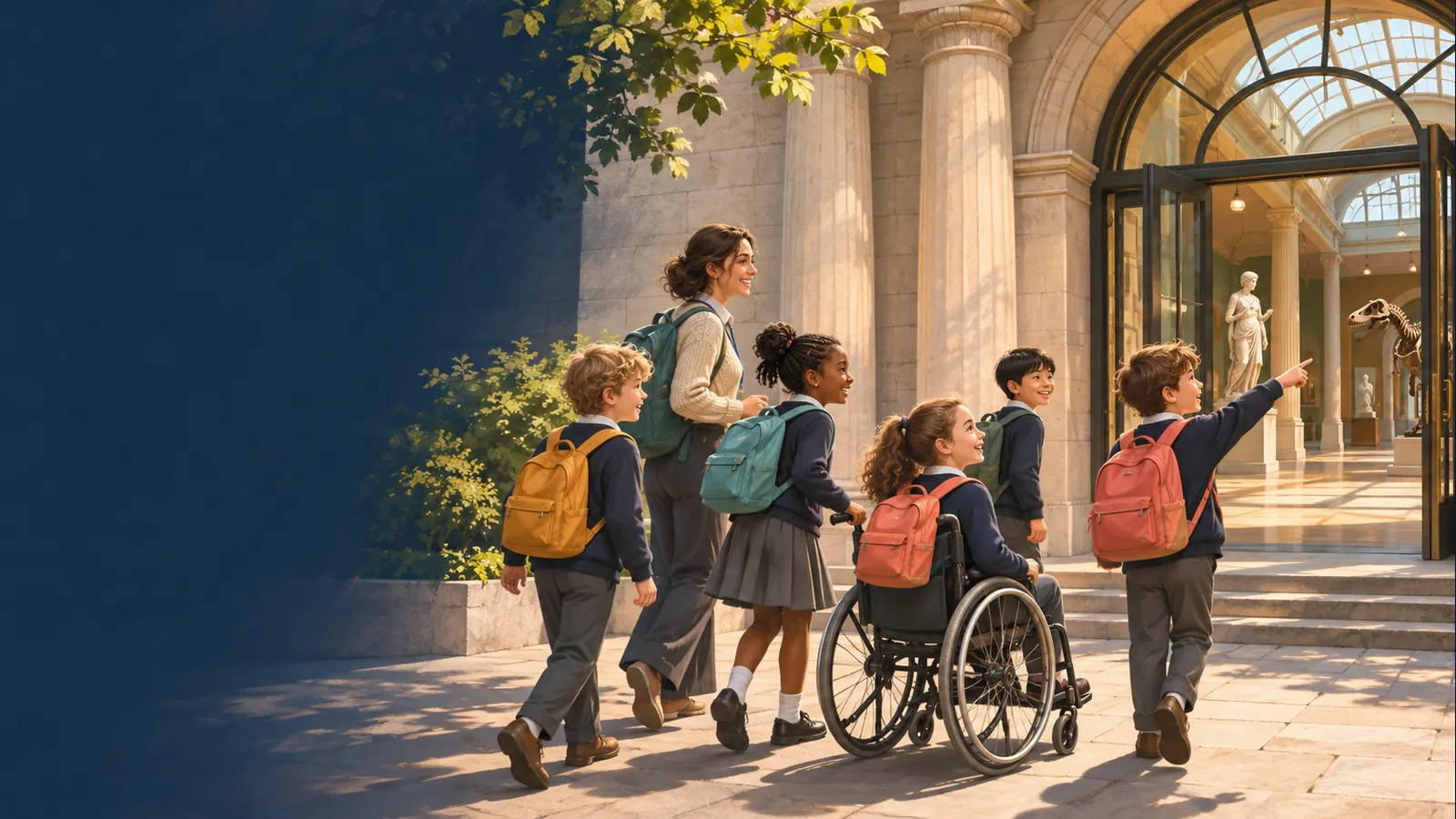
A school trip begins before anyone gets on the coach. For a child, the unanswered questions might be ordinary ones: where will I sit, when can I eat, who will help me find the toilet, and what happens if the room is too busy? “It will be fun” does not answer those questions, however kindly it is meant.
At home and at school, start with the questions the child is actually asking. Work out who’ll answer them and how the child can ask again on the day. A walk across the road will need different preparation from a full day at a museum.
Begin with the visit leader’s confirmed plan
The Department for Education’s guidance on educational visits, published on 26 November 2018 and checked on 8 November 2026, applies to England. It discusses proportionate planning, responsibilities, communications and evaluating visits afterwards. Schools elsewhere in the UK should use their own applicable guidance and arrangements. This article adds practical communication suggestions; it is not a risk assessment, consent form or substitute for the school’s visit procedures.
Ask the school which details are confirmed and which remain provisional. Helpful information includes the destination, travel arrangements, adults accompanying the group, meals, toilets, the return point and what happens if plans change. Families should not have to guess at arrangements from a general venue website. Equally, avoid presenting an unconfirmed detail as a promise simply because it would make a reassuring picture sequence.
For staff, choose a named contact for questions and make sure relevant support information reaches the adults who need it through the school’s usual arrangements. A parent’s useful observation about queues or noisy hand dryers needs to inform planning, rather than sitting in a message that nobody on the visit has seen.
Show the main steps of the day
Make a short sequence using photographs, objects, symbols or words the child understands. For a fictional museum visit, that might be: arrive at school, travel together, explore one gallery, have lunch, return to school. Choose the format with the child where possible. A long illustrated booklet is not automatically clearer than five familiar pictures.
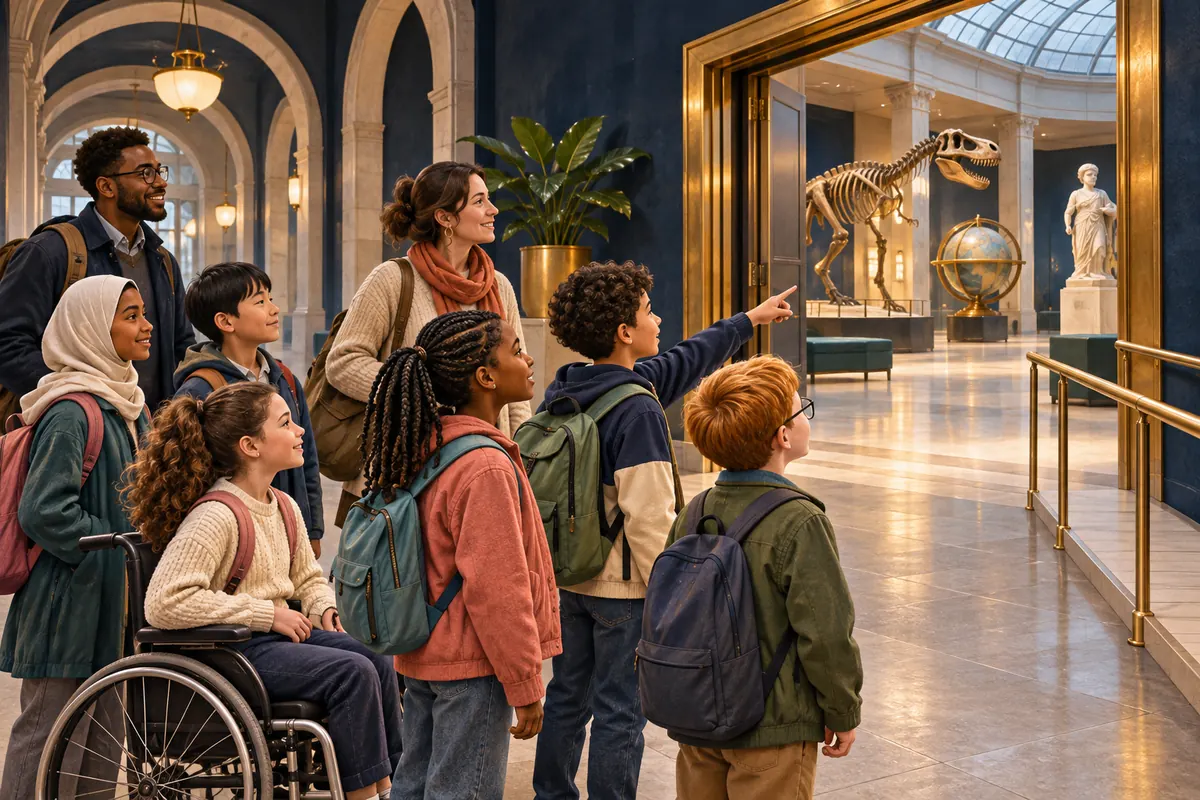
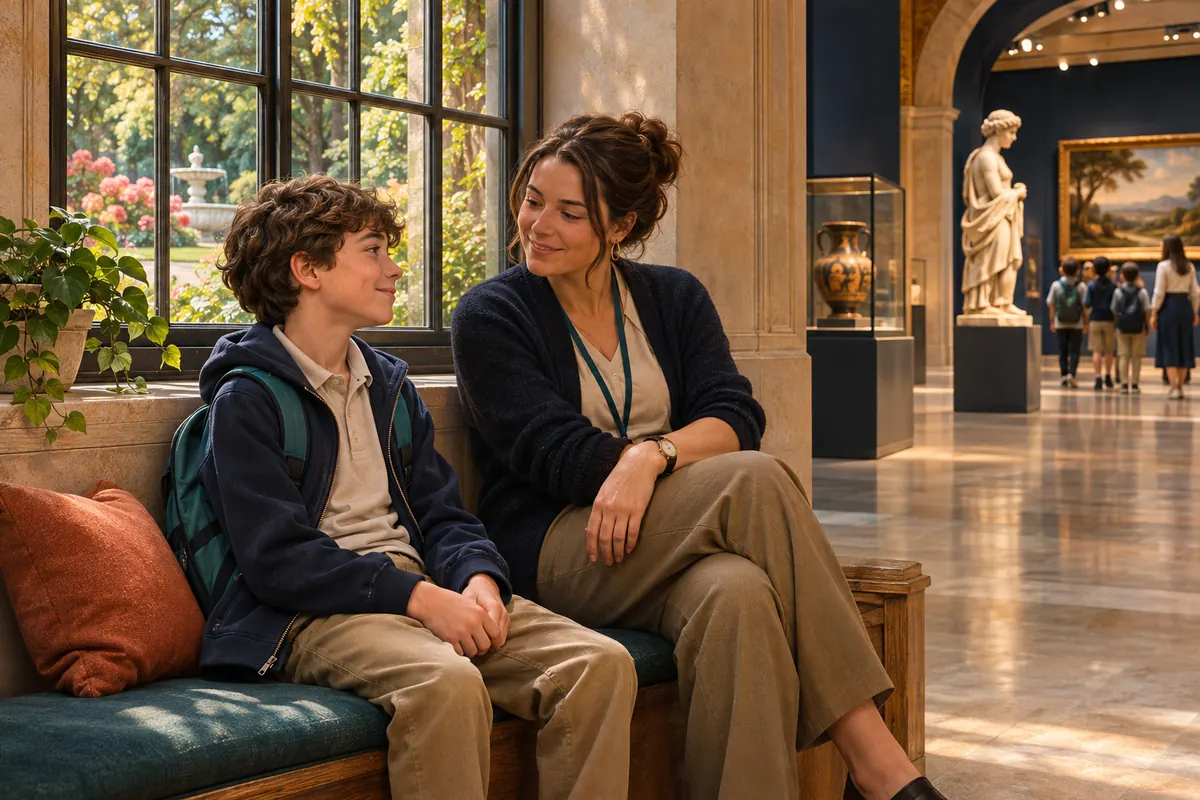
Use real, current venue photographs where available and permitted, explaining what each shows. A photograph of an entrance can answer “Which door?” more directly than a generic building icon. If you use a drawing instead, say that it is a drawing. The generated illustrations in this article are imagined scenes and cannot show what a particular museum, coach or route will actually look like.
Keep the sequence accessible on the day. A plan left on the classroom wall cannot help a pupil check what happens next at lunchtime. Agree who will carry it and how the child can look at it. Our visual timetable guide offers ways to make a short sequence usable without filling it with unnecessary detail.
- Meet at school.
- Travel with the group.
- Look around one gallery.
- Eat lunch.
- Travel back to school.
2. Find the question the child is actually asking
Offer a concrete invitation: “Which part would you like to know more about?” A child might point to the coach picture, ask the same question again or show you their lunchbox. Rather than assuming they are worried about the whole trip, check the particular uncertainty. They may simply want to know whether their usual food will come with them.
Use the way the child normally communicates. Give them time to point, sign, speak or use their device. If you offer choices, leave room for them to ask about something else.
If you’re unsure, say, ‘I’ll check with the visit leader.’ Then come back with what you found out and let the child know if there’s anything the school is still deciding.
3. Check travel, belongings and the less exciting essentials
Walk through the practical transitions: leaving the classroom, waiting for transport, putting a bag somewhere, getting off and finding the group. Ask the school about any relevant transport access arrangements before the day. A familiar seat or boarding routine should only go into the child’s plan once it has been agreed; a generic photograph cannot confirm it.
Use the school’s packing list and go through it together. Your child could put their bottle next to the bag or show you what they want you to pack. Agree who will carry any communication cards or equipment they’ll need during the day.
Explain food, toilets and clothing in plain terms. Avoid saying “later” if you can show the relevant point in the sequence. Where a time is approximate, call it approximate. Ask the venue or school about access details that matter for this child, such as the route to a suitable toilet, somewhere to sit or whether an activity involves standing for a long time.
- Lunchbox and water bottle
- A warm layer
- Any items agreed with the visit leader
4. Rehearse one unfamiliar moment
Choose one part that is likely to need explanation. If waiting for admission is unfamiliar, practise a short wait beside a familiar adult and show what comes afterwards. If the child wants to understand a museum rule, explain it through the actual visit: “We can look closely at this display, but we leave the objects inside the case.” Keep the rehearsal brief and connected to a real question.
A pretend journey can help adults notice missing information. You might discover that nobody has explained where bags will go during an activity. That is a planning question to resolve, not evidence that the child is unready. Avoid repeatedly rehearsing until a pupil performs the expected response perfectly.
For some children, looking at one accurate photograph and asking a question will be enough. Others may prefer a short conversation, a demonstration or an agreed pre-visit opportunity where available. More preparation is not always better. Check whether the material clarifies something or simply adds another long list to remember.
5. Agree a practical way to ask for a pause or help
Decide how the child can communicate “I need help”, “I need the toilet”, “Please explain again” or “I need a quieter place”. Use the method they already know where possible: speech, signing, pointing, an aid or a familiar card. Make sure the accompanying adults recognise it. A beautifully designed card is of little use if it remains at the bottom of a bag or the adult does not know what it means.
Check what’s available at the venue before you tell the child what to expect. If there’s a quieter space, find out where it is, whether you can use it and which adult would go with them.
Use our inclusive communication guide for further response choices. These are educational planning suggestions, not a treatment programme. If a child has an established individual support plan, the trip discussion should build on it with the relevant adults rather than replacing it with a generic checklist.
6. Explain what can happen if the plan changes
Some changes are predictable possibilities: transport could be delayed, an exhibit could be closed or rain could alter the outdoor part. Select the few that matter for this visit. Tell the child how they will find out: “Your adult will show you the next part of the plan.” Avoid listing every possible mishap, which can obscure the ordinary sequence you are trying to explain.
Prepare a simple way to show a change. You might move a picture, replace a stage or cross out a cancelled activity while explaining the new one. Keep the original plan visible enough to make the difference understandable. “We planned to go outside after lunch; now we will visit the indoor gallery” is clearer than silently removing a picture.
Adults need a real contingency plan behind the explanation. Do not promise an early collection, separate transport or an alternative activity unless it has been agreed through the school’s arrangements. The useful reassurance is about who will explain and support the next step, rather than a guarantee that nothing unexpected will happen.
A short conversation for families and school
Try these prompts in a message or a planning conversation. Share personal support details privately through the school’s usual route, not in a class group chat:
- Which part of the day is least familiar to this child?
- What confirmed information can we show them beforehand?
- How will they ask for help, and which adults will recognise that?
- What access, food, toileting or travel detail still needs checking?
- How will changes be explained, and who will follow up afterwards?
Keep the outcome short enough for the adults involved to use. A shared note might say, “Show the entrance photograph before departure; keep the sequence with the pupil; allow time for their communication aid; explain any change before moving on.” That is an invented example, not a complete support plan. Include the child’s own preferences and confirm practical responsibilities.
Afterwards, ask what helped
Give the child time to get back to their usual routine. Later, ask one question they can answer in their own way. ‘Was the entrance picture like the door we used?’ is an easier place to start than ‘How was the trip?’
For staff, separate learning from access. A pupil may remember an exhibit clearly while also finding the travel arrangements difficult. Record what support was useful, what needs checking next time and any follow-up required through your normal procedures. One difficult moment should not automatically become the whole account of the day.
Choose a useful next step
You can begin with paper, the school’s confirmed information and a conversation. For general worry-related reading, our children’s anxiety books page offers ways to talk about worry and prepare for a change in routine. For a separate fictional discussion about a plan getting stuck, try the existing frustration story activity. Neither is a substitute for planning this child’s actual visit.
Browse practical guides or compare current membership options if you want to inspect resources for your setting. Choose by the material and support you need, rather than assuming every plan includes the same allowances. The most useful preparation for tomorrow’s trip may be one answered question and a familiar way to ask for help.
Source and image notes
Official context: Department for Education, England, Health and safety on educational visits, published 26 November 2018; checked 8 November 2026. The six preparation steps are newly authored practical suggestions, not an approved book task, legal advice or an individually assessed support plan. Images are AI-generated editorial illustrations of fictional settings, not photographs of real school visits or evidence of endorsement.