

It might come out while you’re making tea or looking for their PE kit. If a child says, ‘I don’t want to go tomorrow,’ give them a moment and ask what they’d like you to know. Make time to listen before you decide what to do.
This guide is for families and primary school staff. It takes you from the first conversation to a clear handover and a follow-up the child can understand. The examples are invented; adapt the words and communication choices to the child. You can use this approach when you are worried about harm even if you do not yet know whether the school will describe it as bullying.
The Anti-Bullying Alliance has announced Anti-Bullying Week 2026 for 16–20 November, with the theme Break the Silence. The Alliance organises the campaign in England, Wales and Northern Ireland. Its 7 September resource announcement links to materials for families and settings. A campaign can start a conversation; a child who tells you something today needs a response today.
1. Give the first account room to breathe
Find somewhere you can listen without an audience. You might sit alongside the child, rather than ask them to look straight at you. Put down what you were doing if you can. A long pause does not need to be filled with another question.
Start with one invitation: “What would you like me to know?” Reflect back the part you understood: “You said it happened near the lunch queue. Have I got that right?” Let the child correct you. Avoid suggesting who was involved or supplying a reason for what happened. “Why didn’t you tell me before?” can feel like a demand to explain something they are already finding difficult.
It is possible to take a child seriously while some details are still unclear. If you feel angry, try to keep your first response about their experience. You can deal with your reaction separately. Asking the child to calm an upset adult is another job they should not have to do.

2. Let children tell you in a way they can use
Speaking a full account is only one option. A child might point to a place on a simple map, type a short message, use their usual communication aid or tell you one part and return later. Some children communicate more readily with a familiar adult who already knows how they ask for a break or say “I’m not sure”. Ask them which adult or method would help. Avoid introducing an unfamiliar symbol system in the middle of a difficult conversation.
If you offer choices, include a way to say “something else” or “not yet”. For example, “Would it help to show me where, or would you rather I sit with you for a bit?” is an invitation, not a test. Do not read intent into a drawing or a gesture. Check what the child wants it to mean. Our inclusive classroom communication guide has further ideas for making an answer possible without demanding speech.
Give the child control where you genuinely can: whether to talk now, where to sit and what would help them be heard. Do not promise that you can keep everything secret. Explain in plain words who you may need to involve and why. Where school safeguarding procedures apply, follow them and avoid repeatedly asking the child for a detailed account.

3. Ask what would help at the next difficult moment
You do not have to resolve the whole situation before asking a practical question. Try “What part of tomorrow feels hardest?” A child who says “lunch” might mean the queue, a particular table, the walk outside or not knowing which adult is on duty. Find out enough to help the school plan. A child may prefer to show the place rather than name it.
Think about the next point of contact, not just the next school meeting. A useful interim arrangement might be a named adult greeting the child at arrival, a supervised route to a room, or a discreet way to ask for help at lunch. Check the arrangement with staff before promising it. “I’m asking the school who will be there” is better than “Mrs Singh will definitely be there” if you do not yet know.
Keep the responsibility for stopping harm with adults. Moving a child’s seat or changing where they play can be useful if they want it and it helps, but it should not be the only plan by default. Ask what can change in the place, supervision or routines around the problem. A child should still have access to the ordinary parts of school life they want to enjoy.
4. Make a short, private note
After listening, record enough to help the next adult act: what the child reported, where and when if known, any immediate concerns, and what you have already agreed to do. Distinguish the child’s words from what you observed and what you think might be happening. “They told me two children blocked the doorway on Tuesday” is more useful than “The whole class is against them”. If the date or location is unclear, say so.
For messages or posts, GOV.UK reporting guidance advises keeping a record of dates and times and retaining messages received. Use the school’s private contact route to ask how to share relevant information. Avoid forwarding distressing or personal material to a class group. You can report a concern before you have gathered every detail. Staff should record and share through their established school procedures.
- What the child said, in their own words where possible.
- When and where it happened, if known.
- Who will follow up and when you will check in.
5. Hand over the concern and ask for a clear next step
In England, GOV.UK’s reporting page directs families to raise school bullying with the school first. Check the school’s own reporting route; arrangements differ across the UK and between settings. If a child is in immediate danger, use emergency help rather than waiting for a routine school reply. This guide offers practical communication suggestions and does not replace safeguarding procedures or legal advice.
Send a short private note to the appropriate school contact. A fictional example might be:
Alex told me that two pupils blocked the classroom doorway after lunch on Tuesday and that they are worried about going past it tomorrow. They find it easier to show a location on a map than to explain it in front of others. Could you confirm who will check in with Alex at arrival, what will happen at lunchtime and when we can review how the arrangement is working?
Ask for a named contact and a review time. Agree what will be shared with the child, in a form they can use. You may not be given private details about other pupils. You can still ask what support your child will receive, what adults will do in the relevant places and how you will know whether the plan is helping. If the concern is unresolved, check the school’s published procedures and the relevant guidance for your nation.

6. Check whether things actually changed
A review does not have to begin with “Has it stopped?” Try one concrete question: “Was the adult there when you got to the lunch queue?” This is easier to answer and may show where the plan fell short. Then ask what would help next. A child may prefer to show you a picture, answer later or speak to someone else. Give them a way to tell you if the arrangement itself feels uncomfortable.
Staff can review both the child’s account and what adults observed. If there was no named adult at the agreed place, fix that before asking the child to try harder to ask for help. Check quieter times as well as busy ones. If the problem moves to another place, update the plan rather than assuming the original measure is enough. Tell the child what changed so they do not have to keep guessing.
Use stories for practice, away from the live concern
A fictional story can help a class practise what a helpful response sounds like without putting a pupil on the spot. Ask, “What could an adult do next?” or “How could the character tell someone without speaking in front of the group?” Invite a drawing or a short response in pairs. Do not ask children to reveal personal experiences to complete an activity.
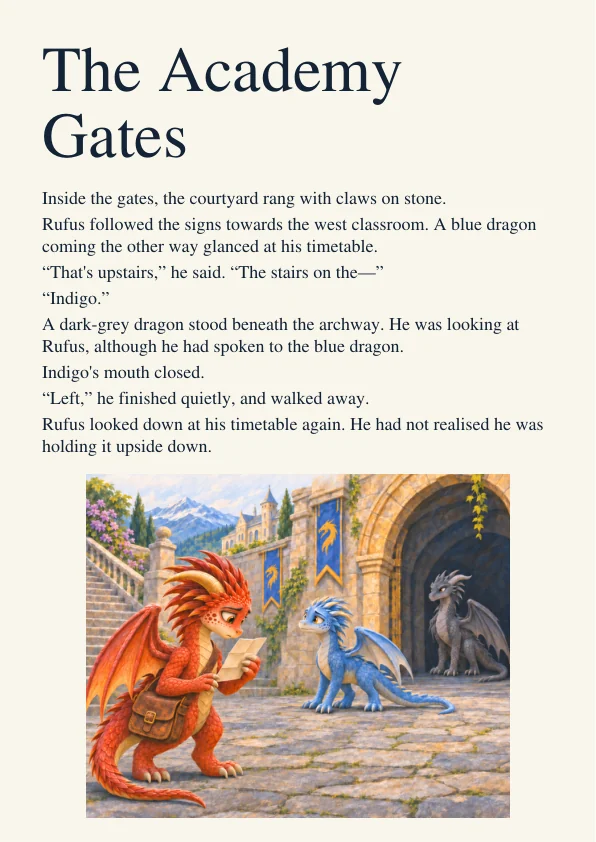
Hewston Higgins’ The Dragon Nobody Defended is a related story to explore. The public book page includes a sample from Rufus’s first day at Skyreach. The questions above are new discussion suggestions, separate from any original book tasks or companion materials. The story is an optional way to rehearse an adult response; it does not address an actual report on its own. For another starting point, see using stories to teach inclusion or compare the current membership options if you are choosing materials for your setting.
Begin with what you can do today: listen, agree one practical next step and check that the adult responsible has the information they need. The child should not have to start the whole conversation again to find out what happens next.
Sources and image notes
Campaign dates and scope: Anti-Bullying Alliance, Anti-Bullying Week 2026 and its resource announcement dated 7 September 2026. Reporting context: GOV.UK reporting bullying; check local procedures outside England. Sources checked 11 November 2026. The prompts and examples are editorial suggestions. The editorial illustrations are AI-generated fictional scenes, not photographs of real pupils or evidence of endorsement.