
Children's books • learning worlds • SEND resources • school programmes
Hewston Higgins Books & Learning
Written by Jonathan Hewston • Sources reviewed October 2026 • Educational information, not clinical advice.
SEND topic resources

Dyslexia books & Storybook River resources

A story-led world for exploring reading differences, patterns, memory and different routes through learning.

What the resource is designed to do

Make the topic easier to approach and talk about.

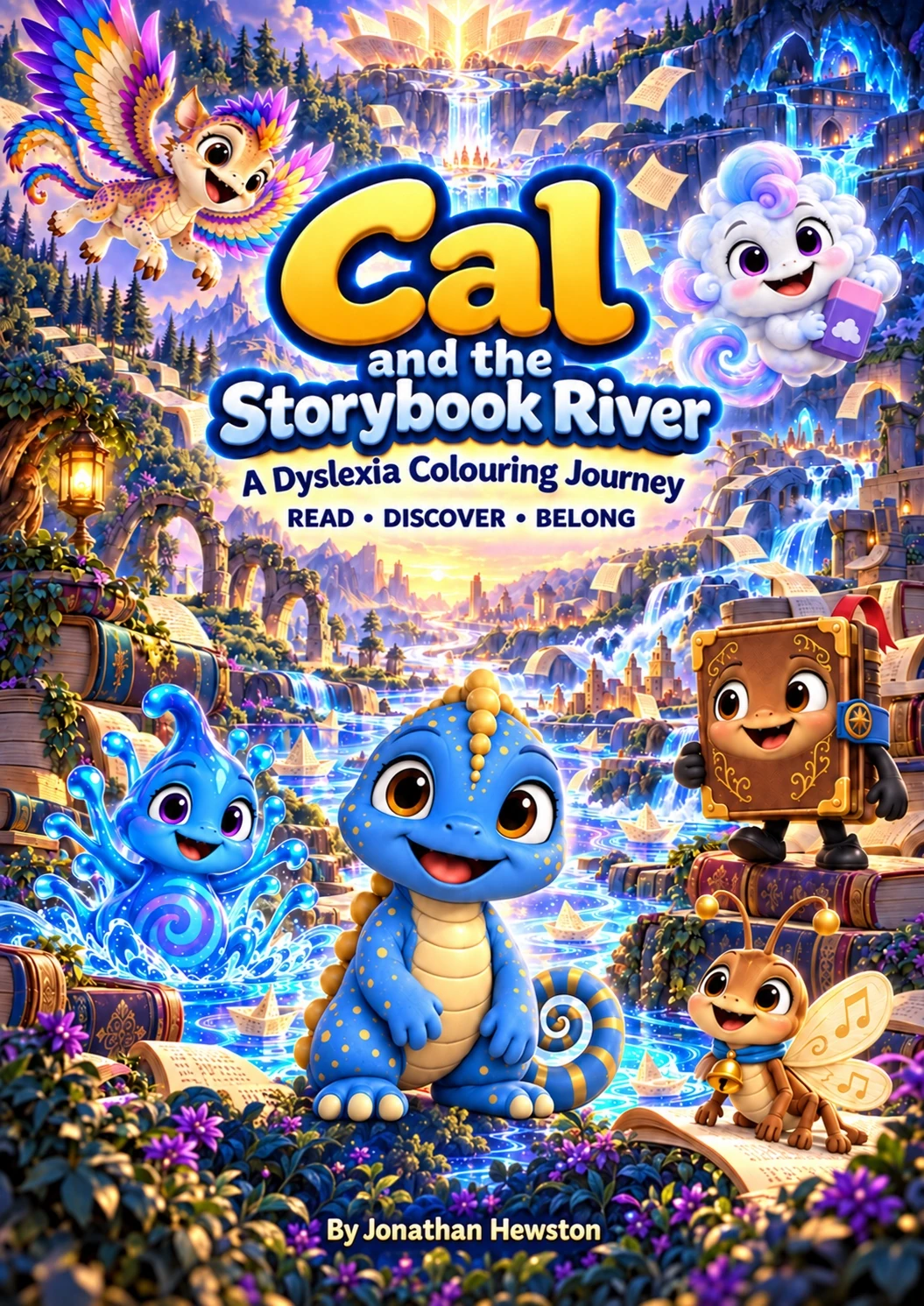
Rather than presenting dyslexia as a list of deficits, the Cal format uses story, characters and practical prompts to explore different experiences, strengths, challenges and possible supports.

  • Use images and story to support discussion around reading experiences
  • Explore patterns, memory and alternative routes through tasks
  • Avoid presenting mistakes as failure
  • Build activities into the scenery rather than turning every page into a worksheet

These are educational resources, not diagnostic or therapeutic materials.

Dyslexia books & Storybook River resources
Detailed guide

Dyslexia: practical context for families and schools

Dyslexia and learning

The NHS describes dyslexia as a common learning difficulty that mainly affects reading, writing and spelling and can also affect remembering information, numbers, planning and organisation. It does not affect intelligence.

Confidence around literacy

Repeated difficulty can change how a child feels about reading. Resources therefore need to protect confidence as well as practise skills. Storybook River frames different routes through literacy as part of an adventure rather than as evidence that the child is failing.

Visual and structured support

Clear layouts, manageable chunks, repeated patterns and concrete examples can reduce unnecessary demands around a task. They do not replace systematic literacy instruction, but they can make the surrounding learning experience easier to access.

Talking about difference

A story can help adults explain that needing a different route is not the same as being less capable. That can be particularly useful for children who have started to associate reading with embarrassment or avoidance.

Where the book fits

Storybook River is best used as a confidence and discussion resource alongside appropriate literacy teaching and any specialist support the child needs. It does not claim to remediate dyslexia.

How we use evidence

Hewston Higgins separates educational design choices from clinical claims. Government, NHS, NICE and EEF sources are used to explain the context; the books themselves are presented as educational resources, not proven treatments.

Written by Jonathan Hewston • Reviewed October 2026
Practical use

Supporting confidence around reading and writing

Dyslexia can affect literacy in different ways, and children may have very different profiles. Educational materials should avoid equating difficulty with low ability. A strong resource can acknowledge challenge while keeping the child's ideas, curiosity and wider strengths visible.

Separate the idea from the transcription demand

When the learning goal is discussion, comprehension or imagination, adults can consider whether every response needs extensive writing. Oral answers, pointing, selecting, drawing or supported recording can sometimes keep attention on the intended learning rather than an unrelated barrier.

Make instructions easy to locate

Clear layout, manageable chunks and consistent visual organisation can reduce the amount of searching a pupil has to do before beginning. The Storybook River world uses a repeated journey structure so the experience has continuity even as the activity changes.

Protect confidence

Repeated difficulty can change how a child feels about reading and writing. Resources should therefore avoid making speed or perfect spelling the only visible measure of success. Progress can also include participation, strategy use, persistence, comprehension and willingness to try.

Use with professional judgement

Hewston Higgins resources are educational materials. They do not diagnose, treat or replace individual educational, medical or therapeutic support.

Read the evidence and claims policy →